Army seeks to blend human- and signals-intelligence to attack important targets quickly
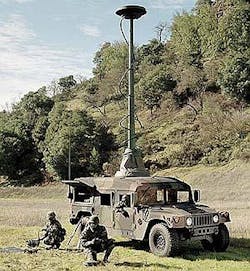
ABERDEEN PROVING GROUND, Md., 20 Jan. 2012. Scientists at the U.S. Army Research, Development and Engineering Command's communications-electronics center (CERDEC) at Aberdeen Proving Ground, Md., are developing an intelligence and surveillance system called Vigilant Pursuit to reduce the time it takes soldiers in the field to identify and attack important targets.
Vigilant Pursuit is a platform-agnostic system, CERDEC officials say. It combines human intelligence and signals intelligence to help soldiers identify persons of interest and other mobile targets while in the field. The system uses cross cueing and tipping to enable soldiers to make decisions quickly and attack these kinds of targets before they can move.
Defense contractors working with CERDEC on Vigilant Pursuit are Science Applications International Corp. (SAIC) in McLean, Va., and CACI International Inc. in Arlington, Va.
"Vigilant Pursuit puts multi-intelligence at the lowest tactical level to support a commander in taking down a target, which was done at a higher level," says James Rose, director of the Capabilities, Development & Integration Directorate at the Army Intelligence Center of Excellence.
Vigilant Pursuit uses intelligence information from humans as well as from signals intelligence systems, officials say. "We are breaking down walls between intel communities, and this forces interoperability," Rose says.
"HUMINT vehicles and SIGINT vehicles will work together on one system, allowing the intel collected by either team to tip/cue the other teams assets to prosecute potential target more quickly than current methods allow," says Ephraim Joe Befecadu, a systems engineer at CERDEC's Intelligence and Information Warfare Directorate.
Vigilant Pursuit will use high-resolution target location and tracking, multi-node collaborative geo-location, and cross cues of HUMINT and SIGINT assets, Befecadu says.
For more information contact CERDEC online at www.cerdec.army.mil, SAIC at www.saic.com, or CACI at www.caci.com.
Editor's note: Kristen Kushiyama in the CERDEC Public Affairs office contributed to this story.
