IARPA kicks off superconducting research program for high-performance computing
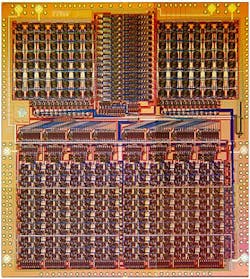
WASHINGTON, 18 Feb. 2013. Computer scientists at the U.S. Intelligence Advanced Projects Agency (IARPA) in Washington will brief industry 12 March on an upcoming project to investigate substituting superconducting computing technology for conventional computing technologies and metal interconnects in an attempt to cut the power demands of high-performance computing.
IARPA will brief industry from 8:30 a.m. to 5 p.m. on 12 March 2013 in the Washington, D.C., area, about the IARPA Cryogenic Computing Complexity (C3) program, which seeks to substitute superconducting computing and superconducting switching for computing systems based on complementary metal-oxide-semiconductor (CMOS) switching devices and metal interconnects.
A formal solicitation for the IARPA C3 program should be released to industry on or before the briefings on 12 March. The program is expected to address unmanageable problems related to power and cooling for large-scale computing systems.
The trend towards large, centralized computing facilities to house supercomputers, data centers, and special-purpose computers continues to grow, driven by cloud computing, support of mobile devices, Internet traffic volume, and computation-intensive applications, IARPA officials explain.
Today's computing technology based on CMOS switching devices and metal interconnects appears to have no path to enhancing energy efficiency quickly enough to keep up with increasing computer demands, experts say. Instead, superconducting computing could offer an attractive low-power alternative to CMOS with many potential advantages.
Superconducting computing research currently consists of a few scattered efforts with no initiative focused on advancing the field overall, IARPA officials say.
The C3 program will seek to help create a new generation of superconducting computers that are more energy efficient than ever before.
IARPA expects that the C3 program will be a five-year, two-phase program. The first phase will last for three years and develop the technologies necessary to demonstrate a small superconducting processor. The second phase, which will last two years, will integrate those new technologies into a small-scale working model of a superconducting computer.
Program thrusts will include cryogenic memory, logic, communications, and systems, such as advanced superconducting circuits integrated with memory and other components for demonstration of a limited superconducting computer system.
Companies interested in attending the IARPA C3 program briefings should register no later than 5 March online at http://events.SignUp4.com/C3_PDRegistration.
Directions to the conference facility and other materials will be available on the Website. No walk-in registrations will be allowed, and attendance will be limited to the first 140 registrants and to no more than two representatives per organization.
Attendees who wish to present organizational capabilities for potential teaming opportunities may request to do so by email at [email protected]
Email questions or concerns to [email protected]. More information is online at https://www.fbo.gov/notices/1d13904f9cc703e0b3ca3e734ce2ca8b.
