BAE Systems introduces handheld thermal imagers for law enforcement
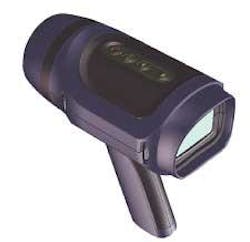
LEXINGTON, Mass. — The latest infrared imaging products from BAE Systems Information & Electronic Warfare Systems, the HHC100 Series handheld thermal imagers, are designed specifically for law enforcement and first responder applications.
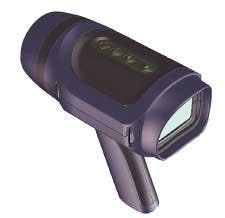
"The HHC100 Series is a low-cost, lightweight, rugged series of IR cameras," says Dennis Long, BAE Systems commercial MicroIR camera product line manager. The uncooled system provides law enforcement personnel with a self-contained, uncooled handheld thermal imager, capable of providing enhanced day/night situational awareness independent of darkness, smoke, and other common obscurants, BAE Systems officials say. The technology improves officer/agent effectiveness and safety by reducing the effectiveness of these types of concealment, company officials say.
The HHC100 Series consists of two variants, the HHC100, which provides 160 by 120-pixel image resolution and the HHC150, which provides 320 by 240-pixel resolution. Both handheld imagers are based on the company's uncooled, MicroIR microbolometer-based, sensor-engine technology, resulting in strong image quality over an extended ambient operating temperature range and a real-time 60-Hz frame rate.
"The HHC100 Series is the first family of handheld thermal imagers designed to provide the law enforcement community with the capability to configure units to meet specific mission requirements," says Dave Smialek, BAE Systems manager of business development for IR Imaging Systems. "For example, the imagers can be outfitted with an eye cup that mitigates display light emissions for covert night missions. When requirements call for remote extended surveillance, the unit can be mounted to a positioning device and the functionality controlled from a remote location via the integral RS-422 serial communication interface."
"Our camera is built from the ground up for law enforcement," Smialek says. Whereas, many of the other cameras being used for this application were originally designed for something else such as plant or facility maintenance, he explains.
"The HHC100 series utilize our SCC500 series IR camera cores as their imaging module — the SCC500L (160 × 120) for the HHC100 and the SCC500H (320 × 240) for the HHC150, Smialek says.
"The optic used in the HHC100 series is a motorized 43-mm lens that results in a 10-degree horizontal field of view (HFOV) for the HHC100 and a 12-degree HFOV for the HHC150," he continues. "The focal plane ties back
to the SCC500 series camera core — 160 × 120 for the HHC100 and 320 × 240 for the HHC150."
The HHC100 also uses two different battery packs — one with six AA batteries and one rechargeable cartridge, Smialek says.
The camera's core infrared technology is based on work BAE Systems engineers have successfully done on commercial and military infrared devices, he says.
Typically, BAE Systems builds volume and business for their infrared technology by developing it commercially, and then leveraging the designs into smaller volume markets such as the military, Smialek says. The U.S. Army's Communication and Electronics Command's (CECOM) recent selection of BAE Systems to supply a family of next-generation thermal weapon sights for its soldiers is an example of this, he adds.
For more information go online at www.iews.na.baesystems.com.
