Lockheed Martin set to build laser-guided practice rounds for U.S. Navy
By John Keller
PATUXENT RIVER NAS, Md.-Leaders of the U.S. Naval Air Systems command at Patuxent River Naval Air Station, Md., are looking to the Lockheed Martin Corp. Missiles and Fire Control division in Orlando, Fla., to build laser-guided training rounds (LGTRs) for Navy combat pilots next year.
Lockheed Martin is performing the work under terms of a $26 million contract awarded in May. With options, the contract could be worth as much as $114 million through 2009. Lockheed Martin is manufacturing the LGTS at a factory in Archbald, Pa.
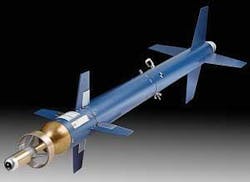
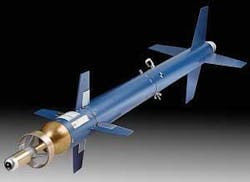
The LGTR helps Navy F/A-18 fighter-bomber pilots train realistically to use the GBU-10/12/16 Paveway II laser-guided bomb, but without the destruction and safety hazards of using live explosives. The LGTR emulates Paveway II’s laser-guided bomb envelope, flight characteristics, and guidance system that includes a laser spot detector.
To use the LGTR or any other laser-designated munition requires use of an air- or ground-based laser designator, which can be aboard the attacking aircraft, on a helicopter nearby, or with infantry units on the ground.
Detectors on the LGTR and its Paveway cousin lock on to a laser spot fixed on the target, and the munition’s aerodynamic fins move to guide the munition to the target. The LGTR and Paveway are glide weapons that have no propulsion other than the inertial energy from the aircraft that releases them.
Target designators are semi-active laser illuminators that tag targets. Typical laser-guided bomb receivers use photodiodes to derive target position signals. These signals translate into control surface movements to direct the weapon to the target.
An airborne detector can feed steering information to the pilot through onboard displays, direct him to the target, and give him an aim point. The pilot also can launch his laser-guided bomb when the detector locks on to the laser spot and the weapon is within its launch envelope. The pilot may never even see the actual target, only the laser aim point.
Laser designators and seekers use a pulse coding system so that seekers and designators work together. The seeker will track only the designated target when the designator and seeker have the same code.
Coding is based on pulse repetition frequency (PRF). This allows individual aircraft or groups of aircraft to attack several targets simultaneously by using laser-guided weapons set on different codes.
The LGTR indicates where it hits with a smoke designator. The practice munition has been valuable in helping bomber pilots train to attack tunnels and other hardened targets in areas such as Afghanistan and Iraq. Pilots have been able to attack abandoned mines at China Lake Naval Weapons Center, Calif., for example, without damage.
“Live-fire training with LGTR permits aircrews to practice delivery tactics in real mission environments and experience actual weapon characteristics with today’s range limitations,” says Capt. David Dunaway, U.S. Navy program manager at Naval Air Systems Command (PMA-201). “Using the LGTR conserves the precision-guided weapon inventory for tactical missions.”
In addition to LGTRs and LGB kits, Lockheed Martin’s facility in Archbald produces instruments and control systems, as well as providing manufacturing services and electrical assembly.
