VDC: Passive backplanes dominate, while active backplanes are on the rise
NATICK, Mass. - Passive backplane-based computer systems continue to dominate the embedded integrated computer systems market, say analysts at Venture Development Corp. (VDC) in Natick, Mass.
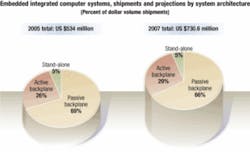
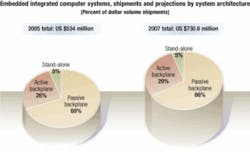
Fueled by the overwhelming share of the systems in the military/aerospace vertical, the largest of the vertical markets, passive backplane-based systems accounted for 69 percent of embedded integrated computer system dollar volume shipments in 2005, VDC analysts say.
VDC’s “Global Market Analysis of Embedded Integrated Computer Systems,” studies the market for system-level computer products sold by embedded vendors into six separate vertical markets: communications; military, defense, and aerospace; transportation infrastructure; industrial automation control and instrumentation; medical; and laboratory and scientific.
Passive backplane-based systems also have a large share of the communications vertical (70 percent), the third largest vertical market, and the laboratory/scientific vertical (61 percent). Passive backplane-based systems offer the greatest computing power, which is the reason that these systems excel in compute intensive military and communications applications.
Passive backplane-based systems have long held the largest share of the market for embedded integrated computer systems, as many of the first embedded system vendors worked only with slot passive backplane systems due to lack of computing process and reliability with active backplane systems.
According to VDC’s study, active backplane-based systems are on the rise due to increased processing power and integrated features of CPUs and chipsets. Active backplane-based systems are now more powerful than ever, making them suitable in many vertical markets and application areas where they previously were not adequate.
VDC projects that the share of the embedded integrated computer systems market attributable to active backplane-based systems will grow from 26 percent in 2005 to 29 percent by the end of 2007.
Active backplane-based systems save customers money and space because they do not require the additional chassis, racks, slot cards that passive backplane systems do require. The biggest verticals for active backplane systems are the industrial and medical markets where price points are paramount over low- to medium-level computing power requirements.
For more information contact VDC online at www.vdc-corp.com.
