Supplier base for VPX embedded computing begins to take shape
By John Keller
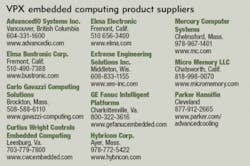
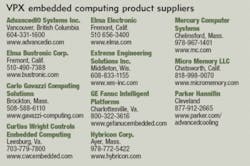
The market and supplier base for VPX and VPX-REDI single-board computers are just beginning to emerge, as several companies are stepping forward to provide embedded computing that adheres to these standards, which also are referred to as VITA-46 and VITA-48.
The promise of VPX embedded computing is near-supercomputer performance in small embedded form factors. VPX is available in 6U as well as 3U formats, which is causing excitement among designers of demanding embedded systems, such as signal processing for unmanned aerial vehicles (UAVs).
“VPX is taking root now, particularly in signal processing-oriented operations—the demanding kinds of processing, where more processors are used,” explains Ian Stalker, DSP product manager at Curtiss Wright Embedded Computing in Leesburg, Va.
VPX computing has freed itself from the I/O bottlenecks of traditional pin-and-socket parallel backplane databuses like VME 64. VPX achieves its throughput by using high-speed serial databuses like RapidIO, which requires a smaller connector to move massive amounts of data.
“The people who care about the throughput that VPX offers most are those who are designing signal processing and trying to eke out more performance,” Stalker says. “We believed those were the kind of customers who would migrate first, and it is unfolding as we thought. It is really for the leading-edge people designing various kinds of radars, signals intelligence, and image processing.”
VPX does have its downside in the embedded computing community, however. The problem is it is relatively incompatible with older embedded computer implementations, such as VME. Those who choose VPX typically are working on new systems. Relatively old systems that need upgrading can make use of VXS computers, which more closely resemble legacy systems.
VPX designers decided to make a clean break with the past in exchange for unprecedented levels of performance, clearly defined cooling methods for VPX-REDI, and two-level maintenance that enables relatively unskilled military personnel to make systems repairs in the field.
The VPX-REDI standard, or VITA-48, defines four cooling methods that are of particular interest to those designing embedded computers for use in demanding environments, such as aircraft, ground vehicles, and unmanned systems: forced air; liquid flow-through cooling; conduction cooling; and air flow-through cooling.
“We knew we had to change the connector to accommodate the kinds of speeds our customers were looking for,” says David Compston, director of product marketing for GE Fanuc Intelligent Platforms in Towcester England.
“The bandwidth of VPX is great, and it really boils down to creating systems that have more capability than they had in the past,” says Tom Roberts, product marketing manager at Mercury Computer Systems in Chelmsford, Mass. “VPX can help you design radars that get greater range, and that can track more targets. The more processing you have, the better job you can do.”
Compston says the 3U and 6U VPX markets are developing as somewhat distinct entities. The 3U boards and backplanes are popular with applications that are simpler than 6U applications, and that require a large number of products. The 6U market, on the other hand, involves systems that require demanding and flexible capabilities and connectivity.
“The fabric meshes you can build with 6U VPX is well suited to multicomputing,” Compston explains. “The fabric connectivity is key for those kinds of applications. We have serial RapidIO and PCI express operating as a dual-fabric architecture on the same board.”
null
