Interference-resistant signal connectors for industrial automation and robotics introduced by Binder
Summary points:
- Binder USA expands M8 connector line with molded 360-degree shielding for enhanced electromagnetic protection.
- Reliable signal transmission even in EMC-critical industrial environments thanks to full-shielded design.
- Compact, durable construction ideal for robotics, automation, and space-limited sensor applications.
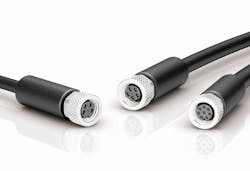
CAMARILLO, Calif. – Binder USA in Camarillo, Calif., is expanding the company's M8 compact, interference-resistant signal connectors with molded 360-degree shielding.
The M8 male and female cable connectors are designed to ensure reliable, interference-free signal transmission from sensors to control units -- even in electromagnetically demanding EMC-critical environments.
Binder's proven 360-degree shielding design provides an enclosed shield that effectively minimizes electromagnetic interference. The result is secure, uninterrupted signal transmission -- even under challenging industrial conditions.
Industry-grade construction
With their robust, industry-grade construction and high vibration resistance, these connectors deliver maximum operational reliability, making them suitable for continuous-use applications in modern automation systems.
The compact M8 connectors are for applications where space is limited, such as in robotics, mechanical engineering, and measurement and testing technology. Their small form factor enables the efficient and space-saving integration of complex sensor-actuator networks.
The models are available with 3-, 4-, 5-, 6-, and 8-pin configurations, customizable cable lengths, and are compatible with standard M8 interfaces, as specified in IEC 61076-2-104. For more information contact Binder USA online at https://www.binder-usa.com/us-en/products/automation-technology/m8.