Global demand for sonar to grow by 42.3 percent over next four years, as seaborne trade increases

AMSTERDAM – Global demand for sonar technology will grow by 42.3 percent over the next four years, increasing from $2.6 billion in 2018 to $3.7 billion in 2023, predict analysts at market researcher ASD Media BV in Amsterdam.

AMSTERDAM –Global demand for sonar technology will grow by 42.3 percent over the next four years, increasing from $2.6 billion in 2018 to $3.7 billion in 2023, predict analysts at market researcher ASD Media BV in Amsterdam.

This growth in the worldwide sonar market represents a compound annual growth rate of 6.98 percent, analysts say. Driving global demand for sonar are increasing global seaborne trade, growing requirement to comply with maritime safety standards, and flourishing maritime tourism.

The vulnerability of ships to cyber threats due to their digitization and shortage of qualified professionals in the maritime industry serve as restraints for the growth of the sonar system market.

Demand for active sonar -- that which transmits an audible sonar ping -- accounts for the largest share of the sonar system market in 2018. Increased demand for active sonar systems such as echo sounders on commercial ships, towed arrays, variable depth sonars, and military hull-mounted sonar are leading growth in this market segment, analysts say.

Related: Lockheed Martin sail-mounted submarine sonar to provide 360-degree underwater situational awareness

Increasing requirements for ensuring reliability, safety, and real-time connectivity of ships is driving growth in sonar hardware.

The Asia Pacific region represents the largest share of the sonar system market in 2018, driven by increasing demand for commercial ships from countries such as India, China, and Japan.

Key players in the sonar market are Raytheon, Lockheed Martin, L-3, Teledyne, and EdgeTech in the United States; Thales in France; Kongsberg Gruppen and Navico in Norway; Ultra Electronics and Sonardyne in the United Kingdom; Atlas Elektronik in Germany; Furuno and Japan Radio Co. Ltd. in Japan; DSIT in Israel; and Aselsan in Turkey.

For more information contact ASD Media BV online at www.asdreports.com.

Ready to make a purchase? Search the Military & Aerospace Electronics Buyer's Guide for companies, new products, press releases, and videos
Sign up for our eNewsletters
Get the latest news and updates

Related

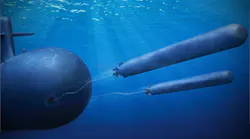
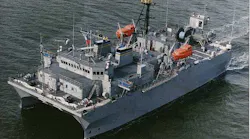
SAN DIEGO – Undersea surveillance experts at Lockheed Martin Corp. will provide the U.S. Navy with two twin-line towed-array sonar systems to detect quiet diesel- and nuclear-powered submarines. Officials of the Space and Naval Warfare Systems Command (SPAWAR) in San Diego, announced a $30 million order late last month to the Lockheed Martin Rotary and Mission Systems segment in Liverpool, N.Y., for two U.S. twin line towed array (TL-29A) systems. These twin-line towed-array sonar systems are to support the Naval Sea Systems Command's Maritime Surveillance Systems Program Office, Program Executive Office Submarines. The twin-line 29A array (TL-29A) is a passive, low-frequency sensor towed by the T-AGOS surveillance ship. Each array comprises a chain of acoustic, telemetry, and interface modules linked together in an integrated system. The TL-29A's passive acoustic and signal-processing technologies can hear submarines at long range and in various sea states. The towed-array sonar is designed particularly to detect and track the new generation of extremely quiet diesel electric submarines operated by foreign navies. Related: L-3 to build six more TB-29A CTA towed array sonar systems for Virginia-class submarines The TL-29A sonar is configured as a pair of mile-long arrays that are towed side-by-side from an electro-optic tow cable attached to a winch on the deck of the host surface ship. Two critical advantages of the TL-29A in the current threat environment are its endurance and ability to be towed in the shallow waters of the littoral zones in coastal waters and in harbors. As a passive sensor, TL-29A does not generate a signal but uses sensitive hydrophones to listen for the faint sounds emitted by extremely quiet diesel electric submarines. The TL-29A, along with its submarine-mounted cousin, the TB-29A, is the first array to use an advanced telemetry called towed array integrated product team (TAIPT). The TAIPT is a commercial off-the-shelf (COTS)-based telemetry architecture. On this contract Lockheed Martin will do the work in Syracuse, N.Y., and should be finished by October 2019. For more information contact Lockheed Martin Rotary and Mission Systems online at www.lockheedmartin.com/us/rms.html, or SPAWAR at www.spawar.navy.mil. Learn more: search the Aerospace & Defense Buyer's Guide for companies, new products, press releases, and videos

Voice Your Opinion!

To join the conversation, and become an exclusive member of Military Aerospace, create an account today!