Collins to overhaul helicopter avionics flight-control computers
Questions and answers:
- What is the main purpose of the $9.2 million contract announced by the Army Contracting Command? For Collins Aerospace Hamilton Sundstrand to overhaul and maintain the flight-control computers for the U.S. Army's UH-60 Black Hawk helicopters.
- What is the role of the flight-control computers in the UH-60 Black Hawk helicopters? They manage inputs from the pilot’s controls and sensors to command actuators that move the helicopter's main and tail rotors to enhance stability and performance.
- How do flight-control computers improve the UH-60 Black Hawk's flight capabilities? They integrate stabilizing functions like flight path stabilization and stabilator adjustments to offer redundancy and fault tolerance for continued flight, even in the event of partial system failure.
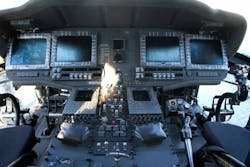
REDSTONE ARSENAL, Ala. – U.S. Army helicopter avionics experts are asking the Collins Aerospace Hamilton Sundstrand segment in Windsor Locks, Conn., to overhaul and maintain flight-control computers for the Army's UH-60 Black Hawk helicopters.
Officials of the Army Contracting Command at Redstone Arsenal, Ala., announced a $9.2 million contract to Collins Aerospace Hamilton Sundstrand in September for the maintenance and overhaul of flight-control computers for the UH-60 Black Hawk. Collins Aerospace is a subsidiary of RTX Corp.
Hamilton Sundstrand manufactures and supports the flight-control computers in the UH-60M Black Hawk and later variants. The flight-control computers manage inputs from the pilot’s controls and sensors and provide stability augmentation to the helicopter.
Stability augmentation
The system integrates the Black Hawk's stability augmentation system, trim system, flight path stabilization, and flight director, all of which work together to stabilize and assist flight under demanding military conditions.
Each UH-60M of the redundant UH-60M flight-control computers perform redundant real-time control, stabilator adjustments, and actuator commands for continued flight even in case of partial system failure.
Each flight computer manages analog, discrete, and digital signals from helicopters sensors and pilot controls.
On this contract Collins Aerospace Hamilton Sundstrand will do the work at locations to be determined with each order, and should be finished by September 2030. For more information contact Collins Aerospace Hamilton Sundstrand online at www.collinsaerospace.com, or the Army Contracting Command-Redstone at https://acc.army.mil/contractingcenters/acc-rsa/.
