Navy asks Boeing and L3Harris for embedded computing avionics system for airborne sensor networking
Key Highlights
Questions and answers:
- What is the purpose of the DTP-N B Kit ordered by the U.S. Navy? To enhance networked targeting capabilities by processing data from onboard and external sources in real time for U.S. Navy aircraft, such as the F/A-18E/F Super Hornet and EA-18G Growler.
- What hardware does the DTP-N B Kit include? General-purpose processors, Ethernet switches, network interface cards, and power supplies, all housed in an eight-slot 6U VPX chassis.
- What is the expected completion date for the work on the DTP-N B Kit order? The work on the order, which involves Boeing and L3Harris, is expected to be completed by March 2027.
PATUXENT RIVER NAS, Md. – U.S. Navy aerial warfare experts needed a data and signal processing embedded computing system to blend onboard and external data and sensor networks in real time. They found a solution from the Boeing Defense, Space & Security segment in St. Louis, and from L3Harris Technologies Inc. in Melbourne, Fla.
Officials of Naval Air Systems Command at Patuxent River Naval Air Station, Md., announced a $22.2 million order to Boeing in late December for 30 Distributed Targeting Processor-Networked (DTP-N) B Kits.
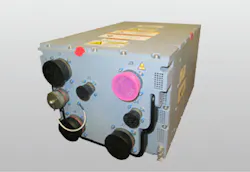
The DTP-N B kit from L3Harris Technologies is for U.S. Navy F/A-18E/F Super Hornet and EA-18G Growler aircraft, and is designed to enhance networked targeting capabilities by processing data from onboard and external sources in real time.
High-performance embedded computing
The kit serves as a high-performance computer that enables secure data sharing via tactical targeting networking technology through Multifunctional Information Distribution System Joint Tactical Radio System (MIDS-JTRS) interfaces.
It supports multi-level security, open-systems standards, streaming video, imagery, and time-critical intelligence for attacking enemy surface ships, and other surface targets. It serves as a weapon replaceable assembly (WRA). The order includes cyber security, travel, and obsolescence mitigation for in combat aircraft modifications.
The DTP-N B kit includes general-purpose processors, Ethernet switches, network interface cards, and power supplies in an eight-slot 6U VPX chassis. It complies MIL-STD-704E/461F/810 standards to resist the effects of shock, vibration, and other environmental extremes.
Signal processing power
The kit measures 9.3 inches wide by 14 inches long by 7.6 inches high, and weighs 41 pounds. It dissipates 340 Watts of power, and offers computer processing power of 919 billion floating point operations per second. It offers 10GBase-SR fiber ports and several copper Ethernet interfaces, and offers a mean time between failures of 1,405 hours.
The kit is intended to reduce pilot workload by providing actionable information on the system's large-area display. It provides a gateway from existing F/A-18E/F and EA-18G avionics to external RF tactical networks, which can increase bandwidth to collect and share time-critical information using streaming video and still imagery.
On this order, Boeing and L3Harris will do the work in Melbourne, Fla., and St. Louis, and is should be finished by March 2027. For more information contact Boeing Defense, Space & Security online at www.boeing.com/defense/fighters-and-bombers/fa-18-super-hornet-and-ea-18-growler, L3Harris at www.l3harris.com/all-capabilities/distributed-targeting-processor-networked-dtp-n, or Naval Air Systems Command at www.navair.navy.mil.
