Boeing to tackle electronics obsolescence in upgrades to C-17A cargo jet cockpit avionics upgrade
Key Highlights
Questions and answers:
- What is the main purpose of the C-17A Flight Deck Replacement program? It aims to replace obsolete cockpit avionics with modern, commercially based systems to keep the C-17A Globemaster III aircraft operational into the 2030s and beyond.
- How much is the contract worth and which four components are being replaced? Boeing received a $266.6 million contract to replace four critical line-replaceable units in the flight deck: multifunction displays, core integrated processors, video integrated processor, and standby engine display.
- What are the cargo capabilities of the C-17A Globemaster III? The C-17A can carry approximately 170,900 pounds of cargo, which includes the ability to transport an M1 Abrams tank, other armored vehicles, or numerous cargo pallets and personnel.
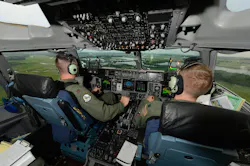
ROBINS AIR FORCE BASE, Ga. – U.S. Air Force cargo aircraft experts are looking to the Boeing Co. to replace the cockpit avionics in the C-17A Globemaster III large, four-engine, military transport to help support the aircraft into the 2030s and beyond.
Officials of the Mobility Directorate of the Air Force Life Cycle Management Center (AFLCMC) at Robins Air Force Base, Ga., announced a $266.6 million contract in late December to the Boeing Global Services segment in Long Beach, Calif., for the C-17A Flight Deck Replacement program.
This project seeks to replace several obsolete cockpit line-replaceable units (LRUs) on the C-17A with open-architecture commercially based avionics to ensure these planes will remain supportable into the 2030s and beyond.
The contracts includes material, kit installation labor, non-recurring engineering design, manufacturing, systems integration test and evaluation, product support, data, and interim contractor support.
Avionics obsolescence
Driving the C-17A Flight Deck Replacement program are avionics obsolescence and anticipated exhaustion of spares for key cockpit components that threaten to keep some of these aircraft grounded later this decade.
The program aims to redesign the C-17A flight deck around modern supportable hardware and software while maintaining or improving existing capability and certifications.
The effort focuses on replacing four critical LRUs in the flight deck: multifunction displays; core integrated processors; video integrated processor; and standby engine display to ease future technology upgrades without another major cockpit redesign.
Communications upgrades
This flight deck replacement is part of a broader package of C-17 avionics and communications upgrades that involve satellite communications (SATCOM) and beyond-line-of-sight connectivity.
These efforts are to keep the C-17 viable as the primary U.S. strategic jet airlifter until an anticipated new cargo jet enters service around the mid-2040s.
The C-17A is for strategic and tactical airlift of troops, vehicles, cargo, airdrop, and medical evacuation. It is a high-wing jet designed to carry heavy and outsized loads over intercontinental distances and then land on relatively short austere airstrips.
Can carry an Abrams tank
It combines long-range capability with short-field performance to deliver cargo and troops to forward-operating bases. It can carry about 170,900 pounds of cargo -- including an M1 Abrams tank, other armored vehicles, or many cargo pallets and personnel.
On this contract, Boeing will do the work in Long Beach, Calif.; Robins Air Force Base, Ga.; Oklahoma City; Fort Walton Beach, Fla.; San Antonio; and Mesa, Ariz., and should be finished by November 2031.
For more information contact Boeing Global Services online at https://services.boeing.com/, or the Air Force Life Cycle Management Center at www.aflcmc.af.mil.
