Artificial intelligence drives military rugged computing
Key Highlights
Summary points:
- AI takes command in rugged defense computing: Artificial intelligence is now the driving force behind next-generation military systems, pushing rugged computers to new levels of power, speed, and adaptability.
- Open standards pave the way forward: Emerging frameworks like VNX+ (VITA 90) and VITA 100 promise enhanced performance, interoperability, and scalability for tomorrow’s high-performance embedded computing.
- From commercial tech to combat-ready gear: The Pentagon’s streamlined acquisition strategy encourages rapid adaptation of proven commercial AI and computing technologies for rugged, field-deployable military platforms.
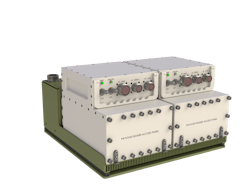
Rugged computers for aerospace and defense applications are more crucial today than they've ever been -- driven by innovations in multi-mission applications, nimble uses of commercially developed enabling technologies, and most important today, the growing uses of artificial intelligence (AI) in military and aerospace systems.
Besides AI and machine learning, today's military rugged computing is benefitting from innovations in packaging and ruggedization, continuing and expanding use of open-systems standards, and a recent drive in the U.S. Department of Defense to peel away layers of bureaucracy in Pentagon acquisition. Moreover, rugged computing is helping military systems designers optimize for several different applications at once, rather than focus on one application at a time.
Just last November the Office of the Under Secretary of War for Acquisition and Sustainment issued a report titled Acquisition Transformation Strategy, which seeks to reduce regulations and processes, chiefly by eliminating the Joint Capabilities Integration and Development System (JCIDS).
The report urges the U.S. military to use AI to reduce administrative burdens and deliver weapons quickly; modernize test infrastructure; reduce test oversight; accelerate cost-effective delivery of software and hardware; reduce redundant and excess studies and analyses the can delay projects; slash rules down to only what is absolutely vital.
The message to industry: harvest the best and most advanced technologies from commercial industry, package it ruggedly enough for military applications without a lot of gold-plating, and put capability into the hands of the warfighter as quickly as possible.
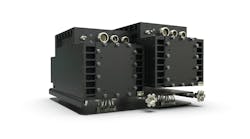
"This could open the flood gate to technology for the battlefield in ways we haven't looked at before," says Chris Ciufo, president of General Micro Systems (GMS) Inc. in Rancho Cucamonga, Calif. You have to take a look at what Ukraine has done and their nimbleness with technology. This memo is a tacit signal that we should look at some of those technologies," Ciufo says. Choose technologies and them onto the battlefield as quickly as possible."
This may be just what many in the rugged computing industry have been waiting for. "It would be nice if we got more guidance from the top levels on how bullish or bearish they intend to be," says Chris Faedely, chief technology officer at EIZO Rugged Solutions Inc. in Orlando, Fla. "If we don't compromise on the technology, we will fall behind because of arbitrary paperwork."
Rugged packaging
Much of the challenge of rugged military computing involves packaging commercially available processing technology such that it's rugged enough for the rigors of combat. "With high-performance CPUs and GPUs, you can collect the processing power you need," says Mark Littlefield, director of system products at Elma Electronic Inc. in Fremont, Calif. "the more-mundane things like heat and power are the problems. There's more going into dealing with heat and power tan going into the processing. For a lot of military applications, we have all the processing power we need."
Still, ruggedizing commercially developed technology so it stays within size, weight, and power-consumption (SWaP) requirements can be easier said than done. "You have to have enabling technologies to make things rugged," says GMS's Ciufo. You have to be able to seal these systems from moisture and dust, and build an enclosure to handle the heat. Commercial electronics often is not designed to work over a wide temperature range, and it has to be made to work over wide temperatures."
The automotive industry on one area from which aerospace and defense systems designers could borrow ruggedized technologies. Automotive systems must be able to handle shock, vibration, and temperature extremes, and can require less ruggedization to transform these technologies for defense use.
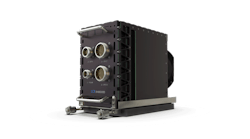
"They are taking that automotive technology and putting it in a rugged form factor like VPX for the military market," says Bill Pilaud, chief solution architect for LCR Embedded Systems Inc. in Audubon, Pa. "Look at these new things out there; it's using COTS systems that are already there, ruggedizing, and deploying them. We have been doing that for 40 years. We take these automotive components, test to the right mil-standards, jake them compatible to the platform for military applications. The trick is making it easier for the military to rapidly deploy it."
The payoff is what an integrated system taken from automotive or commercial technologies can offer. "If you put enough of these parts together, you have disruptive technology for AI and C4ISR together," Pilaud says. That's the difference: all the commercial software technology and software that they leverage, ruggedize it, and deploy it as a SWaP-optimized solution for the field."
Artificial intelligence
Perhaps the most influential application driving rugged computing technology development today is artificial intelligence. "Take the sensor-fusion aspect of it," says EIZO's Faedely. You have the video and RF guys who are bringing that together are looking at an AI software solution."
Other potential military AI applications that rely on rugged computers include autonomous vehicles, robotics, generative AI that control different sensors. "Robotics is moving quickly, and AI is the only solution in that space," Faedely says. "It will be an AI application to see if we can apply AI to radar. You could have a true autonomous brain."
EIZO specializes in packaging general-purpose graphics processing units (GPGPUs) such as the Jetson Orin from 2022 to 2024, and Jetson Thor GPGPUs from 2025, made by NVIDIA Corp. in Santa Clara, Calif. The NVIDIA Jetson GPGPUs for the past several years have been the core of many military AI applications.
"We are excited about the NVIDIA Thor, and it is absolutely on our roadmap," says GMS's Ciufo. "Thor is a highly modular GPU-type of module with all manner of I/O on it, and we have seen commercial companies use the THOR module to be the entire brain of a system. Ciufo says GMS and other embedded companies have been using the previous-generation NVIDIA Jetson Orin for the past couple of years.
"We have customers putting those in manpacks, adding an antenna, and it adds adaptive situational awareness and predictions of where threats come from, and making recommendations of how to deal with those threats," Ciufo says, explaining that Thor represents about 10 times the processing power of the Jetson Orin. "This will give amazing possibilities on the battlefield," Ciufo says.
To put it perspective, Ciufo says previous generations of NVIDIA Jetson GPGPUs could serve as the brains of self-driving cars. "The Jetson Orin previously could drive three different displays, and THOR can drive four different displays, so it has more output. "In math crunching -- tera operations per second (TOPS) -- Orin could do 300 TOPS, and yet Thor can do over 2,000 TOPS."
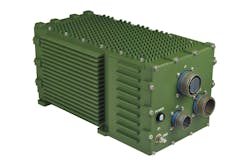
That kind of AI processing power means that high-resolution cameras not only in land vehicles, but also in surveillance, reconnaissance, and targeting applications could discern objects better than in previous generations, and has the horsepower to process increasing amounts of data.
Such AI processing power also has the ability to enable multi-mission military systems, such as RF communications radios that could double as electronic warfare (EW), or even radar systems. "You have antennas collecting signals, and those signals are being converted to digital information," Ciufo says. "The more data you can collect, the faster you can process in real time, and the faster you get the answer you're looking for. You could make decisions based on those signals quickly, and triangulate them to the sources of the signal. An EW receiver with the proper antenna could take all that RF information, and identify if the signal is from a transmitter, microwave oven, cellular device, walkie talkie, or is a Chinese or American waveform."
The Nature of AI, enabled by rugged computers, also is evolving. NVIDIA is now building specialized chips that are inference engines, and can run those compiled token systems to provide self-driving, and provide the human with the ability to interact with the system," says LCR's Pilaud.
Self-driving cars in the automotive industry, as well as intelligent land vehicles, ships, submarines, and aircraft in the military, stand to benefit from that most. "Automotive is a 4.3 trillion dollar market," Pilaud says. "They are trying to electrify the fleet, and with that to provide either driving assistance or full autonomous driving. To do that they have to do sensor integration -- a vision sensor like CCD camera, lidar, or radar -- take that information and then process it and make the car self-driving. Using AI and inference engines are the way to do that.
The same capability could be applied also to military command, control, communications, computers, cyber, intelligence, surveillance, and reconnaissance (C5ISR), he points out. "Using AI and inference engines is 90 percent of what a C5ISR system is," Pilaud says. "The automotive industry and military market are overlapping; automotive still needs all that sensor integration, and they also need safety critical capability.
Open-systems standards
Military rugged computing is at a crossroads where open systems standards and their benefits are concerned. Established standards like OpenVPX have established how standard computer hardware can lend itself to scalability, interoperability, and developing ecosystems of suppliers, yet several new standards are on the horizon to move rugged computers to the next level.
"We are at a turning point now where Open VPX has been a workhorse since it started in about 2010," says Elma's Littlefield It will continue to be a workhorse, but we are seeing a pivot evolving. One of those pivots is the small-form-factor VNX+ standard, and it will be this year is when you really will see that blossom."
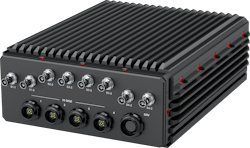
VNX+ is designed for rugged, high-reliability rugged embedded computing in military, aerospace, and defense applications. Also known as VITA 90, it targets severely SWaP-constrained applications like uncrewed vehicles, aircraft pods, and CubeSats. Its modules are roughly one-third the size of a 3U VPX card, and supports power dissipation to 95 Watts, improved signal integrity for high-speed data, and high-speed connectivity.
VNX+ is suited high-performance sensor processing in ground vehicles, uncrewed aircraft, wearable command-and-control nodes, and smart munitions, and enables advanced processors in compact setups for situational awareness, EW, signals intelligence (SIGINT) and autonomous systems.
Also on the horizon is VITA 100 -- a next-generation embedded computing standard developed by the VITA open-standards, open-markets trade group as an evolution from OpenVPX and VPX for military and aerospace systems. It addresses demands for higher processing power, data bandwidth, and power in applications like radar, EW, and SIGINT.
VITA 100 doubles pin density with TE Connectivity MULTIGIG HD 2 connectors that enable speeds to 100 gigabits per second, with paths to 400-Gigabit Ethernet, and PCI Express Gen 6. It boosts power capacity beyond 500 Watts and introduces a new 4U form factor circuit card, alongside 3U and 6U, for scalable, modular designs.
"At the high end is where VITA 100 will play a big role," Littlefield says. "We have reached the limit of growth with 3U VPX. OpenVPX still will be the core of our market, and the higher end that will gravitate to VITA 100. The First VITA 100 switch will be among the first products of VITA 100, Littlefield predicts.
"We are ahead of the curve for VITA 100 in rugged trends this year," says Valerie Andrew, senior strategic marketing manager at Elma. "VNX+ this year will see more introduction of products, and we have design and development platforms to test boards on and do early system development and validation."
