Lockheed Martin to handle logistics and mission planning software for F-35 jet fighter-bomber
Key Highlights
Questions and answers:
- What is the purpose of the $47.6 million order to Lockheed Martin? To develop, install, integrate, and support logistics and mission-planning computer hardware for the F-35, including the transition from ALIS to ODIN.
- How does ODIN improve on the older ALIS system? ODIN is faster, cloud-enabled, more secure, smaller, easier to deploy, and reduces workload for F-35 personnel while enabling rapid software updates.
- When and where will Lockheed Martin complete work on this ODIN project? Work will be done in Orlando, Fla., and Fort Worth, Texas, and is expected to finish by December 2026.
PATUXENT RIVER NAS, Md. – U.S. Navy combat aircraft experts are looking to Lockheed Martin Corp. for logistics and mission-planning computer hardware for the F-35 Lightning II joint strike fighter under terms of a $47.6 million order announced earlier this month.
Officials of the Naval Air Systems Command at Patuxent River Naval Air Station, Md., are asking the Lockheed Martin Aeronautics segment in Fort Worth, Texas, for continued development, installation, integration, testing, training, and delivery of F-35 Autonomic Logistics Information System (ALIS) and Operational Data Integrated Network (ODIN), to include new capability development and current software modifications.
The order also continues support for the ALIS-to-ODIN re-architecture to modernize ALIS -- the original digital backbone for sustainment and logistics for the F-35 joint strike fighter. ALIS is slow and has cyber security vulnerabilities.
Replacing ALIS is the Operational Data Integrated Network (ODIN), a cloud-enabled lighter and faster system to improve reliability; reduce hardware requirements; speed up data processing; and enhance cyber security.
Cloud-native logistics
ODIN is a cloud-native computer logistics sustainment system with an integrated data environment and user applications that improve F-35 sustainment and readiness, and is to supersede ALIS.
F-35 pilots, maintainers, and support personnel have been using ALIS to track and order spare parts, conduct repairs, support mission planning and training, and store technical data. Still, ALIS was designed with the jet in the early 2000s, and some of its technology has become outdated; today it creates a system that is slow and difficult to use.
ODIN is being designed to decrease F-35 administrator and maintainer workload, increase mission capability all F-35 variants, and enable engineers to develop and deploy software updates rapidly.
ODIN will combine Lockheed Martin computer and networking hardware with software coded by the government to enable military experts to retain control over the system.
Smaller and faster
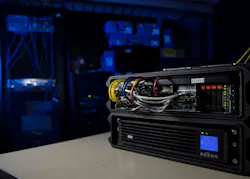
The new ODIN hardware is much smaller than the servers and the computers that support ALIS. Existing ALIS servers can weigh more than 800 pounds require a six-foot rack of electronics and backup power modules, which makes it difficult to deploy ALIS in austere environments near the front lines.
ODIN hardware, on the other hand, has two transportable cases about the size of two pieces of carry-on luggage that collectively weigh about 140 pounds. ALIS software also runs about twice as fast on the ODIN computers than it did on the old hardware.
The F-35 is the first tactical aircraft with sustainment tools designed together with the aircraft to help control the costs of maintaining a fleet of 5th generation jet fighters.
On this order Lockheed Martin will do the work in Orlando, Fla., and Fort Worth, Texas, and should be finished by December 2026. For more information contact Lockheed Martin Aeronautics online at www.lockheedmartin.com/en-us/who-we-are/business-areas/aeronautics.html, or Naval Air Systems Command at www.navair.navy.mil.
