Ethernet Connectivity Across Complex Mission Applications
Key Highlights
- Modern defense systems use Ethernet to connect processors, storage, radios, and sensors across rugged VPX platforms.
- Applications increasingly rely on link speeds ranging from 1GbE to 100GbE to support real-time data processing.
- Ethernet switches aggregate traffic from chassis modules and connect the internal network to external devices.
- Reliable designs must preserve signal integrity, interoperability, and rugged performance from the backplane to the platform edge.
As defense and aerospace platforms continue to evolve toward data-centric operations, Ethernet has become the backbone of embedded communications. Today's mission systems must move significantly more data between sensors, processors, storage, and communications equipment, while maintaining reliability in the harshest operating environments. Engineers need to not only think about how Ethernet is incorporated into a rugged embedded system, but also how those high-speed connections extend beyond the chassis.
A recent webinar co-hosted with our partner, Interface Concept, explores the challenges and practical solutions for implementing rugged Ethernet connectivity and highlights that successful networking isn't simply about adding faster interfaces. It’s imperative to design an integrated architecture that maintains signal integrity, interoperability, and rugged reliability from the backplane to the platform edge.
Ethernet Within the Modern System
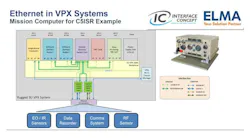
Today’s C5ISR, electronic warfare(EW), radar, and sensor fusion applications demand higher bandwidths to support increasingly sophisticated processing and real-time decision making. Ethernet has been steadily replacing legacy technologies, including sFPDP, Serial RapidIO, and AFDX, across military platforms. In fact, it now serves as the primary internal fabric connecting processors, storage, radios, and sensors throughout rugged VPX systems. (Figure 1)
combination of 1GbE, 10GbE,25GbE, 40GbE, and even 100GbE links are commonly found in these modern systems.The need to transition from the internal sub-system to external interfaces canpresent challenges, due to some inherent technical complexities.
The Role of Ethernet Switching
Extending Ethernet connectivitybeyond a rugged embedded system requires more than routing VPX backplanesignals to an external connector. While the backplane provides high-speedcommunication within the chassis, Ethernet switches act as the transition pointbetween the internal network fabric and external devices. This enables a systemto aggregate traffic from multiple processing and I/O modules, withstandards-based Ethernet interfaces implemented at the chassis edge.
Keep reading at Elma Electronic, Inc.