How Space Robots Survive Extreme Heat, Radiation, and Terrain
Key Highlights
- Space robots must endure extreme temperatures, radiation, and mechanical stresses to operate effectively in harsh environments.
- Refractory metals like tungsten and tantalum provide high melting points and strength for structural components exposed to intense heat and stress.
- Ceramic materials, especially ultra-high temperature ceramics, offer resistance to radiation, corrosion, and micrometeoroid impacts, making them ideal for protective coatings and structural parts.
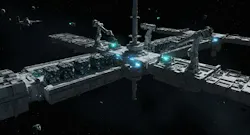
From satellites that keep communications running to rovers that explore distant planets, robots play an integral role in understanding and interacting with space. But withstanding the rigors of space is no small feat. Robots must endure harsh conditions, such as extreme temperatures, intense radiation, and unpredictable terrain. To do so, they rely on cutting-edge materials and technologies designed to protect and maintain their functionality in the most unforgiving environments.
The Hostile Environments of Space and Planetary Surfaces
Space robots are subjected to harsh conditions, whether they are exploring planetary surfaces or traveling through the vastness of space.
Planetary Hazards
On planetary surfaces, like that of Mars, space robots face environmental stressors, including dust storms that can obscure sensors and damage moving parts, jagged terrain, and the constant threat of mechanical damage from rocks and debris. Additionally, solar flares can strike without warning, exposing sensitive electronics to bursts of radiation. While conditions on planetary surfaces are severe, they pale in comparison to the extremes encountered in space.
Space-Based Extremes
Satellites and robotic spacecraft orbiting Earth or traveling deeper into space must contend with harsh temperatures and extreme temperature fluctuations. For example, the International Space Station (ISS) can undergo 16 thermal changes in a 24-hour period while orbiting the Earth. During orbit, the external temperature of the ISS can range from more than 100°C in direct sunlight to -100°C in the shadow of Earth.[1] Experiencing temperature fluctuations causes materials to expand and contract repeatedly, which threatens structural integrity. For large structures like the ISS, managing volume changes over a widespread area is easier. However, for smaller robotic systems, such changes can be difficult to manage, which is why advanced thermal solutions are one of the most important defenses for space robots.
Radiation is another major concern. Space robots are bombarded by atomic oxygen, ultraviolet (UV) rays, high-energy protons and electrons, and cosmic rays. Satellites—especially those in the Van Allen radiation belts—are particularly vulnerable to solar activity. Sudden solar flares can dramatically spike radiation levels, posing a threat to onboard electronics and sensors.
Mechanical stress is also a constant threat to satellites and other robotic spacecraft. Space debris, micrometeorites, launch vibrations, and acoustic pressures can all damage robotic systems. To survive, these robots must be constructed with materials that are resilient at a structural and material level to withstand the extreme mechanical stress of space.
Advanced Material Protection for Space Robotics
To withstand the harsh conditions of space, robots are constructed using advanced materials that offer exceptional durability, thermal resistance, and radiation shielding. While no solution is 100 percent effective, these materials provide an effective structural barrier that enables many space robots to function for long time periods in space.
Refractory Metals: Built for Extreme Heat
Refractory metals are metal alloys with extremely high melting points and exceptional strength. Constructed using tungsten, titanium, tantalum, niobium, and nickel, these alloys boast melting points above 3400°C and Vickers hardness ratings up to 4000MPa. Refractory metals’ resistance to corrosion and mechanical stress makes them ideal for structural components, actuators, gears, and even propulsion systems.
Depending on the space application, the weight of refractory metals can be an issue. In these cases, engineers can combine refractory metals with carbon fiber to create lighter composites. Additionally, recent advances in additive manufacturing have enabled designers to fabricate complex, optimized geometries from these metals, improving both the tailoring to the intended structural function and weight efficiency.
Ceramic Materials: The Silent Protectors
Ceramic materials, particularly ultra-high temperature ceramics (UHTCs), are a cornerstone of space robot design. Composed of carbides, nitrides, and borides of transition metals like hafnium and zirconium, UHTCs offer very high hardness, excellent mechanical properties, and a low friction coefficient. UHTCs can resist UV and high-energy particle radiation, extreme temperatures, corrosion, ablation, and even micrometeoroid impacts, making them indispensable for long-term missions.
Ceramic materials can be used to create robotic components, particularly when employed in structural or load-bearing elements, or as a coating to enhance barrier properties. Ceramics are often found in space robots’ arms, bearings, gears, and heat shields.
>>Click to read the entire article at Mouser
Sources
[1] https://pmc.ncbi.nlm.nih.gov/articles/PMC2691437/
[2] https://ntrs.nasa.gov/api/citations/19990047691/downloads/19990047691.pdf
[3] https://smartir.co.uk/
About the Author
Liam Critchley is a writer, journalist and communicator who specializes in chemistry and nanotechnology and how fundamental principles at the molecular level can be applied to many different application areas. Liam is perhaps best known for his informative approach and explaining complex scientific topics to both scientists and non-scientists. Liam has over 350 articles published across various scientific areas and industries that crossover with both chemistry and nanotechnology.
Liam is Senior Science Communications Officer at the Nanotechnology Industries Association (NIA) in Europe and has spent the past few years writing for companies, associations and media websites around the globe. Before becoming a writer, Liam completed master’s degrees in chemistry with nanotechnology and chemical engineering.
Aside from writing, Liam is also an advisory board member for the National Graphene Association (NGA) in the U.S., the global organization Nanotechnology World Network (NWN), and a Board of Trustees member for GlamSci–A UK-based science Charity. Liam is also a member of the British Society for Nanomedicine (BSNM) and the International Association of Advanced Materials (IAAM), as well as a peer-reviewer for multiple academic journals.