
SDR Integration Handbook for the ICX-FieldHawk RTSA
ABSTRACT
Software-defined radio gives an engineer every sample and no absolute reference; an instrument gives an absolute reference and, usually, no way in. This handbook is about the boundary between them: what a softwaredefined
receiver is, what real-time analysis guarantees that a swept receiver cannot, the SoapySDR abstraction layer documented in enough detail to work from, the ICX-FieldHawk reviewed against seven requirements derived before it is named, and six GNU Radio signal chains against a calibrated front end, with the practice and quick reference an engineer needs on the bench.
WHO THIS PAPER IS FOR
RF and systems engineers building measurement or monitoring systems on open software; researchers and teaching staff who need a result that survives peer review; product architects deciding how much of a receiver to build; test engineers who want the samples underneath an analyzer they already own.
How to use this handbook
This is a reference document, entered at the section that answers the question in hand rather than read from front to back, so it is arranged in five parts that can be enteredseparately, and the sections that matter to each kind of reader are named here.
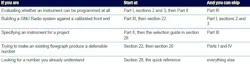
Table 1 is the router. Find the row that matches why you opened this document, and start where it tells you to.
Conventions used throughout
Every figure in this handbook carries a tag saying what kind of evidence it is. Measured is a screenshot of a real instrument or a real host application showing real data. Derived is a chart computed from the relations in this
document, with no measurement behind it. Schematic is a drawing made to explain something, and carries no data claim. Illustration, used on the cover, is a scene that sets a context and is never evidence. The tags are printed so that a reader checking a claim can weight each figure accordingly.
Click here to learn more.