Radiation-hardened electronics evolve for the LEO era
NASHUA, N.H. - The rapid expansion of low-Earth orbit (LEO) constellations, proliferated sensing networks, and artificial intelligence (AI)-enabled defense systems is reshaping the radiation-hardened electronics market from the component level to the architecture level, according to industry experts.
Where traditional space electronics once emphasized maximum survivability for long-duration geosynchronous orbit (GEO) and deep-space missions, today’s programs increasingly demand a different balance: higher processing throughput, smaller size, weight, power, and cost (SWaP-C), and faster deployment cycles, often in shorter-duration missions where scalability and upgradeability matter as much as absolute radiation tolerance.
The result is a broad industry shift away from reliance on fully radiation-hardened devices toward hybrid approaches that combine radiation-hardened, radiation-tolerant, and commercial-off-the-shelf (COTS) technologies with system-level mitigation techniques.
"One of the most significant shifts we’re seeing is that radiation-hardened and radiation-tolerant electronics are no longer just about survivability; they are becoming central to mission performance, scalability, and system architecture," says David Meyouhas, president of Microelectronics & Mission Processing at Frontgrade Technologies in Colorado Springs, Colo.
LEO proliferation
That architectural evolution is being accelerated by the rise of proliferated LEO constellations, where spacecraft are typically smaller, less expensive, and designed for shorter operational lifetimes than traditional GEO platforms. These missions are creating demand for electronics that can deliver higher performance at lower cost while tolerating radiation exposure levels appropriate to mission duration and orbital regime.
Jeremy Ferrell, director of engineering at VPT in Blacksburg, Va., says the company is seeing "a drastic increase in the low Earth orbit missions."
Compared to traditional GEO spacecraft, many of these satellites operate with lower overall power requirements and simplified architectures centered on standardized 28-volt power buses.
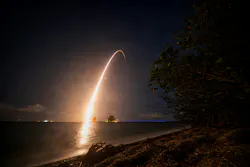
"The most significant mission-level shift is the rise of constellations and shorter-duration missions," Ferrell says. "This is resulting in hardware moving away from fully rad-hard components toward COTS products and rad-tolerant components to minimize costs."
Eye on ISR
At the same time, the growing importance of onboard processing for intelligence, surveillance, and reconnaissance (ISR), missile warning, electronic warfare, and autonomous operations is increasing pressure on space-qualified electronics suppliers to deliver dramatically more compute capability at the edge.
"Historically, radiation-hardened electronics were designed to operate reliably under radiation constraints, often at the expense of performance," Frontgrade's Meyouhas says. "Today, missions—particularly in proliferated LEO constellations, missile warning, and ISR—require high-throughput processing, real-time decision-making, and edge analytics, all within radiation environments."
That shift is changing not only the types of processors being deployed, but also the broader system architectures surrounding them. Rather than relying solely on centralized processing, designers increasingly are adopting distributed and scalable compute architectures that move processing closer to sensors and communications systems.
Industry experts say the challenge is no longer simply protecting individual components from radiation effects, but instead managing data movement, power consumption, thermal constraints, interoperability, and fault tolerance across highly distributed systems.
"As onboard processing requirements increase, particularly for AI/ML workloads, the bottlenecks are shifting from individual components to system-level constraints," Meyouhas explains. "The key takeaway is that scaling onboard processing is not just a compute problem; it is an architecture, integration, and scalability challenge across the entire data path."
Scaling in space
That system-level perspective is increasingly influencing how manufacturers position their product portfolios. Rather than offering standalone radiation-hardened components, suppliers are building scalable ecosystems that span radiation-tolerant and fully radiation-hardened devices, often using common software environments, footprints, and development tools.
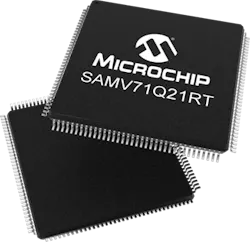
According to Bill Dillard, senior business development manager in Microchip Technology's aerospace and defense business unit in Chandler, Ariz., one of the industry’s defining trends is the movement toward scalable product families and hybrid architectures that combine radiation-hardened modules with radiation-tolerant and upgraded commercial technologies.
"Space and defense systems increasingly use radiation-tolerant/COTS-plus designs instead of classic, fully hardened parts to cut cost and time-to-market, especially for Low Earth Orbit (LEO) and commercial satellite missions," Dillard says. "Blended strategies—combining rad-hard modules with RT, upgraded commercial components, and redundancy—are becoming mainstream."
Dillard says the growing use of hybrid architectures is fundamentally changing how engineers think about onboard processing. Rather than selecting a single dominant processing technology, designers increasingly are combining microcontrollers, field-programmable gate arrays (FPGAs), graphics processing units (GPUs), and specialized accelerators based on mission requirements.
"The question isn’t performance level so much as functionality against a mission profile," Dillard explains. "FPGAs excel where parallel digital processing is required. This can be done with multiple soft-core instantiations or bare metal routing in the fabric. The driving need is performing multiple functions within a constrained Worst Case Execution Time (WCET)."
At the same time, microcontrollers continue to offer important advantages in mixed-signal environments where embedded analog peripherals can operate in parallel with code execution. According to Dillard, the transition point between microcontroller-based architectures and FPGA-centric systems depends heavily on whether the required parallelism is primarily digital or mixed-signal in nature.
AI/ML processing needs
Artificial intelligence and machine learning workloads are further complicating those tradeoffs. While AI processing often is associated with large-scale compute resources, experts say many emerging defense and space workloads can operate effectively within existing radiation-hardened processing environments.
"Rather, it is the consequences of rad-hard design compared to commercial/automotive variants, such as lower MIPS, that constrain the data throughput and the bandwidth of the workload," Microchip's Dillard says. "Also, be aware that many viable workloads are low bandwidth (e.g., comparing slowly changing image frames) and fully compatible with existing RH MCUs."
For larger AI inference models and dense image-processing applications, however, GPUs are increasingly being deployed in LEO systems despite their limited radiation pedigree compared to traditional rad-hard devices.
"GPUs are being adapted through system-level containment and protection rather than component hardening," Dillard says. "The focus is on GPU recoverability rather than imperviousness."
Reducing cost and increasing redundancy
That philosophy reflects a broader trend across the industry. Rather than attempting to harden every component to the highest possible radiation standards, many system designers are now relying on redundancy, fault management, recoverability, and modular architectures to maintain mission assurance while reducing cost and accelerating deployment schedules.
"Compared to just 10 years ago, satellites can now be launched quickly and at a reasonable cost to replace or upgrade existing satellites, thus reducing the traditional reliability requirements," VPT's Ferrell says.

As a result, suppliers are increasingly developing product families that can scale across commercial, radiation-tolerant, and fully radiation-hardened mission sets while maintaining common development environments and system architectures.
Dillard points to Microchip’s SAMV71 family as one example of that approach, with product variants spanning industrial, radiation-tolerant, and radiation-hardened requirements while maintaining common pinouts and software environments. The company’s PolarFire FPGA family and PIC64-HPSC High-Performance Spaceflight Computing microprocessor units are similarly aimed at balancing scalability, processing capability, and mission assurance.
At Frontgrade, Meyouhas says the company is increasingly focused on scalable mission architectures rather than individual radiation-hardened components.
"The conversation is moving upstream from components to systems," Meyouhas says. "Customers are increasingly focused on how sensing, processing, communications, and control layers work together."
A systems-level emphasis
That systems-level emphasis is driving interest in modular processing architectures, software-defined radios, reconfigurable systems, and distributed compute frameworks that support missions across multiple operational domains.
"As a result, value is moving upstream," Meyouhas says. "Greater value comes from system-level expertise, integration, and defining how electronics work together in a radiation environment. In short, the competitive advantage is shifting from parts to architecture. The companies that can engage earlier at the architecture level and help shape how sensing, processing, communications, and control work together, leveraging scalable solutions like modular mission processing architectures and integrated RF/microwave systems, are the ones that can have the greatest impact."
The growing complexity of those architectures is creating new challenges in power management and thermal control, particularly as spacecraft designers attempt to integrate increasingly sophisticated AI and edge-processing capabilities into smaller satellite platforms.
"AI/ML workloads require significant compute resources, which translate into power consumption and heat generation," Meyouhas says. "In space and other constrained environments, power availability and thermal management become primary limiting factors."
SWaP-C constraints
Those constraints are especially pronounced in proliferated LEO constellations, where satellites are often designed around aggressive SWaP-C constraints and compressed deployment schedules. Smaller spacecraft leave less room for thermal dissipation hardware, while higher onboard processing loads place greater stress on power conversion and distribution systems.
Ferrell says those changing mission requirements are influencing power-system design throughout the industry.
"Most of the satellites are smaller and overall, much less power in the LEO market versus the traditional GEO market," VPT's Ferrell says. "Predominantly, the customers are only interested in a 28V bus."
Modular approaches
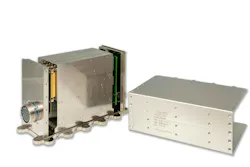
To address those demands, suppliers increasingly are developing modular power-conversion products optimized for emerging New Space architectures. Ferrell points to VPT’s VSC Series of commercial-off-the-shelf direct-current-to-direct-current converters, developed specifically for smaller satellites and NASA Class D missions where programs face tight schedules and budget pressures.
"What makes the VSC Series notable is that it represents one of the first rad-tolerant COTS solutions purpose-built and designed for this segment of the space industry," Ferrell says.
At the higher-performance end of the market, suppliers are investing heavily in gallium nitride (GaN)-based power technologies to improve efficiency while reducing thermal burdens. Ferrell says VPT’s SGRB Series combines GaN-based power conversion with integrated electromagnetic interference filtering, achieving efficiencies of 96%.
Emerging semiconductor materials are also reshaping how engineers approach radiation resilience and high-performance operation. According to Dillard, fully depleted silicon-on-insulator (FD-SOI), silicon germanium (SiGe), and GaN technologies each offer different advantages depending on mission requirements.
"FD-SOI is a legacy technology with strong radiation performance and comparatively low leakage current," Dillard says. "We see the upside for GaN and SiGe in radiation resilient RF devices operating well above silicon’s physical limits."
Compute needs
Advanced packaging technologies likewise are becoming increasingly important as designers seek greater compute density and functionality within constrained spacecraft volumes. Meyouhas says heterogeneous integration approaches such as chiplets and three-dimensional packaging are helping enable higher-performance systems while introducing new radiation, thermal, and reliability challenges.
"Heterogeneous integration, including chiplets and 3D packaging, is enabling higher performance and density," Meyouhas says. "The challenge is ensuring these approaches can operate reliably in radiation environments while managing thermal and power constraints."
The increasing emphasis on scalability and adaptability is also driving broader adoption of software-defined and reconfigurable architectures. Rather than building highly specialized systems optimized for a single mission profile, defense and aerospace customers increasingly want platforms that can evolve over time through software updates, waveform modifications, and modular hardware expansion.
"Flexibility is becoming critical," Meyouhas says. "Systems that can adapt to changing mission requirements or environmental conditions, through reconfigurable hardware and software-defined capabilities, will define the next generation of rad-hard systems."
That flexibility is becoming particularly important as military and intelligence systems become more interconnected across space, air, land, sea, and cyber domains. According to Meyouhas, space platforms are increasingly expected to function as part of larger operational networks rather than isolated assets.
"Space systems are no longer isolated; they are integrated with air, land, sea, and cyber domains," Meyouhas says.
As a result, electronics suppliers are increasingly positioning themselves not simply as component vendors but as providers of integrated mission architectures spanning sensing, processing, communications, control, and actuation.
At Frontgrade, that approach includes modular mission-processing architectures, radiation-tolerant FPGA technologies, software-defined radios, secure radio-frequency and microwave subsystems, and scalable processing frameworks designed to support multiple mission classes and operational domains.
"What differentiates this approach is integration and scalability," Meyouhas says. "Customers are increasingly looking for ways to reduce risk, accelerate deployment, and scale across programs."
Ultimately, industry experts say the evolution of radiation-hardened and radiation-tolerant electronics reflects a broader transformation occurring throughout the defense and aerospace sectors. The market increasingly is prioritizing scalable architectures, rapid deployment, distributed intelligence, and adaptable mission systems over the traditional paradigm of maximizing survivability at any cost.
In many respects, the definition of mission assurance itself is changing. Rather than depending exclusively on highly specialized, extremely expensive components designed never to fail, future systems increasingly may rely on resilient architectures capable of tolerating faults, recovering from disruptions, and evolving over time.
"It’s not just about delivering radiation-hardened components," Meyouhas says. "It’s about contributing to mission-ready, scalable architectures."
