NASA seeks industry input for next-generation Kennedy Space Center operations contract
Key Highlights
- The SIMO contract will support facility maintenance, infrastructure operations, logistics, and technical services at Kennedy Space Center and Cape Canaveral Space Force Station.
- NASA is shifting key engineering and spaceport integration responsibilities in-house, emphasizing real-time monitoring and conflict assessment activities.
- Performance is expected to begin in April 2027, with industry engagement activities including virtual meetings and feedback opportunities.
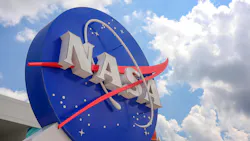
CAPE CANAVERAL, Fla. - The National Aeronautics and Space Administration (NASA) is seeking industry feedback on a planned contract that would support facility maintenance, infrastructure operations, logistics, and technical services across Kennedy Space Center (KSC) and Cape Canaveral Space Force Station (CCSFS), while shifting key engineering and spaceport integration responsibilities in-house.
The agency issued a sources-sought notice for its planned Spaceport Infrastructure, Maintenance, and Operations (SIMO) contract, which will succeed the current Base Operations and Spaceport Services (BOSS) contract. NASA said the SIMO effort represents a significant departure from both the existing contract and a previously canceled follow-on procurement.
Under the new approach, NASA will assume end-to-end engineering responsibility for assigned facilities, systems, equipment, and utilities (FSEU). The agency will conduct engineering analysis, root-cause investigations, technical evaluations, and corrective-action development, functions that traditionally have been performed under broader contractor support models.
Related: NASA shifts SBIR/STTR to BAA model with higher funding caps
In-house movement
NASA also plans to directly manage spaceport integration activities, including real-time monitoring, conflict assessment, customer communications, scheduling, outage coordination, infrastructure impact management, prescribed-burn coordination, and transportation and hardware movement oversight.
The SIMO contract is expected to support more than 30 customers, including NASA, other government agencies, and commercial space operators, across approximately 220 square miles at KSC and CCSFS. Contract performance is anticipated to begin no earlier than April 2027.
The solicitation highlights the growing complexity of maintaining and operating infrastructure that supports both government and commercial launch activities. Contractors will be responsible for preventive, predictive, reactive, and operational support across approximately 900 facilities of varying complexity.
Systems covered under the contract include high- and medium-voltage electrical infrastructure, uninterruptible power supplies, electronic security systems, traffic signaling systems, oxygen-deficiency monitoring systems, fire detection and suppression systems, HVAC equipment, compressed-air systems, elevators, water and wastewater infrastructure, transportation assets, heavy equipment, and facility structures.
Related: NASA selects HawkEye 360 RF data for space-to-space communications research
The contract also encompasses operation and maintenance of supervisory control and data acquisition (SCADA) systems and multiple building automation systems (BAS) used to monitor and control power, utility, environmental, and facility systems across the spaceport.
In addition to maintenance and operations, the contractor will provide logistics services including supply and materials management, equipment management, transportation management, and property disposal support. Technical services will include work control, environmental compliance support, configuration management, utility locating, and surveying.
NASA said work-control activities have historically supported approximately 18,350 preventive-maintenance work orders, 600 predictive testing and inspection actions, 3,050 repairs, 3,100 service requests, and 6,700 trouble calls annually.
The agency is also proposing a new pricing structure for maintenance support requests based on estimated direct craft labor hours. Under the model, work orders would be categorized into predefined labor-hour bands and issued as fixed-price task orders under an indefinite-delivery/indefinite-quantity contract vehicle. Fuel and materials would be reimbursable, while recurring operational support would be provided under separate firm-fixed-price arrangements.
According to the acquisition schedule outlined in the notice, NASA expects to release a draft solicitation in September 2026, followed by a final solicitation in October. Contract award is currently targeted for February 2027, with performance beginning April 1, 2027.
The agency also plans a series of industry engagement activities, including one-on-one virtual meetings with interested firms, as it refines requirements for the procurement.
Responses to this posting are due on 1 July 2026 at 5 p.m. Eastern. NASA named Daniel Hinsley as the primary point of contact for this project. They can be reached via email at [email protected]. More information is available at https://sam.gov/workspace/contract/opp/d08ee844bae54dc684ee251cf049ea92/view.
About the Author
Jamie Whitney
Editor-in-Chief
Jamie Whitney joined the staff of Military & Aerospace Electronics in 2018 and oversees editorial content and produces news and features for Military & Aerospace Electronics, attends industry events, produces Webcasts, and oversees print production of Military & Aerospace Electronics.
Related
Voice Your Opinion!
To join the conversation, and become an exclusive member of Military Aerospace, create an account today!
 Leaders Logo
Leaders relevant to this article: