Designing secure environments with intrusion detection for defense and aerospace sites
Key Highlights
- Sensor fusion integrates radar, ground sensors, and video analytics to authenticate threats, reduce false alarms, and provide comprehensive situational awareness.
- Automated command and control systems streamline threat verification and response, minimizing delays caused by manual data processing.
- Combining multiple sensing technologies and resilient infrastructure is essential for maintaining security in high-stakes military environments.
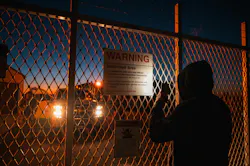
LONDON - Unauthorized access to defense and aerospace sites poses knock-on risks with potentially grave consequences. Far from the typical cases of trespassing you would see in retail or hospitality, which might result in vandalism and petty theft, an unverified intruder in a military installation can steal sensitive information or jeopardize missions that are months and millions of dollars in the making.
The safety of personnel and broader supply chains depends on a sphere of protection that identifies possible breaches as early as possible. The DoD lists the security of arms, ammunition, and intelligence as one of the highest priorities for defense and aerospace sites, and the design of these environments should reflect their importance through intentional, strategic safeguarding.
The difficulty of perimeter protection
One of the main challenges involved in protecting these critical locations is their non-linear arrangements. An erected fence might mark the end of public space and the beginning of a protected area, but the pedestrians who abide by these barriers aren’t a high-priority concern for site security.
An attacker could strike from an outer approach or scale any area of the fence line. They might use drones to scout ahead of time, or hold information on blind spots within the security networks. Visibility must extend to the outer reaches of the base and include as many layers as are present throughout the facility, via cameras, sensors, and continuously monitored alarms.
The next consideration is the assets that are immediately adjacent to the perimeter. Ammo, storage, radar stations, and aircraft aprons can all occupy the outer areas of the base for logistical reasons, but require constant vigilance due to their operational importance. In each of these cases, the objective of intrusion detection frameworks is to detect and verify unauthorized entry as quickly as possible, not necessarily just keep them out.
Harsh environmental realities
Defense and aerospace sites must also contend with environmental conditions that can limit visibility and degrade system performance. Sat isolated from the atmospheric protection of civilian infrastructure, bases experience heavy rain and wind, extreme temperature fluctuations, and absolute surrounding darkness after hours.
Related: Automation: moving security from human to machine speed, and all its implications
Any equipment deployed in these spaces must be tested and capable of maintaining its function under adverse conditions, power failures, and electronic interference. As security technology trends continue to evolve, reliability remains a fundamental requirement in these environments. This often includes weather-hardened surveillance systems, long-range thermal imaging, radar and sensor platforms, backup communications infrastructure, and explosion-protected cameras used in areas where fuel, munitions, chemicals or other hazardous materials are stored and handled.
Both the DoD and Sandia National Laboratories concur on this issue: validated electronics must be able to perform in the realities of the environments they protect.
Sensor fusion and informed decision making
Detection, whether at the perimeter or in an inner area of the site, is only the first step in establishing a secure environment. How bases ascertain the validity of the threat, organize a response, and refine future strategy all play important roles in creating a security ecosystem that adapts to intrusion events rather than addressing them retrospectively.
Sensor fusion, a combination of radar, ground sensors, and video analytics, is the bedrock of this approach. Their integrated function creates an enhanced baseline for input data, as a reading from one system can be cross-referenced with others to authenticate an event and package their combined alerts into a single instance. This reduces the amount of noise an operator must sift through from multiple alarms that originate from the same source.
A seismic radar might detect movement beyond a perimeter fence, which would signal a long-range PTZ camera to focus on the area and track the object, whether it is a person or a drone. The information provided by fused sensors gives security teams an idea of the attack trajectory and likely targets along that path, allowing responses to be focused and directed efficiently.
Integration into broader workflows
A final consideration is that the speed at which insight becomes action measures success for defense sites. One way security teams can achieve this is through sensor networks that communicate with C2 workflows, producing relevant intelligence as part and parcel of an alert.
Locating intel across separate systems takes time, and the intruders that target these sites rarely act without an objective in mind. Every second spent trying to verify an entry point or a potential target gives them more chances to damage equipment, endangering supply lines and the field teams that rely on them.
Command and Control frameworks in the defense industry cite manual data processing and standalone C2 systems as impediments to operational effectiveness that should be phased out within the coming years. In their place, integrated systems will help determine the severity and priority rating of threats, streamlining the chain of command to make responses faster and more coordinated.
Security based on practical needs
Safeguarding national defense assets requires security that is greater in scope and intensity than that of commercial environments. Yet despite their fundamental differences, they face similar roadblocks in legacy systems and isolated channels that degrade response through blind spots and wasted time.
Combining multiple sensing technologies that feed into command-and-control workflows and ensuring systems can withstand harsh conditions without succumbing to the elements helps lay the groundwork for a secure environment in mission-critical spaces.