Beyond New Space: Engineering adaptability for military orbit
Key Highlights
- U.S. military space architecture is shifting from a small number of specialized satellites to large, resilient low Earth orbit constellations to improve survivability against emerging threats.
- Commercial space industry innovations—such as rapid manufacturing, COTS components, and software-defined systems—are increasingly integrated into defense space programs, enabling faster, more adaptable satellite development.
- The evolution toward software-defined, reconfigurable spacecraft requires new validation, cybersecurity, and supply chain strategies to ensure mission assurance amid continuous technological updates.
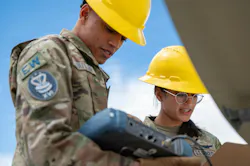
NASHUA, N.H. - For decades, U.S. military space strategy centered on a relatively small number of exceptionally capable satellites. These highly specialized platforms were engineered to operate for years in orbit, carrying bleeding-edge sensors and communications payloads that delivered strategic capabilities few nations could match. The approach produced remarkable technological achievements, but it also created an architecture that was increasingly expensive to field, slow to modernize, and potentially vulnerable to disruption.
Today's threat environment is forcing a fundamental reassessment.
Near-peer competition has accelerated concerns about the survivability of space-based assets in an increasingly contested domain. Potential adversaries are investing heavily in counterspace capabilities ranging from electronic warfare and cyber operations to direct-ascent anti-satellite weapons, forcing defense planners to reconsider whether relying on a relatively small number of high-value spacecraft remains an acceptable strategy.
The answer emerging from the Pentagon is not simply to build better satellites. It is to build a fundamentally different space architecture.
Across the Department of Defense (DoD), resilience has become the defining principle guiding military space development. Rather than concentrating capabilities aboard a handful of platforms, organizations such as the U.S. Space Force (USSF) and the Space Development Agency (SDA) are pursuing proliferated architectures that distribute sensing, communications, missile warning, and data transport across large constellations operating primarily in low Earth orbit. If one satellite is lost or degraded, the larger network can continue performing the mission.
That shift carries consequences extending far beyond orbital mechanics.
Speedy delivery
Building resilient constellations requires an acquisition model capable of delivering spacecraft on timelines measured in months instead of years. It demands manufacturing approaches that resemble those of advanced electronics production more than those of traditional aerospace programs. It requires spacecraft that can evolve through software updates after launch, rather than remaining functionally static throughout their operational lives. It also requires supply chains, embedded computing platforms and test infrastructures capable of supporting continuous technology refresh.

In many respects, these requirements align closely with the commercial space industry's evolution over the past decade.
Launch costs have fallen dramatically. Commercial satellite manufacturers have demonstrated the ability to build spacecraft at previously unprecedented rates. Companies developing processors, FPGAs, optical communications equipment, RF payloads, and autonomous software are bringing terrestrial technology cycles to an industry that has historically moved much more slowly.
The result is a growing convergence between commercial innovation and government requirements.
Congress has increasingly encouraged the DoD to accelerate adoption of commercial space capabilities, while defense leaders have emphasized hybrid architectures that combine government-owned systems with commercial services and commercially developed technologies. Initiatives such as the Commercial Augmentation Space Reserve (CASR) seek to leverage commercial capacity during national emergencies in much the same way that the Civil Reserve Air Fleet (CRAF) supplements military airlift, while organizations like the Joint Commercial Operations cell continue to expand operational collaboration between government and industry.
For engineers, however, the most significant changes are occurring below the policy level.
New Space evolves
The first generation of New Space was defined largely by launch vehicles, venture capital, and startup culture. The next generation is being defined by engineering decisions.
How much onboard processing should move from the ground to the satellite? When should commercial-off-the-shelf (COTS) components replace traditional space-qualified hardware? How can software-defined spacecraft remain cyber-resilient while receiving updates throughout their operational lives? How can manufacturers validate hundreds - or thousands - of spacecraft without allowing testing to become the production bottleneck? And how should embedded computing architectures evolve as artificial intelligence, autonomy and optical networking become standard elements of future constellations?
These are no longer theoretical questions. They are shaping procurement strategies, driving component selection and influencing how the next generation of military spacecraft will be designed, manufactured and sustained.
"The core idea of space commercialization remains unchanged," says Pascale Charpentier, technical staff engineer of product marketing for Microchip Technology's aerospace and defense business unit. "Today's space market is effectively synonymous with New Space."
That observation reflects how profoundly the industry has evolved. Commercial participation is no longer viewed simply as an alternative to traditional government acquisition. It is increasingly becoming the baseline for developing future military space capabilities. The implications reach far beyond launch providers or satellite operators.
From embedded processors and radiation-tolerant FPGAs to production-scale automated test systems and software-defined architectures, commercialization is reshaping nearly every layer of military space engineering. The result is not merely a faster way to build satellites. It is a new philosophy for designing resilient space systems that can adapt to an operational environment where technology - and threats - continue to evolve at an unprecedented pace.
Commercial becomes the baseline
For years, discussions about commercial space often framed the industry as an alternative to traditional government programs. Commercial companies emphasized speed, lower costs, and entrepreneurial agility, while government missions prioritized reliability, extensive qualification, and decades-long operational lifetimes.
That distinction is becoming increasingly difficult to make.
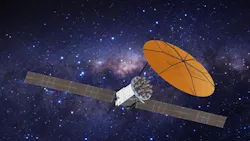
Today, commercial and government programs frequently pursue the same underlying technologies: proliferated satellite constellations, optical communications, software-defined payloads, autonomous onboard processing, and resilient networking. Commercial innovation continues to drive much of the underlying technology development, while government agencies increasingly shape how those technologies are integrated into operational architectures.
Rather than competing models, the two ecosystems are evolving together. Commercialization is no longer simply measured by the number of private companies entering the market or the amount of venture capital flowing into new launch providers. Instead, it is increasingly reflected in how space systems are engineered.
"One of the realities of modern aerospace systems is that the payload has no awareness of engineering disciplines," says Stephen T. Sargeant, CEO of Marvin Test Solutions and a retired U.S. Air Force major general. "It does not distinguish between analog, digital, RF, power management, software, or timing domains. It simply experiences an operational environment where all of those inputs occur simultaneously and interact continuously. Consequently, a meaningful test system must recreate that environment with the same level of determinism.
He continues, "That represents one of the most significant shifts in aerospace testing over the past decade. Engineers are no longer validating individual subsystems operating independently. They are validating highly integrated systems whose performance depends upon precise interaction between multiple technologies occurring within extremely tight timing windows."
Charpentier notes that commercialization - not orbit class or production volume - is increasingly driving demand for scalable electronics portfolios spanning COTS, radiation-tolerant, and fully radiation-hardened devices. Rather than assuming every mission requires the highest available qualification level, designers can increasingly tailor component selection to specific mission objectives, balancing radiation resilience, computing performance, lifecycle requirements, and cost.
The result is a more nuanced approach to mission assurance than the traditional distinction between "commercial" and "space qualified" might suggest.
"The economics of commercial space have fundamentally changed semiconductor strategy," says Sargeant. "Organizations increasingly rely upon advanced commercial silicon because it offers remarkable performance, shorter development cycles, and significantly lower acquisition cost than many traditional aerospace-specific components. That trend is likely to continue.
He continues, "However, commercial adoption should never be confused with reduced engineering rigor. Every semiconductor entering a mission-critical system still requires thorough electrical characterization, production validation, and confidence that the device delivered is, in fact, the device specified. Supply-chain assurance, counterfeit detection, lot-to-lot consistency, and long-term reliability have become as important as electrical performance itself."
Military spacecraft continue to demand exceptionally high reliability, particularly for strategic missions operating in harsh radiation environments or requiring long operational lifetimes. At the same time, proliferated constellations and shorter technology refresh cycles have expanded opportunities to incorporate commercial technologies where they provide meaningful operational advantages.
The engineering challenge is no longer choosing between commercial innovation and traditional aerospace rigor. It is determining where each delivers the greatest value. That same philosophy is influencing acquisition.
The trend is visible across the broader defense space enterprise. Programs increasingly emphasize incremental capability upgrades, shorter development cycles, and continuous technology insertion instead of waiting years for the next major acquisition milestone. Commercial engineering practices - including agile software development, digital engineering, and modular system design - are becoming familiar elements within government programs.
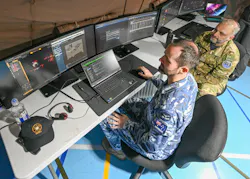
Perhaps the most significant consequence is a change in how engineers think about adaptability. For much of the Space Age, engineering excellence meant designing spacecraft that would perform exactly as intended throughout their operational lives.
Increasingly, engineering excellence also means designing spacecraft that can evolve.
Software updates, reprogrammable hardware, modular electronics, and standardized interfaces enable capabilities to improve after launch while reducing the need for complete system redesigns as technology advances. Rather than freezing performance at launch, engineers are creating architectures that anticipate continuous improvement throughout a constellation's lifecycle.
This evolution does not diminish the importance of reliability. If anything, it raises the bar. Adaptable systems must remain dependable while supporting frequent software updates, integrating new technologies and operating in contested electromagnetic and cyber environments. Security, resilience and trusted computing become foundational design requirements rather than features added late in development.
The software-defined spacecraft
Adaptability is only valuable if the spacecraft itself is capable of changing. That simple idea is driving one of the most significant architectural shifts in the history of space systems.
For decades, spacecraft were designed around a relatively straightforward assumption: once a satellite reached orbit, its hardware -and much of its functionality - was effectively fixed. Engineers invested enormous effort qualifying every subsystem before launch because opportunities to modify the spacecraft afterward were limited. Mission success depended on getting the design right the first time.
That philosophy reflected both the realities of spaceflight and the economics of traditional acquisition. Spacecraft were expected to remain in service for years, often decades, with little opportunity for meaningful capability upgrades after reaching orbit.
In many respects, the transition mirrors the broader evolution of embedded computing.
Modern embedded systems are rarely defined solely by the hardware they contain. Their capabilities continue to expand through software, firmware and increasingly sophisticated algorithms throughout their operational lives. Spacecraft are beginning to follow the same trajectory, albeit within one of the world's most demanding operating environments.
That evolution is reshaping the electronics that underpin modern space systems.
"Programmability and reconfigurability are key enablers of the space industry's shift toward software-defined, scalable architectures," says Microchip's Charpentier. "They enable continuous in-orbit upgrades and improved system performance."
Those capabilities increasingly rely on heterogeneous computing architectures that combine processors, field-programmable gate arrays (FPGAs), application-specific integrated circuits (ASICs) and microcontrollers, each selected according to the specific demands of a mission.
Rather than competing technologies, they have become complementary tools. Processors provide software flexibility and simplify application development. FPGAs excel at highly parallel, deterministic processing for sensor interfaces, communications and signal processing. ASICs continue to deliver efficiency for applications where production volumes justify their development costs. Meanwhile, increasingly capable microcontrollers provide integrated mixed-signal processing, digital power management, and motor control functions that support the growing complexity of spacecraft subsystems.
Together, these devices allow engineers to distribute workloads where they make the most sense, balancing performance, power consumption, radiation tolerance, and lifecycle requirements rather than optimizing around a single processing technology. The result is a spacecraft that increasingly resembles a ruggedized edge-computing platform.
Earth observation satellites process imagery before transmitting it to the ground. Communications satellites are dynamically allocating network resources. Military spacecraft are expected to support greater autonomy, onboard sensor fusion, and increasingly sophisticated decision support while operating with limited bandwidth and intermittent communications.
As more processing moves onboard, software becomes just as important as hardware. That shift extends beyond enabling new capabilities. It also allows operators to refine existing ones.
Mission software can be updated. Signal-processing algorithms can be improved. Autonomous behaviors can be refined. Communications protocols can evolve alongside operational requirements. In some cases, functionality that once required new hardware may instead be delivered through software.
The ability to evolve, however, introduces new engineering responsibilities. Every software update must be trusted. Every reconfigurable device must be protected against unauthorized access. Every additional layer of autonomy expands the importance of cybersecurity, resilient computing, and secure update mechanisms. A spacecraft capable of adapting to new missions must also be able to withstand new threats.
As spacecraft become increasingly capable of adapting after launch, another challenge emerges closer to Earth. How do manufacturers build and validate not just one evolving spacecraft, but hundreds or thousands of them, while maintaining confidence that every system will perform as intended?
Building confidence at scale
If software-defined architectures are changing what spacecraft can do, they are also changing how those spacecraft must be built. The shift toward proliferated constellations represents more than an increase in production volume. It requires a fundamentally different manufacturing philosophy.
Today's manufacturers may be asked to deliver dozens - or eventually hundreds - of spacecraft built from common architectures, incorporating frequent technology refreshes while maintaining the reliability demanded by national security missions.
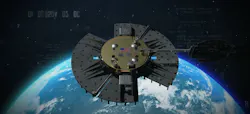
The engineering challenge is no longer simply producing satellites more quickly; it is producing confidence at a pace that matches production.
That distinction is particularly important as military programs increasingly embrace adaptable architectures. Every software update, processor upgrade, interface revision, or component substitution has the potential to affect system behavior. Maintaining confidence across rapidly evolving hardware and software configurations requires manufacturing and validation processes that can keep pace.
Marvin Test Solutions' Sargeant believes that transition demands a broader view of manufacturing than the aerospace industry has traditionally adopted.
"The engineering challenge is no longer demonstrating that one prototype performs correctly," he says. "It is demonstrating—with equal confidence—that the hundredth or thousandth unit performs to exactly the same standard."
That shift elevates automated test systems from production tools to strategic engineering assets. Modern spacecraft combine RF communications, high-speed digital electronics, precision timing, power management, and increasingly sophisticated onboard software within tightly integrated architectures. Validating each of those domains independently remains essential, but it no longer provides a complete picture of system performance.
Instead, manufacturers are increasingly focused on understanding how those domains interact under realistic operating conditions - and how that behavior changes as hardware and software continue to evolve.
As production volumes increase, the amount of engineering data generated by manufacturing also expands dramatically.
Historically, production testing primarily served as a gatekeeper, verifying that hardware met requirements before shipment. Increasingly, that same test data is becoming a valuable engineering resource capable of identifying subtle performance trends, improving manufacturing consistency, and informing future design decisions.
The production floor is evolving into another source of engineering knowledge. Digital engineering tools are accelerating that transformation.
Model-based engineering, digital twins, and increasingly sophisticated simulation environments allow engineers to evaluate design changes before hardware reaches production, reducing development risk and enabling faster technology insertion. Those same digital models can be refined using production and operational data, creating continuous feedback between design, manufacturing, and sustainment.
Artificial intelligence is beginning to strengthen that feedback loop. Rather than replacing engineers, AI tools are helping teams identify patterns hidden within enormous volumes of manufacturing and test data - patterns that might reveal emerging reliability concerns, production variability, or opportunities to improve system performance before problems reach operational fleets.
In that sense, AI is becoming less of a design tool and more of an engineering multiplier. These capabilities are particularly valuable for military space systems, where mission assurance remains non-negotiable despite increasing production rates and shorter development cycles.
As commercial practices continue influencing defense acquisition, manufacturers face the challenge of balancing speed with rigor, embracing rapid iteration without sacrificing the confidence traditionally associated with space-qualified hardware. That balance represents one of the defining engineering challenges of the commercial space era.
Success will depend not only on building adaptable spacecraft, but on creating adaptable engineering ecosystems capable of learning from every design iteration, every production run, and every mission.
The objective is no longer simply to manufacture satellites at scale; it is to industrialize adaptability without compromising mission assurance.
Trusting changing systems
For generations of aerospace engineers, mission assurance began with a straightforward objective: verify that every component would perform reliably throughout the mission. That objective has not changed. The systems being verified, however, have. They also redefine what it means to trust a space system.
Historically, confidence was established before launch through rigorous qualification, environmental testing, and exhaustive verification. Once a spacecraft entered orbit, its behavior was expected to remain largely predictable because its hardware and software changed relatively little.
Today's adaptable architectures introduce a more dynamic model. Engineers must establish confidence not only in the spacecraft delivered on launch day, but also in every authorized change that follows throughout its operational life. That evolution extends across the entire spacecraft architecture.
Software updates must be authenticated and verified before deployment. Reconfigurable hardware must operate predictably despite radiation effects and harsh environmental conditions. Cybersecurity protections must defend systems designed to accept legitimate change while rejecting malicious modification. Supply chains must provide long-term confidence that replacement components remain authentic, available, and electrically consistent over years of production.
FPGAs have become one of the enabling technologies behind adaptable space architectures, allowing engineers to modify processing functions, improve algorithms, and extend mission capabilities long after launch. For defense missions, that flexibility can provide significant operational advantages as threats, mission priorities, and software capabilities continue to evolve.
Configuration management, secure update mechanisms, hardware roots of trust, cryptographic authentication and resilient system architectures become integral elements of spacecraft engineering rather than supporting functions added after development.
The same principle increasingly applies to artificial intelligence. As onboard autonomy expands, engineers must validate not only the hardware executing AI algorithms but also the integrity, predictability and operational boundaries of the algorithms themselves. Confidence depends not simply on computational performance, but on demonstrating that autonomous functions behave consistently under realistic operational conditions.
Engineering the next space enterprise
Every era of spaceflight has been defined by a different engineering challenge. The early decades of the Space Age focused on proving that spacecraft could survive and operate beyond Earth's atmosphere.
Subsequent generations extended mission duration, improved reliability, and expanded the sophistication of sensors, communications systems, and onboard computing.
More recently, the commercial space revolution demonstrated that launch, satellite manufacturing, and access to orbit could be accomplished faster and more economically than many believed possible.
The next chapter appears to be defined by a different objective - not simply building better spacecraft, but by building better systems for continually improving spacecraft.
AI, software-defined payloads, radiation-tolerant processors, reconfigurable FPGAs, optical communications, autonomous operations and digital engineering are often discussed as separate innovations. In practice, they are becoming increasingly interconnected elements of a broader architectural shift.
Embedded computing is moving closer to the edge, enabling spacecraft to process more information onboard while reducing dependence on ground infrastructure.
The challenge is no longer choosing between innovation and assurance; it is achieving both simultaneously. That balance may ultimately become the defining engineering problem of the next decade.
The aerospace industry spent decades perfecting spacecraft. The next decade may be defined by perfecting the engineering ecosystems that continually improve them.
"Every generation of aerospace believes its technology is unprecedented — and in many respects it is," says Sargeant from Marvin Test Solutions. "What has never changed is the responsibility engineers carry before a system leaves the ground. That is the discipline that will define who leads commercial and dual-use space next."
About the Author
Jamie Whitney
Editor-in-Chief
Jamie Whitney joined the staff of Military & Aerospace Electronics in 2018 and oversees editorial content and produces news and features for Military & Aerospace Electronics, attends industry events, produces Webcasts, and oversees print production of Military & Aerospace Electronics.
Related
Voice Your Opinion!
To join the conversation, and become an exclusive member of Military Aerospace, create an account today!
 Leaders Logo
Leaders relevant to this article: