DoD backs domestic, allied critical-materials projects to shore up supply chains
Key Highlights
- The DoD's largest commitment is a $1.4 billion loan to Sila Nanotechnologies to expand advanced battery material production for defense applications.
- Funding includes $150 million for Niron Magnetics to produce rare-earth-free permanent magnets, reducing dependence on foreign rare-earth materials.
- A $400 million loan supports Sunrise Energy Metals' Australian scandium project, establishing a secure supply chain from mining to finished material for U.S. defense needs.
WASHINGTON - The Department of Defense (DoD) is backing nearly $2 billion in conditional financing and more than $80 million in proposed investments in domestic and allied critical-materials projects intended to strengthen supply chains for advanced military and aerospace systems.
The initiatives announced 7 August include conditional loan commitments for advanced battery materials, rare earth-free permanent magnets and an Australian scandium project, along with proposed investments in U.S. mining, metallurgy and materials-recycling research. The projects span mining, materials processing, recycling, qualification and manufacturing of materials used in national-security applications.
The largest commitment is a $1.4 billion conditional loan from the DoD's Office of Strategic Capital (OSC) to Sila Nanotechnologies Inc., a U.S.-based manufacturer of advanced battery materials. The proposed financing, combined with external equity, would support expanded production of silicon-carbon battery anodes and construction of a lithium-ion battery-cell manufacturing facility.
Related: Pentagon invests $25 million to expand domestic rare earth refining capacity
The expanded production is intended to increase U.S. manufacturing of advanced battery materials for national-security applications including satellite operations, uncrewed aerial systems and munitions. DoD also says the project would strengthen domestic supply chains serving defense, aerospace, energy storage and other markets.
Non-rare magnets
OSC also announced a $150 million conditional loan commitment to Niron Magnetics Inc. to scale production of rare-earth-free permanent magnets. Niron, headquartered in Minnesota, develops magnets using iron and nitrogen rather than rare-earth materials, potentially reducing dependence on foreign sources of rare-earth magnets.
The proposed financing, combined with private capital, would support construction of a $605 million manufacturing facility in Sartell, Minn., capable of producing up to 1,500 tons of rare-earth-free permanent magnets annually. Niron previously completed a two-year pilot project with the Department of Energy's Advanced Research Projects Agency-Energy that produced 1 to 2 tons of magnets annually.
DoD describes high-performance magnets as integral to the defense industrial base and says their importance is expected to increase with electrification, robotics and defense modernization. The Niron project therefore targets a material input used across commercial and defense applications while seeking to eliminate dependence on foreign-dominated rare-earth supply chains.
Scandium source
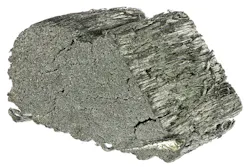
The effort also includes an allied component. OSC announced a $400 million conditional loan commitment to Sunrise Energy Metals Ltd., an Australian publicly listed company that owns the Syerston Scandium Project in New South Wales, Australia.
Related: High-altitude aircraft use NASA sensors to hunt for minerals
Sunrise plans to use the financing, along with private capital, to develop primary scandium mining at Syerston and build metallization and additive-layer-manufacturing capabilities. DoD says the effort is intended to establish an allied mine-to-metal scandium supply chain and provide the United States with a right of first offer on Sunrise's output. The resulting scandium would support U.S. companies, including defense industrial-base companies.
DoD says scandium currently is recovered primarily as a byproduct of other industrial or resource-extraction processes and that no primary mine-source scandium supply currently exists globally. The department says foreign competitors account for approximately 80 percent of global scandium mining production and nearly all scandium processing.
The Sunrise project also illustrates the department's broader approach to critical-materials supply chains. While the scandium resource itself is in Australia, the planned downstream capabilities and U.S. access to the material are intended to establish what DoD calls a U.S.-aligned and allied supply chain from mining through finished material.
Eye on education
DoD is simultaneously proposing $81.3 million for critical-minerals research, materials processing and workforce development at U.S. academic institutions. The proposed investments include $32.7 million for the Colorado School of Mines to establish a Critical Minerals Innovation & Commercialization Hub focused on pilot-scale technology development, materials qualification and workforce-industry integration.
Another $25 million proposed investment at the South Dakota School of Mines would establish a Critical Minerals Merit Scholars Consortium involving the South Dakota School of Mines, the University of Kentucky and Missouri University of Science and Technology. A proposed $23.6 million investment at Johns Hopkins University would establish a multi-material recycling innovation hub focused on scrap sourcing, process innovation, testing, qualification and integration into existing defense platforms.
About the Author
Jamie Whitney
Editor-in-Chief
Jamie Whitney joined the staff of Military & Aerospace Electronics in 2018 and oversees editorial content and produces news and features for Military & Aerospace Electronics, attends industry events, produces Webcasts, and oversees print production of Military & Aerospace Electronics.
Related
Voice Your Opinion!
To join the conversation, and become an exclusive member of Military Aerospace, create an account today!
 Leaders Logo
Leaders relevant to this article: