Eve Air Mobility selects BETA Technologies to supply electric pusher motors for eVTOL program
Questions and Answers:
How large is the agreement between Eve and BETA? Eve says the supplier agreement represents a potential 10-year opportunity for BETA valued at as much as $1 billion.
How does this partnership fit into Eve’s broader supply chain? BETA joins other U.S. suppliers supporting Eve’s aircraft development, including BAE Systems for batteries, Garmin for avionics, Honeywell Aerospace for external lighting, Intergalactic for thermal management, and Nidec Aerospace for lifter motors.
When is Eve’s first flight expected? Eve expects the first flight of its engineering prototype in late 2025 or early 2026.
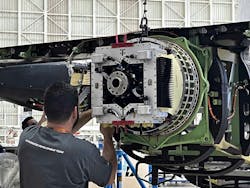
MELBOURNE, Fla. - Eve Air Mobility in Melbourne, Fla., has selected BETA Technologies in South Burlington, Vt., to supply electric pusher motors for its conforming prototypes and production aircraft. The deal represents a potential 10-year opportunity for BETA valued at up to $1 billion.
The announcement follows an evaluation period in which Eve purchased, tested, and validated BETA motors on its engineering prototype as it prepares for a first flight expected in late 2025 or early 2026.
"Integrating BETA Technologies into our supply chain is a pivotal milestone in advancing our eVTOL program," said Johann Bordais, chief executive officer of Eve Air Mobility. "Their electric motor technology will play a critical role in powering our aircraft during cruise, supporting the maturity of our propulsion architecture as we progress toward entry into service. This collaboration underscores our commitment to working with suppliers who share our rigorous safety standards and deliver proven engineering solutions, driving performance, efficiency, and sustainability as we bring urban air mobility to life."
Related: Eve Air Mobility, UI Helicopter partner to develop advanced air mobility in South Korea
BETA designs and manufactures electric propulsion systems with high power-to-weight ratios and simplified architectures intended to reduce parts count and support safety and cost goals.
BETA joins a group of U.S. suppliers supporting Eve’s development program, including BAE Systems in Nashua, N.H., for batteries; Garmin in Olathe, Kan., for avionics; Honeywell Aerospace in Phoenix for external lighting; Intergalactic in St. George, Utah, for thermal management; and Nidec Aerospace in Novi, Mich., for lifter motors.
Eve’s eVTOL uses a lift-plus-cruise configuration with eight propellers for vertical flight and fixed wings for cruise. The aircraft includes an electric pusher powered by dual electric motors for propulsion redundancy. Eve says this configuration allows each system to be optimized for its flight phase while reducing maintenance, operating costs, and noise.
The company is conducting tests with its prototype to evaluate aircraft performance, flight behavior, and safety features as part of its ongoing development program.
