Liquid cooling for thermal management in artificial intelligence (AI) uses introduced by Vertiv
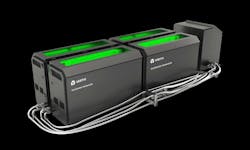
Summary points:
- Vertiv unveils CoolCenter Immersion system designed for AI and high-performance computing applications.
- Advanced liquid cooling efficiency supports heat removal from 25 to 240 kilowatts per system, surpassing air-cooling limits.
- Redundant design and smart monitoring enable high reliability, simplified management, and potential heat reuse for sustainable thermal control.
WESTERVILLE, Ohio – Vertiv in Westerville, Ohio, is introducing the Vertiv CoolCenter Immersion cooling system for artificial intelligence (AI) and high-performance computing (HPC).
Immersion cooling submerges servers in a dielectric liquid for efficient and uniform heat removal where power densities and thermal loads exceed the limits of traditional air-cooling methods, and enable heat removal from 25 to 240 kilowatts per system.
The Vertiv CoolCenter Immersion liquid cooling system is available in several configurations, including self-contained and multi-tank options, with cooling capacities from 25 kilowatts to 240 kilowatts. Each system includes an internal or external liquid tank, coolant distribution unit, temperature sensors, variable-speed pumps, and fluid piping.
Dual power supplies and redundant pumps provide high cooling availability, while integrated monitoring sensors, a 9-inch touchscreen, and building management system connectivity simplify operation and system visibility. The system's design also enables heat reuse for efficient thermal management.
For more information contact Vertiv online at www.vertiv.com.
About the Author
John Keller
Editor-in-Chief
John Keller is the Editor-in-Chief, Military & Aerospace Electronics Magazine--provides extensive coverage and analysis of enabling electronics and optoelectronic technologies in military, space and commercial aviation applications. John has been a member of the Military & Aerospace Electronics staff since 1989 and chief editor since 1995.