Air Force surveys industry for electronic warfare (EW) and cyber warfare to counter uncrewed aircraft
Key Highlights
Questions and answers:
- What is the goal of the MUSE project? Modern Unmanned-warfare Systems Environment (MUSE) aims to develop a framework that integrates commercial sensors, aircraft, and command-and-control systems to enable autonomous, cooperative uncrewed aircraft for both offensive and defensive missions.
- What types of technologies are being researched under MUSE? The project focuses on technologies such as electronic warfare (EW), cyber warfare, signals intelligence, AI and machine learning, sensor integration, countermeasures against drone swarms, and open-architecture command-and-control systems.
- How will the Air Force test and integrate these capabilities? Researchers plan to use the Small Unmanned Aircraft Defense System (SUADS) architecture to develop and integrate counter-uncrewed sensors and weapons, while also exploring human-machine teaming and autonomous operations.
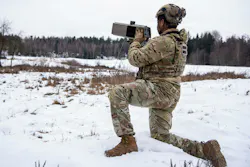
ROME, N.Y. – U.S. Air Force researchers are surveying industry for companies able to develop sensing, electronic warfare (EW), and cyber warfare capabilities for future offensive and defensive uncrewed aerial combat.
Officials of the Air Force Research Laboratory Information Directorate in Rome, N.Y., issued a request for information (FA875025RB010) last Thursday for the Modern Unmanned-warfare Systems Environment (MUSE) project.
Researchers want to develop a framework to blend commercial sensors, aircraft, and command and control (C2) designs in new offensive and defensive uncrewed aircraft capabilities. The project seeks to demonstrate cooperative uncrewed aircraft prototypes that work autonomously, and develop enabling technologies to defeat several enemy uncrewed aircraft simultaneously.
Research will involve analyzing RF and microwave signals and signatures; detection, location, and identification techniques; link-access techniques; cyber intelligence, surveillance, and reconnaissance (ISR); cyber countermeasures; integrating interceptors; open-architecture command and control; machine automation; and cyber attacks on enemy uncrewed aircraft.
Signals intelligence
The U.S. must develop technologies to detect and counter uncrewed aircraft and uncrewed aircraft swarms, researchers point out.
Research will involve information exchanges and interfaces; adapters and translators; messaging, queueing, and transformation middleware; electronic warfare (EW); cyber warfare; EW-enabled cyber warfare against uncrewed aircraft communications links; low-collateral-damage EW and cyber warfare; anti-tamper technologies; near-real-time battle damage assessment; and cyber intelligence and surveillance.
Researchers plan to use an Air-Force-developed counter uncrewed aircraft architecture called Small Unmanned Aircraft Defense System (SUADS) to help develop and integrate counter-uncrewed sensors and weapons.
Air Force researchers also are interested in human-machine teaming; rules of engagement for automated systems; mass and swarm attacks; integration with higher-level command and control; cooperation and de-confliction among cyber warfare systems; air traffic management; integrating raw sensor feeds with meta data; artificial intelligence (AI) and machine learning algorithms; detect-and-avoid technologies; and enclosures like pods and hives to deploy interceptors.
Counter-uncrewed sensors
Sensors of interest include acoustic; radar and light detection and ranging; unintended radiated emissions; and signature and effects libraries; and ways to store cyber warfare effects and index their capabilities.
Companies interested should email capabilities statements no later than 6 April 2026 to the Air Force's Matthew Zawisza at [email protected], to Meghan Thomas at [email protected], and to Patrick Cerminaro at [email protected].
Email questions or concerns to Matthew Zawisza at [email protected], to Meghan Thomas at [email protected], and to Patrick Cerminaro at [email protected]. More information is online at https://sam.gov/workspace/contract/opp/1e654f14c8d746b2ad56277ad6abe8b2/view.
