Sensor technology: The next evolution in an environment of advancing threat capabilities
Key Highlights
- Modern military sensors are increasingly integrated with AI, edge computing, and software-defined architectures to enable faster, more accurate threat detection and response.
- Advances in multi-spectral sensing, including EO, IR, UV, and RF, improve situational awareness in degraded or contested environments, supporting multi-domain operations.
- Key challenges include thermal management, data overload, cybersecurity, and system interoperability, which require innovative engineering solutions and open-architecture designs.
- Industry trends favor multi-modal sensors, AI-driven image interpretation, and size, weight, and power (SWaP) optimization, especially for unmanned and space-based platforms.
- Future sensor development will focus on autonomous data fusion, predictive situational awareness, and resilient architectures to maintain operational advantage in complex environments.
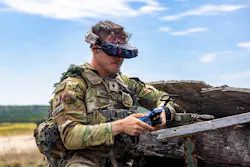
“We are going to do things differently; we are going to do things in a completely netted environment. … We have the weaponry to go a lot farther than we’re able to do because of the sensors,” said the Navy's Director for Warfare Integration, Rear Adm. Dan Fillion in 2019 at the American Society of Naval Engineers’ annual Combat Systems Symposium.
NASHUA, N.H. - Sensors and the complex engineering that powers them are swiftly advancing.
Modern warfare is increasingly defined not by the platforms themselves, but by the speed, accuracy, and integration of the data those platforms generate. Across air, land, sea, and space, military forces are confronting a rapidly evolving threat environment — one characterized by advanced missiles, autonomous drones, and coordinated, multi-domain attacks that can emerge simultaneously from multiple vectors. In this context, the ability to detect, interpret, and act on sensor data in real time has become a decisive operational advantage.
At the center of this shift is a new generation of electro-optical (EO), infrared (IR), and multi-spectral sensing technologies, tightly coupled with advances in artificial intelligence, edge computing, and software-defined architectures. These systems are no longer standalone tools, but integral components of a broader, interconnected ecosystem designed to compress the timeline between detection and decision. As defense strategies increasingly emphasize information dominance and concepts such as Combined Joint All-Domain Command and Control (CJADC2), the role of sensor technology is expanding — from passive observation to active participation in mission execution.
Yet this transformation is not without friction. Engineers and program managers must navigate a complex set of challenges, including data overload, thermal constraints, cybersecurity risks, and the persistent difficulty of integrating disparate systems across legacy and next-generation platforms. At the same time, industry dynamics — from mergers and acquisitions to shifting investment priorities — are reshaping how sensor technologies are developed and deployed.
This all merits an examination of the technological trends, operational demands, and engineering realities driving the evolution of military sensing systems, as well as the AI-enabled processing, and open architectures are redefining situational awareness — and what those changes mean for the future of survivability and mission success.
Threat Capabilities Are Advancing
Mike Sweeney is the technology director for integrated survivability systems at BAE Systems in Boston. Sweeney says that today’s platforms face many threats – from guided missiles to attack drones – and the threats can come from sea, air, land and space. They can appear quickly from multiple locations and from any direction.
“The capabilities of the threats are also advancing,” says Sweeney. “They’re becoming smarter and versatile, and there’s more of them. The increased use of multispectral systems and coordinated capabilities makes the environment even more challenging.
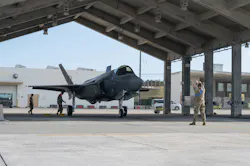
Warfighters need survivability systems that can detect threats at long range and provide early cue times to defeat them. A full-spectrum approach that uses both radio frequency (RF) and electro-optical / infrared (EO/IR) is the cornerstone of threat warning and survivability.
As a best practice, given that infrared sensor systems are being asked for multifunction capability, they are procured and developed to accommodate growth and mission change over time. “When platform owners cut holes in their platforms to install sensors, they expect that the sensor systems they install can serve multiple mission requirements,” says Alan Enman, chief engineer and technology director for integrated survivability systems at BAE Systems in Boston.
“This drives the need to get the sensor hardware right up front, provision sufficient processing resources for growth, and then give the sensor system its functionality through algorithms – software apps that give the sensor system its personality – or multiple personalities.”
Dr. Yiannis Papelis is a research professor and executive director of the Virginia Institute for Spaceflight and Autonomy (VISA) at Old Dominion University in Norfolk, VA.
He says that because electro-optical sensing and imaging technologies are increasingly central to how situational awareness is developed across distributed and multi-domain operations, one of the most significant shifts is the move away from standalone sensing platforms toward integrated sensing and processing architectures, where data from multiple sensors is fused and interpreted in near real time. This offloads the work from the compute units responsible for mission management, providing key computational and performance advantages. This shift towards integration is a recurring theme among many other industry leaders.
“From a broader DoW strategy perspective, this aligns with a growing emphasis on information advantage — the ability to collect, process, and act on data faster and more effectively than adversaries,” says Papelis. “This has driven increased focus on onboard and edge-based processing, where signal processing and initial analysis occur closer to the sensor, allowing algorithm optimization, reducing latency, and enabling faster decision-making.”
He adds that in practical terms, this includes the use of real-time signal processing pipelines, multi-sensor fusion frameworks, and artificial intelligence/machine learning (AI/ML)-based inference models for tasks such as object detection, tracking, and classification. These processing approaches, he says, are increasingly designed to operate in resource-constrained environments, balancing performance with size, weight, and power (SWaP) limitations.
Industry Growth and Driving Trends in Sensor Technology
Industry growth is trending towards firms that are adept at integrating combat systems and can meld different capabilities across different modes of warfighting and support thereof.
Meghan Welch is a managing director within the aerospace, defense and government services group of Brown Gibbons Lang and Company, an investment bank and financial advisory firm in Miami, Fla. She says the DoD’s broader strategy is clearly moving toward sensor-to-shooter compression, where timelines between detection, identification, and action are minimized. This places a premium on onboard processing, autonomy, and interoperability across domains – air, space, maritime, cyber.
“From an investment and mergers and acquisitions standpoint, this is driving interest toward companies that sit at the intersection of hardware and software, particularly those enabling data fusion, edge analytics, and resilient communications rather than standalone sensor manufacturers,” says Welch. “A few trends stand out that are shaping both capability development and capital flows: First, there’s a clear move toward multi-spectral and multi-modal sensing, combining infrared bands such as mid-wave infrared (MWIR, 3–5 μm) and long-wave infrared (LWIR, 8–14 μm), along with short-wave infrared (SWIR) and visible light, and even radio frequency (RF) data into unified sensing packages,” explains Welch. “The advantage is not just better detection, but greater discrimination in contested or cluttered environments. Second, SWIR is gaining disproportionate attention. It offers a compelling middle ground – better performance in degraded visual environments (smoke, haze, low light) while being more scalable in certain applications than traditional cooled infrared systems. That makes it attractive for both tactical and proliferated sensing use cases. Third, processing is becoming a differentiator. Advances in signal processing and AI-driven image interpretation allow systems to extract more value from lower-cost or smaller sensors. In many cases, software extends the relevance of existing hardware, which is changing procurement and upgrade cycles. Finally, there’s a push toward size, SWaP-C optimization, particularly driven by unmanned systems and space-based architectures. This is opening the door for newer entrants and more specialized suppliers deeper in the value chain.”
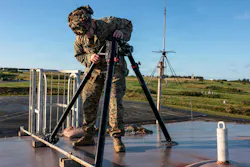
“SWIR is particularly valuable because it improves visibility in low-light, smoke, and haze and can better detect camouflaged objects and laser designators," says Keith Heinzig, senior director for design engineering with Benchmark Electronics in Santa Ana, Calif. “The most notable trend is the integration of AI and advanced signal processing into imaging systems. Rather than requiring operators to monitor every feed, systems can now automatically detect, identify, and track potential targets. Multi-spectral sensing, combining electro-optical (EO), IR, ultra-violet light (UV) and SWIR, is also becoming more common because it provides better situational awareness across a wider range of environments.”
Adam Smith is the chief technology officer of Larx Inc. in Hot Springs, Ark., a firm that develops complex platforms that develop data into actionable intelligence. Smith, like Welch, also emphasizes an overarching trend towards data integration and operationalization. He notes that DoD’s broader push toward concepts like Combined Joint All-Domain Command and Control (CJADC2) reflects a recognition that decision advantage depends on the ability to integrate and operationalize data across domains in real time.
"As a result, we are seeing increased emphasis on software-defined capabilities that sit above the sensor layer, systems that can ingest, fuse, and contextualize data from multiple sources and deliver decision-ready outputs," says Smith. "Signal processing is no longer just about refining individual sensor feeds, but about enabling cross-sensor understanding and accelerating time to insight."
Technology Challenges
While demands from DoW drive industry growth and trends, there remain challenges in the development, testing, and implementation of sensor technology.
Paul Mesibov is the senior director and chief technologist with Mercury Systems in Upper Saddle River, N.J. – a firm that develops mission-critical technologies more accessible to the aerospace and defense industries.
He points to five specific areas that present notable challenges to sensor development and implementation: thermal management, data volume and processing, radiation hardening, cybersecurity in contested environments, and integration and interoperability.
"High-performance sensor processing generates substantial heat, which is manageable on Earth, but a critical challenge in space where convection doesn’t exist," says Mesibov. "Advanced conduction-cooling employs specialized thermal bridge materials and “K-core” technology utilizing annealed pyrolytic graphite conducting heat with extraordinary efficiency, even during intensive AI workloads. Without effective thermal management, processors would either throttle performance (defeating the purpose of high-speed processing) or fail entirely."
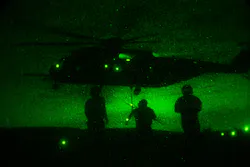
In reference to his view on the growing volume of data and its processing, he remarks that the “firehose” of data from hyperspectral sensors requires intelligent architectures that can prioritize, filter, and analyze data in real time. "High-capacity, secure storage integrated directly into their processing subsystems, combined with AI algorithms that perform automated analysis at the edge, can dramatically reduce the burden on communications links, while accelerating the decision cycle," he says.
When it comes to radiation hardening and reliability, he notes that space-based sensors must survive years of exposure to cosmic radiation, solar particle events, and trapped radiation belts. "Radiation-tolerant hardware can address this through multiple strategies: radiation-hardened components, error detection and correction, and redundant architectures that maintain functionality even when individual components degrade," explains Mosibov. "Solutions with TRL 6-ready status will indicate that these technologies have been demonstrated in relevant environments—a critical milestone that reduces risk for DoW acquisition programs."
And then there's cybersecurity in contested environments. "As sensor systems become more sophisticated and networked, they become more attractive targets for cyber-attacks, he says. "Compromised sensor data or algorithms can blind friendly forces or feed false information into decision-making processes. Using technology that provides defense-in-depth, starting with hardware-level root-of-trust, ensures only authenticated code executes on the system, protecting both the sensor data and the AI algorithms that process it."
Finally, there's integration and interoperability. "Developing sensor processing solutions that can scale from small UAVs to large satellites across the thousands of platforms employed by the DoW requires flexible, modular architectures, "explains Mosibov. "An open-architecture approach, like SOSA and SpaceVPX, ensures system level integration and interoperability among existing and future platforms, while fostering competition and innovation at the component level."
Adam Smith of Larx, adds that one of the primary challenges is not technical performance alone, but a theme that many are mentioning: integration. Fragmentation across platforms and vendors is a significant challenge that everyone in the industry faces. "Sensors often operate within siloed systems, making it difficult to fuse data effectively," says Smith. He also adds that data overload at the operator level challenges the development of sensor technology. "High-fidelity sensors generate more data than analysts and operators can realistically process in time-sensitive environments."
Other challenges Smith points to: testing in operationally realistic conditions and ensuring performance across contested, degraded, or denied environments; and latency between collection and action. "Even with advanced sensors, delays in processing and dissemination can limit operational impact."
Dmitry Zakharchenko is the chief software officer at the AI computing company Blaize in Cary, North Carolina. He presents other challenges to be mindful of in the forward advance of sensor technology.
“A primary challenge today is the ‘power versus performance wall.' As sensors move to higher resolutions and higher frame rates, the compute required to process data increases exponentially. Implementing these advanced sensors in SWaP-constrained environments, such as small UAA or handheld devices, poses thermal and battery-life challenges. Brute-forcing the compute will not work; extreme efficiency at the chip level is required.”
A secondary challenge, says Zakharchenko, is the move from laboratory testing to "edge reality." “An AI model for infrared targeting might perform perfectly in a sanitized simulation but fail in high-clutter, dynamic environments where dust, smoke, or rapid light changes occur," he says. "Testing must now account for these edge cases to ensure reliability. If the signal processing isn't robust enough to filter out environmental noise in real-time, the sensor's advanced range or resolution becomes a liability.”
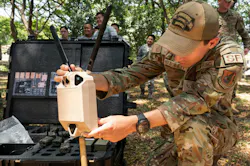
Finally, says Zakharchenko, there is the challenge of integration and longevity. Defense programs have long lifecycles, yet AI and sensor technology evolve quickly. Building hardware that is flexible enough to be updated with new algorithms via software without requiring a complete hardware teardown is a massive engineering challenge. Moving toward software-defined sensors is the industry's attempt to solve this, but it requires a fundamental shift in how we design the underlying processing architectures.’
What Does the Future Hold?
The development of sensors and sensor technology in an ever-expanding world of artificial intelligence, more data, and a ravenous appetite for interoperability and actionable intelligence. So, what will the future of sensitization and all its peripheral computing and applications bring?
“We’re seeing continued advances in multi-sensor fusion, where electro-optical data is combined with other sensing modalities to create more comprehensive situational awareness," says Dr. Yiannis Papelis of Old Dominion University. “There is also significant progress in edge computing and onboard inference, allowing systems to process and interpret data closer to the point of collection. This is reducing bandwidth requirements and latency and enabling more responsive operations.”
Looking ahead, Dr. Papelis sees areas of strong focus in autonomous sensor networks, where multiple platforms collaborate and share data in real time. He also sees improved performance in degraded environments, including fog, low light, and high-clutter scenarios, and lastly, AI-assisted detection and classification, particularly for dynamic and ambiguous targets.
Like Dr. Papelis, Meghan Welch also views the future with an emphasis on edge computing and processing, as well as distributed sensing, resilient architectures, and more robust integration.
"We’re seeing real progress in edge-based AI processing, where sensors can autonomously detect, classify, and prioritize targets without relying on centralized systems," says Meghan Welch. "That’s critical for operating in denied or bandwidth-constrained environments. Another area is the proliferation of low-cost, distributed sensing, particularly in unmanned systems and space. Instead of relying on a few exquisite platforms, there’s a shift toward resilient, redundant architectures that are harder to disrupt. Looking forward, I think the strongest areas of focus will be sensor fusion and cross-domain integration, autonomous processing and decision support at the edge, resilient sensing in contested and degraded environments, and supply chain localization and material innovation, particularly in infrared components."
Adam Smith of Link views future sensor technology as shifting the emphasis to data and its treatment. "As electro-optical technologies continue to evolve, the conversation is shifting from 'how do we collect more data?' to 'how do we make better decisions with the data we already have?" says Adam Smith. "The operational advantage will go to teams that can move from raw sensor input to actionable insight in seconds, not hours, particularly in time-constrained and contested environments. This shift underscores the importance of human-machine teaming approaches that enhance, rather than replace, operator judgment while enabling them to operate at greater speed and scale."
Like many others quoted herein, Dmitry Zakharchenko of Blaize says that looking ahead, there is expected to be a heavy focus on autonomous sensor fusion. "The industry is moving toward platforms that can natively ingest and correlate multiple high-bandwidth streams (e.g., EO, IR, and RF) simultaneously," he says. "This requires a departure from traditional, power-hungry compute methods in favor of architectures that can handle data-flow complexity with extreme efficiency. Also, there is an anticipation of a drive toward predictive situational awareness. Future sensors will not only identify threats but use low-latency AI at the edge to anticipate a target’s next move. More importantly, emerging systems are evolving beyond detection and prediction toward bounded reasoning—operating within defined decision mandates to prioritize, recommend, or take limited actions in real time. Achieving this level of capability within the strict SWaP constraints of tactical devices will be the defining challenge for the next generation of defense electronics."
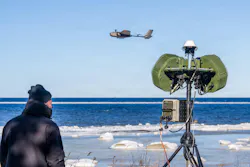
Sensor technology continues to advance. But so do many other interfacing systems where they interact. The more complex space systems and combat systems evolve, the more demand there is for interoperability and integration with legacy systems and designs as well as new systems and architectures. This demand will be a stimulus for more and more engineering that creates new potential for sensor technology while keeping within design boundaries of weight, temperature, compatibility, data, and small UAVs and UAA vehicles and technologies. There is so much to design for and so much for aerospace and electronics systems to meet in the introduction, implementation, and maintenance of sensor technology and systems.
“The way threat warning systems are integrated today needs to evolve,” says Mike Sweeny of BAE. “Systems must be adaptable and easy to integrate onto existing aircraft and other platforms using Modular Open Systems Architectures and open U.S. government interface standards. This will bring agility to the fighting force to quickly update systems with advanced technology as it matures and is ready for battle.”