Binder introduces triangular molding for M16 and M12 cable connectors to improve durability and strain relief
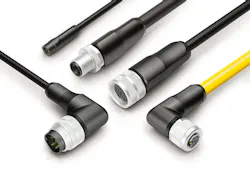
CAMARILLO, Calif. - binder USA, LP in Camarillo, Calif., has introduced a triangular molding design for its M16 cable connectors and M12 K- and L-coded variants, aimed at improving mechanical performance in industrial environments with dynamic cable movement.
The updated design targets applications involving moving machinery, energy chains, and robotic systems, where connectors are subject to repeated bending, vibration, and tensile stress. The triangular molding is intended to improve force distribution at the transition between the cable and connector, helping reduce material fatigue over time.
According to the company, the geometry distributes bending and tensile forces more evenly while also enhancing anti-twist performance. These characteristics are designed to improve mechanical stability and extend service life in demanding operating conditions.
In addition to mechanical performance, the molding is designed to improve handling during installation and maintenance. The structured shape provides additional grip and reduces potential dirt traps in the connection area, which may simplify cleaning in environments exposed to dust, oil or moisture.
The design is implemented using M16 cable connectors in series 425, intended for industrial signal transmission. These connectors are available with 3 to 12 contacts and support rated voltages of up to 150V and currents of up to 3A. When mated and locked, they meet IP67 and IP68 protection ratings for use in environments with dust and moisture exposure.
The connectors feature gold-plated contacts for electrical reliability and are offered in both shielded and unshielded configurations. They are molded directly onto the PUR cable, with standard lengths of 2m and 5m, and additional lengths available on request.
The triangular molding required precise tool design, controlled material flow during injection, and prevention of air inclusions, while maintaining electrical and mechanical performance.
Typical applications include automation systems, mechanical and plant engineering, robotics, conveyor systems, packaging equipment, and measurement and sensor technology, particularly in systems where cables are subject to continuous motion.
For more information, please visit https://www.binder-usa.com.