Navy asks Kratos for 70 subsonic uncrewed target drones for shipboard air defense in $61.1 million deal
Key Highlights
Questions and answers:
- What is the purpose of the BQM-177A aerial target drone? To simulate high-subsonic, sea-skimming anti-ship cruise missiles so Navy aircrews and surface warship crews can train against realistic threats.
- How many BQM-177A drones are included in the latest Navy contract? The U.S. Navy awarded Kratos a $61.1 million contract for about 70 BQM-177A subsonic aerial targets, along with 70 rocket-assisted takeoff kits.
- What capabilities make the BQM-177A a high-fidelity target? It can fly at speeds above Mach 0.95, skim as low as 10 feet above the sea, and carry payloads such as electronic countermeasures, RF augmentation, infrared plume pods, and chaff and flare dispensers.
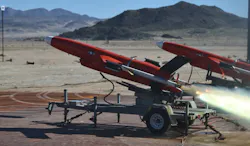
PATUXENT RIVER NAS, Md. – High-performance target drones experts at Kratos Defense & Security Solutions Inc. will build about 70 uncrewed subsonic aerial targets designed to help Navy aircraft and surface warship crews learn to defeat enemy cruise missiles.
Officials of the U.S. Naval Air Systems Command at Patuxent River Naval Air Station, Md., announced a $61.1 million order last week to the Kratos Unmanned Systems Division in Sacramento, Calif. (formerly Composite Engineering Inc.), for 70 BQM-177A subsonic aerial targets and 70 rocket-assisted takeoff attachment kits.
The BQM-177A is the Navy’s next-generation subsonic aerial target (SSAT), which is designed to mimic the behaviors and radar cross sections of dynamic, high-subsonic, sea-skimming anti-ship cruise missiles to help naval personnel practice air-to-air engagements.
In November 2016 Kratos Unmanned Systems officials announced they had achieved the final development program milestone for the BQM-177A target drone leading up to low-rate initial production. In 2018 Kratos began LRIP on the BQM-177A with a Navy order for 45 of the high-performance target drones.
High-fidelity target
This month's contract also includes technical and administrative data in support of weapons system test and evaluation and fleet training for the Navy.
The BQM-177A program is designed to meet the U.S. Navy's requirements for a new high fidelity target to replicate subsonic anti-cruise missile threats in direct support of fleet training and weapon system testing and evaluation.
Capable of speeds in excess of 0.95 Mach and a sea-skimming altitude as low as 10 feet above the surface of the water, the BQM-177A carries internal and external payloads including proximity scoring, identification friend or foe (IFF), passive and active RF augmentation, electronic countermeasures, infrared plume pods, chaff and flare dispensers, and towed targets.
The BQM-177A is based on the Kratos BQM-167X aircraft, a derivative of the U.S. Air Force BQM-167A Skeeter target. The BQM-177A introduces a new fuselage with area ruling, high-mounted wings, and an internally integrated MicroTurbo TR-60-5+ turbo jet engine for reduced transonic drag.
Long-range target drone
The BQM-177A will augment and later replace existing BQM-74E aerial targets, and will deliver longer range, lower cruise altitudes, and greater maneuverability than previous-generation target drones.
The BQM-177A is 17 feet long, has a 7-foot wingspan, and weighs 620 pounds with fuel or payloads. It can fly at altitudes as low as 6.6 feet above the ground or water, and as high as 40,000 feet above sea level.
On this contract Kratos will do the work Sacramento, Santa Ana, Concord, and Chatsworth, Calif.; Dallas; Fort Walton Beach, Fla.; Blacksburg, Va.; Milwaukie, Ore.; and other U.S. locations, and should be finished by August 2028. For more information contact Kratos Unmanned Systems online at www.kratosdefense.com/unmanned-systems/air/aerial-targets/bqm177, or Naval Air Systems Command at www.navair.navy.mil.
