Navy asks industry for 45-pound uncrewed vehicles to help reduce risks to Marines on the battlefield
Key Highlights
Questions and answers:
- What is the U.S. Navy seeking from industry? The Naval Surface Warfare Center Crane Division is seeking companies able to provide a 45-pound uncrewed vehicle for the U.S. Marine Corps to counter enemy uncrewed systems and reduce battlefield risk to Marines.
- What are the basic performance requirements for the uncrewed system? The vehicle must weigh no more than 45 pounds, operate for at least 30 minutes on battery power, and move at speeds between 2.5 and 4 miles per hour — roughly the pace of infantry Marines.
- What additional capabilities is the Navy evaluating? Navy researchers are assessing payload capacity, safety and deployment features, autonomy levels, production speed, cost, stealth, operation in contested environments, Blue UAS status, prior demonstrations, and potential weapons capability.
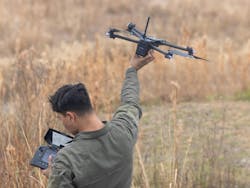
CRANE, Ind. – U.S. Navy researchers are surveying industry for companies able to provide a 45-pound uncrewed vehicle for the U.S. Marine Corps to counter enemy uncrewed systems and reduce risks to Marines on the battlefield.
Officials of the Naval Surface Warfare Center (NSWC) Crane Division in Crane, Ind., issued a request for information (N0016426SNB34) last week for the Autonomous Systems to Reduce Risk Warfighters Encounter project.
This uncrewed system must weigh no more than 45 pounds, have at least a 30-minute battery charge; and be able to move at speeds between 2.5 and 4 miles per hour -- or about the same speed as infantry Marines. the system must be able to reduce the risk a Marine faces by searching for uncrewed ground vehicles, aircraft, surface vessels or submarines.
Uncrewed vehicle description
Navy researchers want to know the amount of weight the proposed uncrewed vehicle can carry; if it has safety systems for dropping and deployment; if it has a timer feature; what is its cost; how fast each unit can be produced; if it is on the Blue UAS list; if it's been shown, and if so, where; if it has any level of machine autonomy; if it can work in contested environments; if it's stealthy; and if it has weapons capability.
Companies interested should email five-page responses no later than 30 March 2026 to the Navy's Mark Dravet at [email protected] and Lance Buechler at [email protected].
Email questions or concerns to Mark Dravet at [email protected] and Lance Buechler at [email protected]. More information is online at https://sam.gov/workspace/contract/opp/824e30e5e65b40a88ca73f183f1bbc95/view.
