UAV Navigation introduces VECTOR-300 autopilot for uncrewed interceptor and loitering munition systems
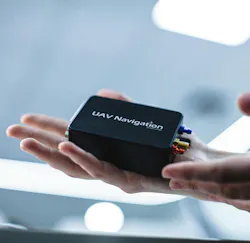
MADRID - UAV Navigation, a division of Grupo Oesía specializing in guidance, navigation, and control systems for uncrewed vehicles in Madrid, has introduced VECTOR-300, a high-performance autopilot designed for mass-produced attritable uncrewed aerial systems, with a focus on loitering munitions and counter-uncrewed aerial system interceptor applications.
VECTOR-300 is engineered to combine advanced autonomous guidance, navigation, and control capabilities with scalability and manufacturability. The system architecture is designed to reduce technical complexity and support large-scale production while maintaining consistent performance across high-volume deployments.
The autopilot is intended for high-dynamic interception and terminal-phase missions, providing precision guidance with high accuracy. UAV Navigation said VECTOR-300 supports integration of artificial intelligence-based target identification and optical data directly into its guidance, navigation, and control loops, enabling engagement of both static and moving targets. The system also supports real-time trajectory adaptation during pursuit and terminal engagement phases.
VECTOR-300 is designed to operate in contested and global positioning system-denied environments, including electronic warfare conditions such as jamming, spoofing, and meaconing. Its navigation core uses inertial algorithms and multisensor fusion to maintain mission continuity, and it can be paired with the company’s Visual Navigation System to improve dead reckoning performance.
Building on the VECTOR autopilot family, VECTOR-300 supports autonomous mission execution, swarming and formation flight, four-dimensional trajectory management for time-on-target operations, high-dynamic maneuvering, and crewed-uncrewed teaming, among other capabilities.
The system features an open and modular architecture intended to support interoperability with third-party platforms, payloads, and sensors through integration with VECTOR MCC. It also enables integration of autonomous decision-making software, allowing adaptation to evolving operational concepts and autonomy requirements.
UAV Navigation said VECTOR-300 is intended to address both near-term operational requirements and longer-term uncrewed systems development needs, with a scalable and resilient design aimed at supporting future defense programs.
For more information, please visit https://www.uavnavigation.com/.