U.S. to scramble to replenish supplies of smart munitions and guided weapons expended in Iran war
Key Highlights
Questions and answers:
- What types of weapons did the U.S. use in the opening strikes of the Iran war? The U.S. used a mix of conventional and smart munitions, including Tomahawk cruise missiles, Precision Strike Missiles (PrSM), JDAMs, JSOWs, LUCAS drones, MQ-9 Reapers, and air-to-air missiles like the AIM-9X and AIM-120 AMRAAM.
- Why is there concern about the continued use of smart weapons? Smart munitions are expensive and limited in supply. If the conflict lasts several weeks, stockpiles could run low, potentially forcing greater reliance on less precise, unguided bombs. answer to question goes here
- What is the GBU-57 Massive Ordnance Penetrator and why is it important? The GBU-57 MOP is a 30,000-pound satellite-guided bunker-buster designed to destroy deeply buried targets like reinforced bunkers and tunnel facilities. Each bomb costs about $3.5 million, and the Pentagon recently awarded a contract for additional units to replenish supply.
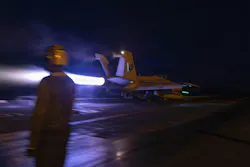
THE MIL & AERO BLOG – By now everyone knows that the war with Iran is on. The U.S. high-tech arsenal has been on full display, as a wide variety of conventional and smart munitions take-out the Iranian high command, missile sites, command and control, the Iranian naval surface warships.
The Iran war started Saturday morning with a barrage of advanced weapons from land, sea, and air, including warship-launched Tomahawk cruise missiles, Precision Strike Missiles (PrSM), Joint Direct Attack Munitions (JDAMs), Joint Standoff Weapons (JSOWs), and uncrewed weapons such as Low-Cost Unmanned Combat Attack System (LUCAS) drones and the MQ-9 Reaper uncrewed aircraft.
Air-to-air weapons used over the weekend included the AIM-9X Sidewinder infrared-guided missile and the radar-guided AIM-120 Advanced Medium-Range Air to Air Missile (AMRAAM) for air defense.
It was a devastating display of guided weapons, and of the U.S. ability to carry out "surgical" strikes on Iranian leaders, weapons systems, and maritime weapons, with the intent of causing as little civilian damage as possible.
Surgical strikes
There's a problem, though; smart weapons are expensive, and their stockpiles don't last forever. U.S. military leaders estimate that strikes on Iranian targets could last much longer than through the weekend. Attacks might last over the next four or five weeks.
It's a cinch that over the next several months, one of the Pentagon's top priorities will be to ramp-up smart munitions production. Just last week -- before the war even started -- the Air Force let a $61.5 million contract to Boeing for about 17 more GBU-57 Massive Ordnance Penetrator bunker-busting super bombs.
You might remember last June when U.S. B-2 Spirit stealth bombers dropped 14 GBU-57A/B Massive Ordnance Penetrators on deeply buried enrichment sites at Fordow and Natanz, Iran. Each GBU-57 bomb costs about $3.5 million, so this contract could pay for as many as 17 more of these massive bombs.
The satellite-guided Massive Ordnance Penetrator, otherwise known as MOP, is a 30,000-pound super bomb with a 6,000-pound high-explosive warhead that is designed to destroy hard and deeply buried targets such as reinforced-concrete bunkers and deeply buried tunnel facilities.
Satellite guidance
Without a deep supply of smart munitions, continued attacks on significant targets in Iran progressively could get less smart and less surgical as reliance on unguided bombs increases as smart weapons supplies start to run low.
When or if supplies of smart munitions start to run out is anyone's guess. Sustained military operations like those we're seeing in Iran burn-through supplies of smart weapons at an alarming rate. Estimates say that some types of U.S. smart munitions in a high-intensity war with China over the Taiwan Strait, for example, could be exhausted in as little as three to seven days.
You can bet that traditional U.S. adversaries like China and Russia will be watching closely to gauge when this might start to happen. No one in the U.S. government wants to see that happen, so it's likely that we'll see more smart weapons contracts over the next several months to a year.
Certainly these smart weapons are not being expended at current rates during operations in Iran, but it's something to think about.
