Siemens to provide automation and digitalization solutions for CAPHENIA SAF rollout
Key Highlights
- Siemens and CAPHENIA partner to scale sustainable aviation fuel (SAF) production using plasma technology.
- Siemens provides automation, digital twin, and process control solutions to support global SAF facility deployment.
- CAPHENIA's plasma reactor efficiently converts bio-methane into synthesis gas with over 86% energy efficiency.
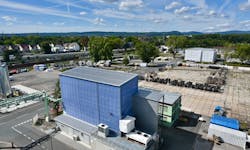
MUNICH - Siemens AG in Munich and CAPHENIA GmbH, in Frankfurt, Germany, have entered into a partnership to scale production of sustainable aviation fuel (SAF) using CAPHENIA’s plasma-based technology.
Under the agreement, Siemens becomes CAPHENIA’s preferred automation and digitalization partner, providing process control systems, drive technology, measurement systems, process simulation software, and digital twin capabilities from its Xcelerator portfolio. The goal is to create a standardized automation and digitalization concept to support the global rollout of commercial SAF production facilities.
CAPHENIA’s technology uses a plasma process to split bio-methane into synthesis gas at temperatures of about 1,500 degrees Celsius. Its Plasma Boudouard Reactor, or PBR, integrates three established chemical reactions into a single 3-in-1 zone reactor system. The resulting synthesis gas can be processed into synthetic kerosene, renewable diesel, or other chemical products without by-products and with minimal energy losses, according to the companies.
Related: Embraer-X inks innovation agreement with Sustainable Aero Lab
A feature of the system is thermal integration. Heat released during cooling of the synthesis gas is used to preheat incoming bio-methane, resulting in process efficiency of more than 86 percent. The companies say this represents significantly higher energy efficiency than conventional methods.
"Decarbonizing aviation cannot be achieved without synthetic fuels. Demand for SAF is growing exponentially, yet production capacity urgently needs to be ramped up," said Christian Gückel, head of vertical chemicals at Siemens Digital Industries. "This is exactly where Siemens comes in: with our digitalization and automation solutions, we are making CAPHENIA's technology industrially scalable and thus accelerating its global market ramp-up."
Siemens is supporting CAPHENIA from its pilot plant at the Industriepark Höchst in Frankfurt, Germany, through commercial scale-up. The companies aim to develop a modular, standardized automation and digitalization template for the PBR that can be adapted to different sites, reducing commissioning time and accelerating deployment of new plants.
Demand for SAF is increasing, driven in part by regulatory requirements such as the European Union’s Renewable Energy Directive, which mandates binding blending quotas and imposes penalties for noncompliance. By 2050, the global aviation industry is expected to require about 500 million tons of SAF annually. Currently, SAF accounts for less than 1 percent of global kerosene demand, underscoring the need for scalable production technologies.
