Navy asks Boeing for avionics real-time mission computers for radar, infrared, and EW sensor fusion
Key Highlights
Questions and answers:
- What aircraft will use the Navy’s Advanced Capabilities Mission Computer (ACMC) units? The F/A-18E/F Super Hornet and EA-18G Growler.
- What are the main functions of the ACMC? It handles mission processing, sensor fusion, weapons control, threat identification, and decision support.
- How do ACMCs improve over legacy mission computers? They provide faster processing, handle multiple data streams, support software upgrades, and reduce the need for multiple legacy computers.
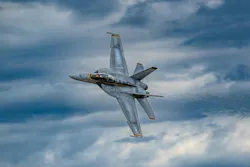
PATUXENT RIVER NAS, Md. – U.S. Navy experts needed high-performance mission computers for they F/A-18E/F Super Hornet jet fighter-bomber and the and EA-18G Growler electronic warfare (EW) jet. They found a solution from the Boeing Co. Defense, Space & Security segment in St. Louis.
Officials of Naval Air Systems Command at Patuxent River Naval Air Station, Md., announced a $38.9 million order to Boeing last week for Advanced Capabilities Mission Computer (ACMC) units, which provide mission processing, sensor integration, and decision-support capabilities for the Super Hornet and Growler combat jet avionics.
ACMCs enable rapid processing of complex data from sensors, communications systems, and weapon systems for Navy weapons and avionics in real time.
ACMCs handle real-time sensor fusion from radar, sonar, EW systems, and communications links. They fuse data to provide an integrated picture of the battlefield, and help pilots and operators make fast and accurate decisions.
Weapons fire control
These ruggedized military computers also manage weapons fire-control; enable automatic threat identification and targeting for missiles, guns, or torpedoes; and support coordinated engagements with naval ships, aircraft, and submarines.
ACMCs also can reduce the need for several legacy computers to simplify maintenance and improve reliability. They can accept software upgrades to add new capabilities without replacing hardware.
On the F/A-18E/F and EA-18G Growler, ACMCs provide EW, threat detection, and weapons control. On naval ships, ACMCs can be part of combat management systems that coordinate radar, missile defense, and communications networks.
ACMCs offer faster processing speed and memory than older military mission computers. While legacy mission computers can handle basic sensor inputs and weapons control, they can struggle with processing several data streams at once.
Processors and databuses
ACMCs use modern processors and high-speed databuses, which enables them to process large amounts of sensor and targeting data, and can synthesize radar, sonar, EW, camera, and communications data into one tactical picture.
ACMCs can analyze threats automatically, rank targets in order of importance, and suggest countermeasures. They also are designed to coordinate with other ships, aircraft, and ground forces in networked combat operations, where data from one can support another in real time.
On this order, Boeing will do the work in Bloomington, Minn.; St. Louis; and Linthicum Heights, Md., and should be finished by June 2029. For more information contact Boeing Defense, Space & Security online at www.boeing.com/defense, or Naval Air Systems Command at www.navair.navy.mil.
