WASHINGTON - Lockheed Martin Corp.'s Rotary and Mission Systems business unit has received a U.S. Navy contract valued at $122.4 million for Trident strategic weapons system fleet support, shipboard integration, and navigation subsystem development.
The cost-plus-incentive-fee and cost-plus-fixed-fee contract (N0003027C3015) covers Strategic Weapon System Trident Fleet Support, Trident II Strategic Systems Programs Shipboard Integration Increment 8, and navigation subsystem development. The award also supports a foreign military sale to the United Kingdom.
A central objective of Shipboard Integration Increment 8 is replacing the aging Electrostatic Gyro Navigator (ESGN), an inertial-navigation system used in the Trident strategic weapons system. The Navy's fiscal 2027 budget justification identifies the approximately 30-year-old equipment as a modernization priority, along with replacing electronic equipment consoles and updating navigation subsystem software.
Related: Honeywell to supply ring laser gyro components for Navy WSN-7
Navigating
Inertial navigation systems use internal sensors to measure motion and orientation and calculate a platform's position and movement. For submarines, this capability is particularly important because they cannot continuously rely on satellite navigation signals while operating underwater.
The Increment 8 effort also includes related changes to fire-control and navigation training systems, as well as software updates for shipboard data and recording systems. The Navy's budget documentation says the alterations will retain existing navigation-center infrastructure, including equipment bedplates, cabling, chilled-water and ventilation systems, and electrical power.
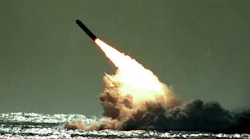
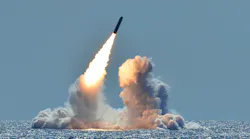
The work is part of the Navy's broader Shipboard Systems Integration program, which uses a commercial off-the-shelf (COTS)-based strategy to integrate common electronics into the fire-control subsystem. The program also refreshes inertial-navigation technology to sustain the Trident II D5 Life Extension (D5LE) strategic weapons system aboard Ohio-class ballistic-missile submarines and establish a baseline for Columbia-class submarines.
Related: Lockheed Martin wins $10.4 million contract for Patriot guidance processor redesign
The Navy's incremental modernization approach targets aging equipment and obsolescence while retaining selected existing shipboard infrastructure. Increment 8 focuses on navigation equipment, consoles and associated software rather than introducing a new missile system. The budget documentation describes a separate, broader shipboard re-architecture effort intended to improve the adaptability and scalability of the strategic weapons system's underlying architecture.
Work will be performed in Mitchel Field, New York (77%); Huntington Beach, California (20%); Manassas, Virginia (2%); and other locations (1 percent total). Work is expected to be completed by 31 Oct. 2030.
The contract value includes optional line items, if exercised, and is subject to fund availability. Approximately $29.2 million in fiscal 2027 Navy operations and maintenance, other procurement, and shipbuilding and conversion funds will be obligated at award. The $3.97 million in operations and maintenance funds will expire at the end of fiscal 2027.