Moog adds high-delta-V configuration to METEORITE satellite bus
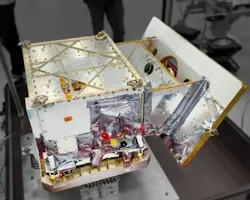
EAST AURORA, N.Y. - Moog Inc. has added a High Delta-V configuration to its METEORITE ESPA-class satellite bus to increase propulsion capacity and orbital maneuverability for missions requiring high-energy transfers, orbital-plane changes, rapid repositioning, and frequent station keeping.
The configuration builds on the company's METEORITE bus, adding increased thrust and propellant capacity without requiring a lengthy new development and qualification program. Moog is targeting the configuration for propulsion-intensive missions, including tactical intelligence, surveillance and reconnaissance (ISR) and space-domain-awareness applications.
The baseline METEORITE is designed for low Earth orbit missions from 500 to 1,200 kilometers and has a 120-kilogram dry bus mass and payload capacity of up to 220 kilograms. Moog specifies more than 175 meters per second of delta-V for a configuration with a 200-kilogram dry mass. The company has not disclosed the delta-V, thrust, or propellant capacity of the new High Delta-V configuration.
METEORITE combines propulsion with radiation-tolerant avionics and a configurable spacecraft architecture. Its flight systems include a radiation-hardened BRE440 processor, configurable flight software, a three-axis stabilization system using reaction wheels and torque rods, a layered guidance, navigation, and control sensor suite, and a modular power system. The baseline platform uses green propulsion and is designed for ESPA rideshare or dedicated small-launch-vehicle missions.
Moog identifies multi-plane deployments, high-LEO repositioning, and transfers toward medium Earth orbit (MEO) and geostationary Earth orbit (GEO) as potential applications for the High Delta-V configuration. The additional maneuvering capability is intended to support dynamic space operations in which a spacecraft must change orbital position or perform more frequent maneuvers after launch.
For more information, visit https://www.moog.com/.