Near Earth to prototype autonomous resupply aircraft for Marine Corps
Key Highlights
- The program focuses on developing an autonomous logistics aircraft to support Marine Corps operations in contested environments.
- The aircraft combines Near Earth's Captain autonomy architecture with Bell 505 and Moog avionics for rapid deployment and adaptability.
- It aims to carry a 1,300-pound payload over 100 nautical miles, fitting two aircraft inside a C-130 for transportability.
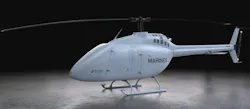
PITTSBURGH - Naval Air Systems Command has awarded Near Earth Autonomy in Pittsburgh an Other Transaction Agreement under the Naval Aviation Systems Consortium for the Medium Aerial Resupply Vehicle-Expeditionary Logistics (MARV-EL) Increment 2 program to prototype autonomous aerial logistics aircraft for the U.S. Marine Corps.
Near Earth will lead the effort with Bell Textron in Fort Worth, Texas, Moog Inc. in East Aurora, N.Y., and XP Services in Warrenville, Ill. The team’s Uncrewed 505 logistics aircraft combines Near Earth’s Captain autonomy architecture with the Bell 505 platform and Moog’s Genesys avionics to create an autonomous cargo aircraft intended for tactical-edge resupply missions in contested environments.
The MARV-EL program is intended to address logistics challenges associated with Distributed Maritime Operations and Expeditionary Advanced Base Operations concepts, where dispersed Marine Corps forces require sustained resupply while reducing risk to onboard helicopter crews operating in contested areas.
Related: AIR completes first flight of heavy-lift cargo UAS platform
According to Near Earth, the aircraft is being designed to integrate with existing Marine Corps operational workflows, including MAGTAB and MANGL integration. The company said the aircraft is also intended to support cargo handling with standard pallet jacks and forklifts, reducing infrastructure requirements during expeditionary operations.
Aerial logistics
Near Earth executives said the program builds on experience gained through previous Marine Corps Tactical Resupply Unmanned Aircraft System (TRUAS) and Aerial Logistics Connector programs, as well as autonomy work associated with the Army’s RUC-60 optionally piloted Sikorsky UH-60 Black Hawk helicopters.
The autonomous flight architecture is based on Near Earth’s Modular Open Systems Approach (MOSA)-based Captain autonomy framework, which is designed to support autonomous takeoff, en route navigation, obstacle avoidance, GPS-denied navigation, safe landing, and dynamic in-flight mission updates while preserving the assurance artifacts needed for airworthiness and future military flight release processes.
Bell officials said the Bell 505 provides a mature, OEM-supported aircraft platform suitable for rapid adaptation to autonomous logistics missions, while Moog said its role includes integrating autopilot systems, avionics, and flight-control hardware.
XP Services will provide aircraft modification, integration, maintenance, and experimental flight-test support throughout the development effort.
Program background
According to the companies, the awarded contract requires a logistics aircraft capable of carrying a 1,300-pound payload with a 100-nautical-mile combat radius. Near Earth said its proposed Bell 505-based configuration is intended to exceed some threshold objectives, including increased payload capacity, support for a full Joint Modular Intermodal Container, longer combat radius, and transportability allowing two aircraft to fit inside a Lockheed Martin C-130 Hercules cargo aircraft with minimal disassembly.
Near Earth said the program builds on more than 13 years of autonomy development work involving more than 10,000 flights across more than 140 airframes. Previous autonomous helicopter platforms developed by the company have included the Kaman K-MAX, Bell 412, Leonardo AW139, and Sikorsky UH-60 Black Hawk.
The MARV-EL Increment 2 effort is scheduled to continue for 36 months and will include integration and flight testing intended to progress from early demonstrations to full mission capability for autonomous Marine Corps aerial logistics operations.
About the Author
Jamie Whitney
Editor-in-Chief
Jamie Whitney joined the staff of Military & Aerospace Electronics in 2018 and oversees editorial content and produces news and features for Military & Aerospace Electronics, attends industry events, produces Webcasts, and oversees print production of Military & Aerospace Electronics.
Voice Your Opinion!
To join the conversation, and become an exclusive member of Military Aerospace, create an account today!

Leaders relevant to this article: