Aptiv supports NVIDIA Jetson Orin Nano 2 for edge AI systems
Key Highlights
- The Jetson Orin Nano 2 offers up to 78 TOPS of AI performance with reduced power consumption, ideal for size-constrained autonomous platforms.
- Aptiv enhances sensor input with PULSE surround-view cameras and Gen 8 radar, providing comprehensive perception under challenging environmental conditions.
- Edge computing enables real-time data processing onboard drones and robots, reducing reliance on remote data centers and improving operational responsiveness.
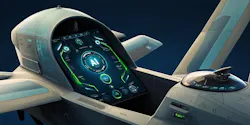
SCHAFFHAUSEN, Switzerland — Aptiv in Schaffhausen, Switzerland, is expanding its work with California-based NVIDIA to support the new Jetson Orin Nano 2 platform for AI-enabled drones, robots and other autonomous systems. Aptiv plans to combine NVIDIA's embedded computing technology with sensing, software and engineering support.
The effort builds on Aptiv's existing support for NVIDIA Jetson platforms, including Jetson Thor. It targets what the companies describe as physical AI: systems that use artificial intelligence to interpret sensor information and make decisions while operating in the real world.
For aerospace applications, this includes delivery and inspection drones that have to process information from cameras, radar and other sensors while meeting the size and reliability constraints of a mobile platform.
Jetson Orin Nano 2 targets smaller edge AI systems
NVIDIA designed Jetson Orin Nano 2 as an entry-level embedded AI platform for robotics, drones and machine-vision applications. The module provides up to 78 trillion operations per second (TOPS) of AI performance, 8 gigabytes of memory and an eight-core Arm processor.
According to NVIDIA, the platform doubles inference performance compared with the previous Jetson Orin Nano while using 40% less power at equivalent performance.
That balance matters for autonomous aircraft and other mobile systems because adding computing capability creates its own engineering tradeoffs. More processing can support sophisticated perception and AI models, but available electrical power, cooling capacity, weight and physical space remain limited.
Aptiv adds sensing around the AI computer
Compute alone does not give an autonomous system an understanding of its surroundings. Sensors first have to capture the information that feeds perception software. Aptiv plans to support Jetson-based systems with its own sensing technologies, including Aptiv PULSE and Gen 8 radar.
PULSE combines surround-view cameras with ultrashort-range radar to provide 360-degree sensing. Aptiv's Gen 8 radar adds longer-range detection and 4D perception capabilities intended for operation in difficult environmental conditions.
Bringing those inputs together gives AI software different types of information to work with. Cameras can provide detailed visual information, while radar can measure range and motion and continue operating under conditions that may degrade camera performance. For a drone or robot, the challenge becomes turning those separate inputs into a usable picture fast enough to support autonomous functions.
Moving from a demonstration to a fleet creates another challenge
A prototype can prove that an AI model works on a particular piece of hardware. Deploying that same capability across a commercial fleet introduces a different set of requirements.
Systems need software updates, security monitoring and long-term maintenance. Developers may also have to manage compliance requirements and ensure that software changes do not create unexpected behavior elsewhere in the platform.
Aptiv plans to use Wind River software and lifecycle services to address those parts of deployment.
The company is also developing robotics computing solutions around Jetson Orin Nano 2, Orin NX and AGX Orin. The range gives customers different computing options based on an application's performance requirements.
Jay Bellissimo, senior vice president and president of Intelligent Systems, Software and Services at Aptiv, said physical AI is moving from experimentation toward deployment, requiring manufacturers to consider perception, software and systems integration alongside processing capability.
Edge processing changes how autonomous systems use data
The broader move toward embedded AI reflects the amount of sensor information modern autonomous systems can generate. Sending all of that information to a remote data center is not always practical. Communications links may have limited bandwidth or introduce latency, while a mobile system may temporarily lose connectivity altogether.
Edge computing moves more of the processing onto the vehicle or device itself. For an inspection drone, for example, onboard AI could analyze imagery as the aircraft collects it and identify an object that deserves closer attention. A robot could combine camera and radar information to respond to obstacles without waiting for a remote computer to return a decision.
That does not remove cloud or networked computing from the architecture, though. Instead, it changes which decisions can happen locally and which data needs to leave the platform.
Aptiv is positioning its expanded Jetson support around that transition, combining embedded AI compute with sensors, software and lifecycle services for autonomous systems operating at the edge.
About the Author
Samantha McGrail
Associate Editor
Related
Voice Your Opinion!
To join the conversation, and become an exclusive member of Military Aerospace, create an account today!
 Leaders Logo
Leaders relevant to this article: