How cold is the dark side of the Moon?
Key Highlights
- The Moon's lack of a substantial atmosphere causes dramatic temperature swings, with nighttime temperatures dropping to -208°F near the equator and below -410°F in shadowed polar regions.
- Permanent shadowed craters near the poles can preserve water ice and volatile compounds, making them key targets for exploration despite their extreme cold and hardware challenges.
- Engineers use insulation, heaters, heat pipes, and thermal switches to protect lunar hardware, but maintaining warmth requires significant energy, especially during the 14-day lunar night.
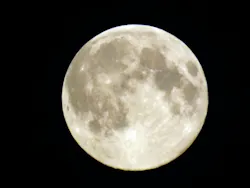
NASHUA, N.H. — Calling one half of the Moon its "dark side" makes it sound as though sunlight never reaches it, but that's actually not the case. The far side gets sunlight, too. For spacecraft on the surface, the bigger problem begins after the Sun goes down and stays down for roughly two Earth weeks.
Temperatures near the lunar equator can fall to about -208 degrees Fahrenheit (-133 degrees Celsius) at night, according to NASA. Some permanently shadowed areas near the poles get much colder, dropping below -410 degrees Fahrenheit (-246 degrees Celsius).
For landers, rovers and scientific instruments, those temperatures affect much more than whether something can physically withstand the cold. Engineers also have to figure out how to keep electronics and batteries operating through the lunar night.
Related: Why aircraft electronics are becoming harder to cool
The far side of the Moon is not always dark
The Moon takes about the same amount of time to complete one rotation as it does to orbit Earth. That keeps roughly the same hemisphere facing us, which is why the opposite hemisphere became known as the dark side. "Far side," though, is more accurate. As the Moon travels around Earth, sunlight reaches both hemispheres.
The lack of a substantial atmosphere is part of what makes the temperature change so dramatic. Earth's atmosphere absorbs, stores and moves thermal energy. The Moon has only a thin exosphere, so it cannot redistribute heat in the same way.
During daylight, the surface absorbs energy from the Sun. Once the Sun drops below the horizon, that source disappears while the ground continues releasing thermal energy to space. With nighttime lasting for roughly half of the Moon's 29.5-day day-night cycle, the surface has plenty of time to cool.
Some parts of the Moon never see sunlight
An ordinary lunar night is not the coldest environment engineers may see. Near the Moon's poles, the Sun stays low on the horizon. The walls and terrain around some craters block sunlight from reaching their floors, creating permanently shadowed regions.
Some of these locations remain dark year-round. Measurements from NASA's Lunar Reconnaissance Orbiter have found temperatures below -410 degrees Fahrenheit in these deep polar craters.
The extreme cold can also trap materials that might otherwise escape. Scientists have found evidence of water ice in these areas, which is one reason the lunar poles have become a focus for future exploration.
Electronics have temperature limits, too
Sending equipment into those temperatures requires more than choosing materials that will not crack in the cold. Batteries, electronic components and electrical connections all have temperature ranges within which they are designed to operate. Conditions that are too cold or too hot can change performance and affect the properties of spacecraft hardware.
Engineers can protect sensitive components with insulation. Heaters can maintain equipment above minimum operating temperatures, while heat pipes, thermal switches and other thermal-control hardware can move or retain heat where needed. Keeping that hardware warm, however, requires energy.
Keeping hardware warm takes power
Solar arrays provide a straightforward source of electricity during the lunar day. Once the Sun sets, a surface system has to rely on another source or use energy it stored earlier. That can make batteries a significant part of the spacecraft's mass.
NASA researchers studying lunar-night survival have looked at the amount of stored energy needed to keep conventional electronics and batteries warm through roughly 354 hours of darkness.
Adding battery capacity is one solution, but spacecraft engineers work within strict mass limits. More batteries and thermal-control hardware can mean less mass available for instruments, communications equipment or other payloads.
Other approaches can supply energy without continuous sunlight. For instance, radioisotope systems produce heat from radioactive decay. NASA is also working on fission surface power for longer-term operations on the Moon.
Related: Mouser Electronics Stocking Newest Connectivity Solutions from Nordic Semiconductor
Some hardware could freeze and wake back up
Another strategy is to stop trying to keep every component warm. NASA Glenn Research Center has studied a hibernation architecture that would allow lithium-ion batteries to become extremely cold while a spacecraft shuts down for the lunar night. Instead of spending stored energy heating batteries for hundreds of hours, the system would wait for sunlight to return.
Solar arrays could then begin generating electricity, and electronics designed to operate at cryogenic temperatures could control the process of warming the batteries and restarting the spacecraft.
The idea changes the engineering question. Instead of asking how much energy a spacecraft needs to stay warm all night, engineers can ask which components actually need to remain operational and which can safely shut down, freeze and recover later.
This could be especially useful for smaller spacecraft that cannot carry large batteries or other nighttime power systems.
Lunar-night survival matters for commercial missions
Commercial lunar missions also have to account for the long lunar night. NASA's Commercial Lunar Payload Services (CLPS) initiative buys lunar delivery and surface services from private companies. The agency identifies lunar-night survival as one of the capabilities commercial providers can offer alongside transportation and surface mobility.
The difference can determine how long a surface mission lasts. A solar-powered lander or rover that cannot survive the temperature drop may finish operating when its first sunset arrives.
Hardware that can store enough energy, use another power source or safely shut down and restart has another option… wake up when sunlight returns and keep working.
About the Author
Samantha McGrail
Associate Editor
Related
Voice Your Opinion!
To join the conversation, and become an exclusive member of Military Aerospace, create an account today!
 Leaders Logo
Leaders relevant to this article: