How build-to-print manufacturing supports legacy military aircraft sustainment
Key Highlights
- Build-to-print manufacturing relies on high-quality technical data packages to produce exact replicas of legacy components, maintaining configuration integrity.
- Reverse engineering helps recover missing or outdated design data, enabling continued production of critical parts for aging aircraft.
- Strict quality assurance processes—including inspection, traceability, and material verification—are essential to meet stringent aerospace standards.
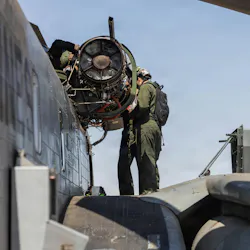
BURBANK, Calif. - Airframes, subsystems, and mission equipment continue to be worthwhile investments for many military aircraft, provided the sustainment team maintains configuration discipline to ensure those assets can keep meeting wartime or peacetime needs. But age eventually taxes the supply chain. That bracket, latch, or collection of aerospace hinges may have been specified decades ago, then acquired through a vendor chain that no longer can help you. Build-to-print manufacturing offers defense and aerospace organizations a logical method for fabricating myriad components.
Build-to-print starts with good data quality
Control build-to-print by starting with an approved technical data package (TDP). This should include drawings, specs, dimensional tolerances, material callouts, finish requirements, heat treatment needs, inspection criteria, and, of course, revision history. The manufacturer’s responsibility is to build the component exactly as specified by the engineering authority responsible for the design. That’s extremely valuable for legacy aircraft. The original aircraft baseline has already been qualified through years of service, maintenance experience, and engineering analysis. When someone manufactures to print, they build to the defined specs, track parts for traceability, and create hardware that fits within the existing configuration management process.
Obsolete parts can affect mission readiness
When you work with legacy aircraft sustainment, it doesn’t take long to run into issues like minimum manufacturing sources, low annual demand, expired tooling, unavailable castings, missing process knowledge, or vendors that no longer wish to support older aircraft platforms. Something that was once a standard bracket can suddenly become mission-essential when the total fleet population of serviceable spare parts drops below a specified amount.
Build-to-print production mitigates this problem by giving the program back control of manufacturing for parts that are no longer available through commercial channels. Technical leaders can qualify alternate suppliers, re-machine or re-build tooling as needed, machine from certified stock, develop inspection plans, and document every lot or production run for traceability.
Reverse engineering helps recover lost data
Although original drawings often serve as the basis for this manufacturing approach, they aren’t always complete, legible, or current enough to use without additional engineering work. Reverse engineering allows you to recover that lost information and still feed it into an engineering process for approval. Experienced professionals can use coordinate measurement, 3D scan data, material tests, hardness testing, coating identification, teardown observations, and comparison to known mating components to rebuild the engineering definition for a missing component. Keep in mind that reverse engineering is no shortcut toward manufacturing. The engineering package still must be signed off by the appropriate authority. Reverse engineering disciplines allow you to recover part geometry, confirm material properties, identify critical component interfaces, and establish a refreshed TDP.
Build-to-print relies on quality assurance
Once the engineering package is approved, the quality assurance team becomes responsible for ensuring those legacy aircraft parts meet all required specifications. When you’re manufacturing old components, that often means little room for deviation on fit requirements, environmental considerations, fatigue life sensitivity, or part-to-part interfaces. Expect your build-to-print supplier to implement incoming material verification, calibrated measurement systems, first-article inspection, process travelers, special-process instructions, non-destructive testing if required by the specification, and full traceability from raw material through the finished component.
A mix of capabilities adds flexibility
Rarely will you find a legacy component that comes down to just one process. It’s not unusual for a single program to need CNC machining, sheet metal fabrication, EDM, welding, heat treatment, coating, grinding, additive tooling, or casting capabilities just to build-to-print a collection of spare parts. Choosing a supplier with a wide range of manufacturing capabilities allows manufacturers to select the production process that best meets the requirements defined in the approved drawing, rather than trying to force a design into your supplier’s area of focus.
When planning your sustainment program, consider how additive manufacturing can support the effort through fixtures, gauges, forming tools, casting wash molds or skeleton cores, prototypes, or direct production of qualified parts. Don’t think of additive as a way to replace traditional tooling. Think of it as a way to reduce lead time and add flexibility to your overall production plan, especially for low-dollar components that don’t have reusable tooling.
Properly executed build-to-print programs rely heavily on strong engineering leadership, good data governance, qualified suppliers, inspection rigor, and realistic production planning. Used correctly, build-to-print manufacturing keeps older aircraft fleets maintainable, safe, and mission-ready for the next conflict.
Author bio: Eric Haworth is the General Manager of Bandy Manufacturing, a company specializing in precision manufacturing and engineered components for aerospace and industrial applications. With five years at Bandy and a background in global sales and marketing within the commercial and defense aerospace sectors, he brings a well-rounded perspective to the role. Eric Haworth focuses on driving operational excellence, supporting growth initiatives, and implementing strategic processes that strengthen team performance and overall business performance.
