LEUVEN, Belgium - Simera Sense and S&T have signed a memorandum of understanding (MoU) to develop a European space situational awareness (SSA) system combining satellite-mounted optical sensors, ground-based surveillance systems, passive radio-frequency (RF) sensors, and data-processing software.
The proposed system is intended to help European defense organizations, government agencies, and satellite operators detect, track, and characterize objects in orbit while reducing dependence on foreign space-surveillance technologies.
Simera Sense is developing its xScape100 Scan360 optical payload for space-based SSA at its French subsidiary in Toulouse. The camera builds on the company's flight-proven Earth-observation technology and is designed to scan a 360-degree field of view to observe objects in low Earth orbit (LEO) and medium Earth orbit (MEO).
Related: Army awards Sherpa 6 contract for tactical-edge endpoint management
The payload weighs 3.75 kilograms, typically consumes 15 watts, and has a 95-millimeter optical aperture. Its instantaneous field of view is 2.22 by 1.67 degrees, while its field of regard extends 360 degrees. The scanning system has a maximum angular speed of 90 degrees per second and pointing accuracy of less than 0.01 degrees.
Simera Sense says the camera can detect objects as small as CubeSats. The company expects the first flight model to become commercially available in the fourth quarter of 2027.
Partner parameters
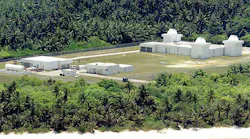
Under the proposed partnership, S&T will contribute data-processing and analysis software, ground-based surveillance and tracking systems, and passive RF sensing technologies. The companies intend to combine observations from optical and RF sensors to help satellite operators identify objects, assess potential threats, and make informed decisions about protecting their spacecraft.
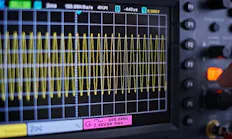
Optical and passive RF sensors offer complementary surveillance capabilities. Optical systems collect images and observations of objects in orbit, while passive RF sensors monitor radio-frequency emissions from transmitting spacecraft. RF measurements can provide information about spacecraft position, motion, and activity, but they cannot track objects that do not emit detectable radio signals.
The companies also envision deploying six to 12 xScape100 Scan360 payloads hosted on satellites. Such a network could increase observation frequency and reduce gaps in monitoring objects that existing surveillance systems may not regularly observe.
Simera Sense and S&T initially will focus on European defense and civilian customers, working to establish operational requirements and applications for the integrated system. The companies describe the effort as an opportunity to develop a sovereign European SSA capability combining space-based sensing, ground infrastructure, and data analysis.