Honeywell to provide inertial measurement units (IMUs) for AARGM-ER missile guidance and navigation
Key Highlights
Questions and answers:
- Which company is supplying inertial measurement units (IMUs) for the AARGM-ER missile? Honeywell International Inc., through its Aerospace segment in Minneapolis.
- How many AARGM-ER IMUs are being ordered, and which countries or forces will receive them? A total of 1,890 IMUs: 703 for the U.S. Navy, 530 for the U.S. Air Force, 104 for Italy, and 553 for other U.S. allies.
- What is the primary purpose of the AARGM-ER’s IMU? To guide the missile toward enemy radar emitters, maintain navigation if radar signals disappear, and assist with stability and course corrections during high-speed flight.
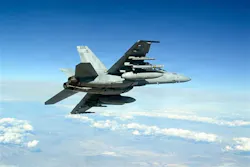
PATUXENT RIVER NAS, Md. – U.S. Navy air-to-ground missile experts are asking Honeywell International Inc. to provide inertial measurement units (IMUs) for the Advanced Anti-Radiation Guided Missile Extended Range (AARGM-ER) under terms of a $30.8 million order announced in late February.
Officials of the Naval Air Systems Command at Patuxent River Naval Air Station, Md., are asking th Honeywell Aerospace segment in Minneapolis for 1,890 AARGM-ER IMUs -- 703 for the Navy, 530 for the U.S. Air Force, 104 for Italy, 553 for other U.S. allies.
AARGM-ER is designed to sense and destroy enemy air-defense radar by homing-in on radar signals to pinpoint their targets. It is an evolution of the AGM-88E AARGM, with extended range and enhanced capabilities for modern electronic warfare (EW) environments.
The anti-radar AARGM-ER uses IMUs as part of its navigation and targeting system to guide the missile toward enemy radar emitters even when those radars attempt to shut down or jam signals. An IMU uses accelerometers and gyroscopes to measure the missile’s motion—acceleration, rotation, and orientation to help guide the missile towards its target when GPS signals are degraded or jammed.
When RF signals disappear
The missile's IMU also takes over guidance when enemy radar signals disappear, like when adversary radars shut down to avoid detection or attack. These navigation devices also work together with GPS and passive RF homing sensors.
The AARGM-ER must continue toward a target even if the radar emitter turns off. The IMU helps the missile continue navigating to the last known radar location; maintain stability and course corrections during high-speed flight; and feed motion data to the onboard missile guidance computer.
Modern U.S. tactical missiles commonly use compact high-reliability IMUs such as micro-electromechanical sensors (MEMS)-based IMUs; ring laser gyroscopes; and fiber-optic gyros that withstand high vibration and launch shock; rapid acceleration; and extreme temperatures.
Integrated guidance
The AARGM-ER guidance system combines IMU, GPS guidance, and passive RF homing to enable the missile to locate, track, and strike enemy air-defense radars even in enemy EW jamming.
The AARGM-ER is being fielded by the Navy and developed by Northrop Grumman for suppressing enemy air-defenses for aircraft like the F-35 Lightning II.
On this order, Honeywell Aerospace will do the work in Minneapolis, and should be finished by December 2027. For more information contact Honeywell Aerospace online at https://aerospace.honeywell.com/us/en/products-and-services/products/navigation-and-sensors/inertial-measurement-units, Northrop Grumman at www.northropgrumman.com/what-we-do/advanced-weapons/strike-missiles, or Naval Air Systems Command at www.navair.navy.mil.
