Rocket Lab introduces radiation-hardened star tracker for high-precision spacecraft pointing
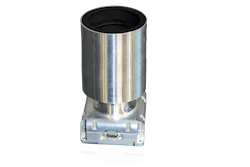
LONG BEACH, Calif. - Rocket Lab USA Inc. in Long Beach, Calif., has introduced a next-generation High-Performance Star Tracker designed to deliver precise spacecraft attitude determination in radiation-intensive environments.
The new Star Tracker, known as ST-HP, targets pointing accuracy of better than 1 arcsecond, enabling stable payload operations for long-duration missions in low Earth orbit and beyond. The unit is engineered to withstand more than 50 kRad total ionizing dose at the board level, helping maintain accuracy and reliability in high-radiation conditions that can degrade conventional optical navigation sensors.
Star trackers are critical electro-optical subsystems that use stellar field imaging and onboard processing algorithms to determine spacecraft orientation. The ST-HP builds on Rocket Lab’s existing flight heritage, with more than 185 star tracker units deployed, and incorporates additional radiation hardening to support extended mission lifetimes and deep-space operations.
The system is designed as a scalable, cost-effective solution that can be produced rapidly while maintaining performance and reliability. Company leadership indicated the product reflects continued investment in vertically integrated spacecraft subsystems and is intended to meet evolving requirements from both commercial and government missions, particularly where resilience and precision are essential without increasing cost or manufacturing complexity.
The ST-HP is part of Rocket Lab’s broader spacecraft component portfolio, which includes reaction wheels, separation systems, radios, flight and ground software, solar power systems, and optical payloads. These components are developed and manufactured in-house across facilities in the United States, Canada, Germany, and New Zealand. Star tracker production is centered in Toronto, where the company operates thermal vacuum chambers, vibration test systems, X-ray inspection, optical calibration equipment, and clean room environments to support development and qualification.
For more information, please visit https://www.rocketlabusa.com.