Sikorsky advances Nomad 100 VTOL aircraft into DARPA flight testing
Key Highlights
- The EVADE program aims to quickly evaluate lightweight autonomous VTOL aircraft with enhanced range, endurance, and payload capacity.
- Standardized software architecture, including Sikorsky's MATRIX system, simplifies operator interaction and speeds integration of new aircraft and payloads.
- Nomad 100 is designed for multirole missions such as logistics, surveillance, and weapons delivery, operating independently of traditional runways.
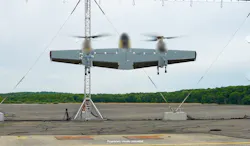
STRATFORD, Conn. - The Defense Advanced Research Projects Agency's (DARPA) effort to rapidly field a new generation of autonomous vertical takeoff and landing (VTOL) aircraft reached another milestone as Sikorsky in Stratford, Conn., completed initial ground and flight testing of its Nomad 100 uncrewed aircraft under the agency's Early VTOL Aircraft Demonstration (EVADE) program.
The flight tests mark progress in DARPA's accelerated demonstration effort, which builds on the agency's AdvaNced airCraft Infrastructure-Less Launch And RecoverY (ANCILLARY) program. Rather than waiting until later phases of development, DARPA launched EVADE to quickly evaluate autonomous VTOL aircraft weighing less than 330 pounds that offer improved range, endurance, and payload capacity over existing systems in the same size class while speeding technology transition to military users.
One of EVADE's distinguishing features is its standardized software architecture. Rather than evaluating five completely independent aircraft, DARPA selected Sikorsky's MATRIX autonomous flight system as the common autonomy software across all five participating aircraft.
The software manages flight control and navigation throughout an entire mission, from takeoff through landing, while reducing operator interaction during long-range transit. By providing a common autonomy baseline, the program allows performers to concentrate development on aircraft design, propulsion, and mission payload integration instead of developing separate flight autonomy systems.
Related: DARPA opens solicitation to commercialize agency-funded defense technologies
EVADE architecture
DARPA has also standardized portions of the mission systems architecture. All EVADE aircraft use the Naval Surface Warfare Center Dahlgren Division's Battle Management System payload software and interface with the Tactical Assault Kit, enabling aircraft to distribute operational information directly to troops while reducing reliance on dedicated ground control stations.
According to DARPA, standardizing autonomy and mission software across the demonstration fleet simplifies operator interaction and accelerates integration of new aircraft and mission payloads.
Sikorsky said Nomad 100 will next undergo an expanded flight test campaign at a government facility, where the aircraft will perform multirole mission demonstrations representative of operations from austere forward operating bases, ship decks and unimproved landing zones.
Nomad 100 is one of five aircraft designs participating in the EVADE demonstration. Other performers include AeroVironment, Griffon Aerospace, Karem Aircraft and Method Aeronautics, each pursuing a different aircraft design while using the common autonomy and mission-systems software provided through the program.
The aircraft uses Sikorsky's rotor-blown wing architecture, combining helicopter-like vertical takeoff, landing and hover with the speed, range and endurance of a fixed-wing aircraft. The design transitions from hover into wing-borne cruise flight while maintaining runway-independent operations over land and at sea.
Related: Sikorsky wins Marine Corps contract for R66-based autonomous resupply helicopter
Logistics and more
DARPA envisions the aircraft supporting missions including logistics resupply, communications relay, synthetic aperture radar, intelligence, surveillance and reconnaissance, and weapons delivery. Program officials have described the aircraft as "flying trucks" capable of carrying interchangeable payloads while providing operational capabilities typically associated with much larger Group 4 and Group 5 uncrewed aircraft systems to smaller tactical units operating without traditional aviation infrastructure.
Sikorsky said Nomad 100 is designed to operate as part of crewed-uncrewed teams and incorporates the company's MATRIX autonomy technology, which has also been integrated into the S-70UAS U-Hawk and the hybrid electric demonstrator (HEX). The company also said the aircraft's open architecture enables integration with existing command-and-control systems, including the Army Universal UAS Controller and the U.S. Marine Corps' MAGTF Agile Network Gateway Link (MANGL).
DARPA said the EVADE demonstration is intended to shorten the transition from prototype to operational capability by advancing aircraft development, certification, manufacturing readiness and supply chain maturity in parallel. The agency ultimately envisions an expandable ecosystem of autonomous VTOL aircraft that can be rapidly adapted for evolving military missions through iterative development rather than traditional acquisition timelines.
About the Author
Jamie Whitney
Editor-in-Chief
Jamie Whitney joined the staff of Military & Aerospace Electronics in 2018 and oversees editorial content and produces news and features for Military & Aerospace Electronics, attends industry events, produces Webcasts, and oversees print production of Military & Aerospace Electronics.
Related
Voice Your Opinion!
To join the conversation, and become an exclusive member of Military Aerospace, create an account today!
 Leaders Logo
Leaders relevant to this article: