FAA seeks industry input on future STARS air traffic control sustainment effort
Key Highlights
- The FAA is exploring industry competition to support the STARS system beyond its current contract expiration in 2030.
- The platform is critical for managing terminal airspace, providing real-time aircraft data, safety alerts, and controller support across civil and military facilities.
- Challenges include proprietary software, hardware obsolescence, complex integration, and security requirements, especially for military sites.
WASHINGTON - The Federal Aviation Administration (FAA) is evaluating whether sufficient industry competition exists to support the continued integration, sustainment, and enhancement of the Standard Terminal Automation Replacement System (STARS), a nationwide air traffic control automation platform used by both FAA and Department of Defense (DoD) facilities.
The FAA said it is seeking information from companies capable of assuming responsibility for system integration, software and hardware engineering, cybersecurity, logistics support, deployment, testing, training, and operational sustainment of STARS after the current contract expires on 30 Sept. 2030.
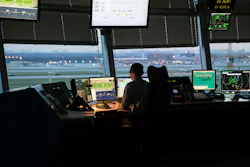
STARS serves as the FAA's primary terminal air traffic automation platform, providing aircraft surveillance, tracking, flight data processing, safety alerts, and controller situational awareness throughout the National Airspace System (NAS). The system supports air traffic controllers responsible for managing aircraft within terminal airspace, as well as controllers overseeing arrivals and departures at airport control towers.
Related: FAA shifts air traffic modernization focus toward software and automation
Program background
Originally awarded in 1996, STARS replaced several legacy terminal automation systems, including Common Automated Radar Terminal Systems (CARTS) IIIE and Automated Radar Terminal Systems (ARTS) IIE and IE. Through the FAA's Terminal Automation Modernization and Replacement (TAMR) program, the platform became the standard terminal automation architecture across FAA and military air traffic control facilities.
According to the FAA, approximately $3.55 billion has been invested in STARS through fiscal year 2025. The system is deployed at 432 FAA air traffic control towers, 145 Terminal Radar Approach Control (TRACON) facilities, and 257 Department of Defense air traffic control sites.
STARS provides controllers with real-time aircraft position, identification, tracking, and flight plan information while supporting radar separation services, weather advisories, navigational assistance, conflict alerts, mode C intruder warnings, and minimum safe altitude warnings. The platform also includes integrated training capabilities and maintenance functions for system operators and technicians.
Dual use
The system is jointly sponsored by the FAA and DoD and supports civil, commercial, and military air traffic operations. Authorized users include air traffic controllers, traffic management personnel, system maintainers, trainers, and test organizations.
Related: FAA eVTOL pilot program drives demand for detect-and-avoid and sensor fusion technologies
STARS is deployed in multiple configurations, including Full STARS and STARS ELITE. Both operate from a common software baseline and provide the same operational functionality, but support different hardware footprints. Full STARS employs redundant Full Service Level and Emergency Full Service Level processing suites designed to maintain operations during failures, while STARS ELITE provides a reduced-footprint configuration for smaller facilities.
From a systems architecture perspective, STARS integrates surveillance data from multiple sensor sources, including Airport Surveillance Radar (ASR), Air Route Surveillance Radar (ARSR), Automatic Dependent Surveillance-Broadcast (ADS-B), and multilateration systems. The platform exchanges flight and control data with the NAS En Route Automation System and interfaces with systems such as Airport Surface Detection Equipment Model X (ASDE-X) and Precision Runway Monitor (PRM).
The architecture relies on Terminal Control Positions used by controllers and Monitor and Control Positions used by maintenance personnel. It also incorporates centralized software management, configuration management, site adaptation, and testing capabilities through the STARS Central Support Complex and Operational Support Facilities.
A key technical requirement identified by the FAA is maintaining the system's availability rate of 99.9995%, reflecting STARS' role as a safety-critical national infrastructure system. The platform employs multiple levels of redundancy to ensure continuity of operations and minimize disruptions to air traffic services.
Software background
The market survey highlights several challenges facing any future contractor. Among the most significant are proprietary software components and documentation developed by Raytheon, including the AutoTrac flight and radar data integration software and the ATCoach air traffic control simulation environment used for training and testing.
Related: FAA eVTOL pilot program drives demand for detect-and-avoid and sensor fusion technologies
The FAA noted that STARS operates from a single software baseline comprising approximately three million lines of code. Any future hardware refreshes, end-of-life hardware replacements, technology insertions, or capability enhancements would need to be integrated into that baseline. The agency stated that Raytheon's proprietary software and technical information will not be provided as government-furnished information.
Additional challenges include management of third-party development tools, mitigation of hardware obsolescence and end-of-life component issues, integration of upgrades across hundreds of geographically dispersed FAA and DoD facilities, and support for installations outside the continental United States. Some military facilities also require active security clearances for site access.
The FAA said STARS is expected to remain operational until deployment of the Brand-New Air Traffic System/Common Automation Platform (BNATS/CAP).
Interested companies are being asked to describe how they would address the program's technical, operational, software-rights, supply-chain, and sustainment challenges, as well as provide examples of assuming responsibility for complex operational systems originally developed by another contractor.
Responses are due to the FAA by 17 July 2026 at 11 a.m. Eastern. The agency named Peter Dewald as the primary point of contact for this market survey. They can be reached via email at [email protected]. More information is available at https://sam.gov/workspace/contract/opp/69112bdfc04641928b10d6558cc11a4d/view.
About the Author
Jamie Whitney
Editor-in-Chief
Jamie Whitney joined the staff of Military & Aerospace Electronics in 2018 and oversees editorial content and produces news and features for Military & Aerospace Electronics, attends industry events, produces Webcasts, and oversees print production of Military & Aerospace Electronics.
Related
Voice Your Opinion!
To join the conversation, and become an exclusive member of Military Aerospace, create an account today!
 Leaders Logo
Leaders relevant to this article: