Where does mixed reality fall short in aerospace engineering?
Key Highlights
- Immersive technology allows engineers to simulate aircraft environments digitally, streamlining the design process and reducing the need for physical prototypes.
- Hardware limitations, such as headset size and optical quality, still pose challenges that impact the effectiveness of mixed reality in aerospace applications.
- Physical mockups are crucial for testing hardware responses to environmental factors like vibration and temperature, complementing virtual simulations.
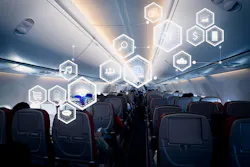
NASHUA, N.H. — Put on a headset and a digital aircraft cabin can look finished before anyone builds it. An engineer can walk through the space, inspect equipment and interact with objects positioned where they would appear in the real aircraft.
The experience can reveal useful information about a design. It also highlights an important distinction for aerospace engineers. Looking convincing is not the same as being validated.
Marti Romances, our Co-Founder and Creative Director, said immersive technology can help engineers work through designs before building physical prototypes.
“Developing immersive technologies means you don't need to physically ‘be there’; instead, you can simulate a situation digitally and accurately, reducing costs and time to get that much-needed validation,” Romances said.
However, the experience still depends on the hardware delivering it. Romances said headset size and performance remain challenges as developers work to make mixed-reality systems more practical.
“The size and performance of that hardware is still not 100% there to be optimized for a great user experience,” he said.
Virtual and mixed-reality tools can help teams evaluate designs before committing to hardware, but aircraft and spacecraft still have to operate in a physical environment. Engineers need to understand what an immersive model can establish and what still requires other forms of simulation or physical testing.
Part one: How does mixed reality help aerospace engineers design aircraft?
A virtual model is only as useful as the information behind it
Immersion changes how engineers interact with a model, but it does not automatically make the underlying engineering more accurate. The environment still depends on engineering data that accurately represents the proposed system.
NASA's Mixed Reality Engineering Toolkit reflects that relationship. The agency developed the software to support spacecraft design, hardware integration and testing as well as mission telemetry applications.
The same distinction matters when teams simulate operations. A virtual environment may allow someone to practice a procedure or evaluate an arrangement, but the result depends on how closely the simulation represents the conditions that matter to the real task.
The headset introduces its own human-factors questions
Romances identifies optical systems as a particular challenge. “The main pain points are in the optical solutions (hardware), since processing units are improving rapidly and software is already good enough to perform at a higher level,” he said.
For aerospace applications, those limitations matter because the person using the system is part of the evaluation. If a display makes information difficult to read or obscures part of a person's view, it can affect how accurately that person assesses the proposed interface.
The FAA continues to study human factors associated with head-worn aviation displays. Its 2026 research on synthetic vision and head-worn displays examines areas such as equipment functionality, intuitiveness, pilot training and potential hazards.
Some physical questions stay physical
A virtual component can occupy the correct amount of space without behaving exactly like its real counterpart. Engineers eventually need to know how hardware responds to temperature, vibration and structural loads. They may need to look at tactile feedback, physical clearances or the effort required to perform a task with actual equipment.
This is one reason physical mockups remain part of aerospace development even as immersive tools improve. Airbus combines virtual environments with real aircraft cabin equipment when evaluating layouts. Its facilities allow customers and personnel to move between full-scale virtual representations and physical mockups when they need to examine a particular configuration more closely.
NASA follows a similar progression for human spaceflight design, using CAD, virtual reality, prototypes and mockups as different tools within the development process.
Mixed reality can reduce iterations without eliminating testing
NASA engineers have described virtual reality as a way to resolve design iterations before teams move to physical models. One example involves cable routing. Engineers can evaluate the route and determine what they need virtually before building the hardware.
The FAA takes a similarly cautious approach to immersive technology in aviation. Its research into extended-reality remote collaboration for maintenance identified potential benefits from shared visualization while also examining the human-factors questions that require further study and field evaluation.
Teams can examine layouts, practice tasks and revise digital designs before committing time and materials to physical prototypes. The aircraft or spacecraft must still undergo testing to establish that the real hardware works.
About the Author
Samantha McGrail
Associate Editor
Related
Voice Your Opinion!
To join the conversation, and become an exclusive member of Military Aerospace, create an account today!
 Leaders Logo
Leaders relevant to this article: