How can autonomous aircraft predict equipment failures?
Key Highlights
- Conventional monitoring flags measurements outside set limits, while predictive systems look for changes in equipment behavior over time.
- Battery, motor and power-electronics problems can affect the performance of an entire electric propulsion system.
- AI models can compare sensor readings with expected behavior, but operating changes, sensor errors and limited training data can affect predictions.
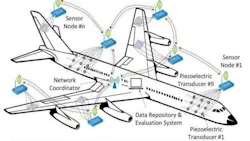
NEWTON, N.H. — An aircraft doesn't always show obvious signs of trouble before a component fails. A battery may struggle to maintain its usual performance or an electrical system may begin operating outside its expected range, but these changes can develop long before equipment stops working.
For autonomous aircraft, recognizing those changes is particularly challenging. A vehicle operating without a pilot onboard may need to assess its own condition and respond before a developing problem affects its ability to complete a flight. Engineers are exploring predictive health monitoring to give aircraft more information about equipment and how it may change during operation.
Related: Navy demonstrates autonomous mission-planning capability with MQ-20
How do aircraft detect developing equipment problems?
Aircraft already use sensors to monitor the performance of mechanical and electrical systems. These devices collect measurements such as temperature, vibration, voltage and electrical current.
Conventional monitoring systems compare those measurements with established operating limits. If a component becomes too hot or its electrical output moves outside an acceptable range, the system can alert an operator or maintenance crew.
That approach helps identify abnormal conditions, but it doesn't always show how a component reached that point or how much longer it might continue operating. Predictive health monitoring examines changes in equipment behavior over time. Instead of focusing only on whether a measurement has crossed a limit, the software looks for patterns that may indicate wear or developing faults.
For example, a gradual increase in motor temperature under similar operating conditions could prompt further analysis. Engineers would need to understand whether the change reflects equipment degradation or another factor, such as a different workload or environmental conditions.
Why is electric propulsion difficult to monitor?
Electric aircraft propulsion depends on several components working together. Batteries supply electrical energy, power electronics regulate its delivery and motors convert that energy into mechanical power. But a battery experiencing degradation may deliver less usable power than expected, and a motor developing an electrical fault may draw additional current or generate more heat. Problems involving power electronics can also affect how efficiently the propulsion system operates.
These changes don't necessarily produce an immediate failure. They may instead reduce the aircraft's available performance or place additional demands on other components.
So, engineers need to understand how individual faults could affect the larger propulsion system. Monitoring one component in isolation may not provide enough information to estimate the aircraft's remaining capabilities.
How does artificial intelligence help identify faults?
AI can help engineers analyze sensor measurements and recognize changes that conventional monitoring rules may overlook. Machine learning models can look at patterns in operating data and identify combinations of measurements linked to equipment degradation.
Some approaches also incorporate mathematical models of physical systems. These models describe how components should behave under particular conditions, allowing software to compare expected performance with actual measurements.
For instance, engineers may model how a motor's temperature should change under a given electrical load. If sensor readings consistently differ from that expectation, the monitoring system can investigate whether the equipment is developing a problem.
Changes in operating conditions, sensor errors and incomplete training data can affect a model's predictions. Engineers must account for these factors before relying on the software to assess equipment health.
Can aircraft use health information to make decisions?
Identifying a developing fault answers part of the issue, but an autonomous aircraft may also need to assess what that fault means for its remaining flight. Depending on the vehicle, that information could help determine whether the aircraft should continue its planned route, reduce power demand or return to a designated landing location. Such decisions involve equipment condition and the aircraft’s available energy and operating limits.
A prediction that a component is deteriorating may be useful, but the system must still figure out whether the remaining performance is sufficient for a particular maneuver or mission. Connecting health estimates with flight decisions introduces additional requirements for software reliability and system verification.
Why does predictive monitoring need onboard computing?
Autonomous aircraft cannot always rely on a continuous connection to ground operators or remote computing systems because communications may be unavailable due to distance, terrain, or equipment limitations. Even when a connection remains stable, delays can make remote analysis unsuitable for time-sensitive decisions.
Onboard computing allows aircraft to process sensor information without sending every measurement to an external system. That capability can help monitoring software evaluate equipment condition while the vehicle continues operating independently.
However, aircraft computers have limited processing capacity, electrical power and cooling resources. Engineers must account for those constraints when deciding how much analysis the software can perform onboard. They must also ensure that monitoring functions don't interfere with controls or systems that require predictable computing performance.
How do engineers test predictive health monitoring?
Before engineers can rely on a monitoring system, they need evidence that it can identify problems accurately under realistic operating conditions.
Simulation provides one way to study how software responds to changing equipment behavior. Engineers can introduce modeled faults and compare the system's predictions with expected results. Hardware testing adds another level of evaluation. Physical components and test equipment let engineers collect measurements from actual electrical and mechanical systems.
These tests can reveal whether the software recognizes developing faults, distinguishes equipment problems from normal variations and estimates remaining performance accurately.
Engineers must also look at incorrect predictions. A false alarm could cause a vehicle to interrupt a flight unnecessarily. And a missed fault could leave it operating without information about a developing equipment problem.
Testing therefore needs to address both prediction accuracy and the consequences of acting on unreliable information.
What does this mean for autonomous aviation?
As aircraft take on more tasks without direct human control, their systems will need reliable information about both the surrounding environment and the condition of the aircraft itself. Predictive health monitoring could help provide that second source of information, particularly for vehicles that operate beyond continuous communications or use electric propulsion systems.
The challenge is turning sensor measurements into dependable estimates of equipment condition and then determining how those estimates should influence flight decisions. For engineers developing autonomous aircraft, predicting a potential failure is useful only if the aircraft can respond to that information safely.
About the Author
Samantha McGrail
Associate Editor
Related
Voice Your Opinion!
To join the conversation, and become an exclusive member of Military Aerospace, create an account today!
 Leaders Logo
Leaders relevant to this article: