Artemis II astronauts reflect on the mission and the technology behind it
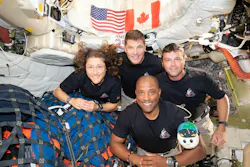
WASHINGTON — Months after becoming the first crew to fly around the Moon in more than 50 years, the four Artemis II astronauts aren't talking about launch day checklists or mission timelines. They're talking about waking up in space, seeing Earth from hundreds of thousands of miles away, and realizing just how many people made those moments possible.
"When you sleep in space, the weirdest thing is waking up... and still being in space," astronaut Victor Glover said during a recent discussion at Red Rocks reflecting on the mission. For most people, that's the part they'll remember. For engineers, it's a reminder of everything that had to work before a crew could wake up in deep space at all.
Artemis II marked NASA's first crewed mission around the Moon in more than half a century. While astronauts did not land on the lunar surface, the mission served as the first crewed flight test of the Orion spacecraft and Space Launch System before Artemis III attempts a lunar landing. Just as importantly, it tested many of the communications, navigation, and ground systems NASA will rely on as human exploration moves deeper into space.
Related: Artemis II returns astronauts to deep space, informs next phase of lunar program
Spaceflight depends on far more than the spacecraft
The crew spent about 10 days aboard Orion, but the mission stretched far beyond the capsule itself. As Orion traveled farther from Earth, NASA shifted communications between multiple networks to maintain contact with the spacecraft.
Near Earth, the agency relied on its Near Space Network before handing communications to the Deep Space Network, a trio of massive antenna complexes in California, Spain, and Australia. Together, those stations kept engineers connected with Orion across thousands of miles.
Artemis II also carried the Orion Artemis II Optical Communications System, or O2O, a laser communications demonstration designed to transmit data at much higher rates than traditional radio-frequency systems. If future missions adopt similar technology, astronauts could eventually send larger volumes of scientific data from deep space more efficiently.
Success started years before launch
Long before Orion rolled onto the launch pad, engineers rehearsed flight scenarios, tested software, and reviewed countless procedures. Every system onboard depended on another one performing as expected. Communications, navigation, propulsion, electrical power, and environmental controls all had to operate together, not individually.
Unlike many previous exploration missions, Artemis II also served as a systems-level test for infrastructure that will support future lunar operations, giving engineers their first opportunity to validate those technologies with astronauts onboard.
The European Service Module quietly kept Orion alive
One of the least visible pieces of the mission was also one of its most important. The Orion crew module carried the astronauts, but the European-built Service Module supplied much of what allowed them to survive the journey. It generated electrical power through its solar arrays, provided propulsion, controlled the spacecraft's temperature, and stored water and oxygen.
Those systems rarely attract the same attention as rockets or spacewalks, yet they're what turned a spacecraft from a vehicle into something astronauts can actually live inside.
That connection became especially clear when the Artemis II crew recently visited the European Space Agency's technical center in the Netherlands. Rather than focusing only on public appearances, the astronauts met the engineers responsible for developing and supporting the European Service Module, thanking many of the people whose work remained largely behind the scenes during the mission.
"Every time I talk to someone at NASA that worked on Artemis II, I just remind them that you all brought the world together,” Reid Wiseman said.
Looking back at Earth changed the mission
Technical achievements made the mission possible, but they weren't necessarily what stayed with the crew. "From far, far away, it actually looked powerful," Christina Koch said while describing Earth. "Like a lifeboat. Like this perfect place and oasis hanging in the universe."
That perspective has long been one of spaceflight's defining experiences. Artemis II offered it from farther away than any astronauts had traveled since the Apollo era. That observation reaches beyond the astronauts themselves.
NASA led the mission, but Artemis II also depended on international partners, commercial suppliers, and engineering teams spread across multiple countries. Companies built spacecraft hardware, propulsion systems, communications infrastructure, and ground support equipment years before launch.
Engineers monitored telemetry and managed mission operations around the clock as Orion traveled around the Moon. Ground systems also played a critical role in acquiring and preserving mission telemetry throughout the flight.
The astronauts became the faces of Artemis II, but their recent reflections point back to something engineers have always understood. Spaceflight isn't built around one breakthrough or one team. It's built from years of testing and people working together toward a mission that, for a brief moment, let four astronauts wake up one morning and realize they were still in space.
About the Author
Samantha McGrail
Associate Editor
Related
Voice Your Opinion!
To join the conversation, and become an exclusive member of Military Aerospace, create an account today!
 Leaders Logo
Leaders relevant to this article: