Small form factor, full-scale capability: How VNX+ and QMC bring MOSA and COTS to SWaP-constrained defense systems
Key Highlights
- VNX+ extends MOSA principles into SWaP-constrained environments, enabling compact, rugged, and scalable systems for small platforms like UAVs and soldier systems.
- QMC provides application-specific flexibility by allowing modular integration of high-speed I/O and processing functions, supporting evolving mission needs.
- Together, VNX+ and QMC create a multi-layer modular architecture that enhances interoperability, reduces development time, and leverages COTS components for defense applications.
PINNEBERG, Germany - For years, the defense electronics industry has focused on using open standards and commercial off-the-shelf (COTS) technologies to lower costs, speed up deployment, and make managing systems easier. Modular Open Systems Approach (MOSA) initiatives such as the Sensor Open Systems Architecture (SOSA) support this goal, encouraging system integrators to use interoperable, standards-based designs.
However, a key challenge has remained. Standards like VPX, which follow MOSA principles, work well for high-performance computing at the platform level but do not always fit environments with strict size, weight, and power (SWaP) limits, such as UAVs, soldier systems, and small electronic warfare (EW) payloads. In these cases, integrators often return to custom designs, giving up interoperability and future scalability to meet size and power needs.
New standards like VITA 90 (VNX+) and VITA 93 (QMC) are important steps in bringing MOSA principles to even the smallest and most limited edge platforms without making trade-offs. Together, these standards create multi-layer modular systems that support scalable, flexible, and future-ready designs for many defense applications.
VNX+: Extending MOSA into the SWaP-Constrained Edge
VITA 90 VNX+ was developed with a clear objective: deliver the benefits of open standards and COTS modularity into environments where traditional architectures are not a viable option. Building on the original VNX concept, VNX+ introduces enhanced high-speed connectivity, improved mechanical robustness, and support for modern serial fabrics, all within a significantly smaller footprint than larger systems like VPX.
The result is a standard that is purpose-built for SWaP-constrained platforms. VNX+ enables system designers to construct compact, rugged systems using standardized modules for processing, I/O, and communication, rather than relying on fully custom designs. This shift is critical. It allows integrators to align even the smallest systems with MOSA strategies, benefiting from vendor diversity, reduced development cycles, and improved lifecycle management.
In practical terms, VNX+ allows a UAV payload, a portable EW system, or a dismounted command unit to adopt the same architectural principles as larger platforms but at a fraction of the size and power consumption. For the first time, MOSA is no longer limited to “big iron” systems; it becomes viable at the tactical edge.
QMC: Unlocking Application-Specific Flexibility
While VNX+ provides the system-level framework, VITA 93 QMC addresses another critical requirement: application-specific adaptability.
Modern defense systems rarely rely on fixed interfaces. Sensor payloads evolve, communication protocols change, and processing requirements grow rapidly. Fixed-function I/O is no longer sufficient. What integrators need is a way to tailor system functionality without redesigning the entire hardware platform.
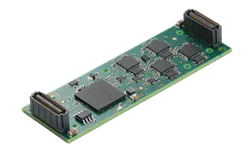
VITA 93 QMC delivers exactly that. As a high-density, high-speed mezzanine standard, QMC enables the integration of specialized functionality, whether FPGA-based processing, custom sensor interfaces, or high-speed data acquisition, onto a standardized carrier. Its support for modern serial interfaces using a compact form factor makes it particularly well-suited for edge systems where space and power are at a premium.
In essence, QMC transforms a fixed platform into a configurable system, where functionality can be adapted simply by changing mezzanine modules. This capability is especially valuable in applications where mission requirements vary or evolve over time.
VNX+ and QMC Together: A Shift towards Multi-Layer Modularity
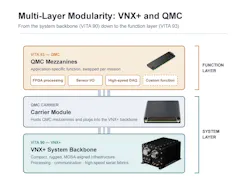
Individually, VNX+ and QMC address different layers of system design. Together, they form a cohesive architecture that enables true modularity from the system level down to the function level.
At TEWS Technologies, we view this as a shift toward multi-layer modularity. VNX+ defines the system backbone, a compact, rugged, and MOSA-aligned infrastructure for processing and communication. QMC extends that modularity into the functional domain, allowing integrators to customize I/O and processing capabilities without altering the underlying platform.
This combination creates a powerful design paradigm. A VNX+ system can host carrier modules that support QMC mezzanines, enabling integrators to deploy a standardized hardware platform while tailoring functionality to specific missions. As requirements evolve, QMC modules can be upgraded or replaced independently, preserving the investment in the VNX+ infrastructure.
The result is a system architecture that is not only scalable but also continuously adaptable to have a critical capability in modern defense environments and achieve a competitive edge on the battlefield.
Real-World Applications: From UAVs to Dismounted Systems
The benefits of combining VNX+ and QMC become particularly clear when applied to real-world scenarios.
In UAV platforms, where payload size and weight are tightly constrained, VNX+ provides a compact computing backbone capable of handling mission processing and communication. QMC modules can then be used to integrate specific sensor interfaces, whether electro-optical, radar, or signals intelligence, allowing the same platform to support multiple mission profiles with minimal hardware changes.
In electronic warfare systems, adaptability is paramount. Threat environments evolve rapidly, and systems must be updated frequently to remain effective. A VNX+ architecture equipped with QMC-based I/O and processing modules enables rapid reconfiguration, allowing new capabilities to be deployed without redesigning the entire system.
Dismounted soldier systems present another compelling use case. Here, size, weight, and power constraints are extreme, yet functionality demands are high. VNX+ enables compact, rugged computing nodes, while QMC allows integration of mission-specific interfaces such as radios, sensors, or encryption modules. The result is a flexible, upgradeable system that can evolve alongside operational requirements.
Across all these applications, the combination of VNX+ and QMC supports a consistent architectural approach that balances performance, flexibility, and lifecycle efficiency.
COTS Availability and Practical Implementation
A key advantage of both VNX+ and QMC is their alignment with the broader COTS ecosystem. System integrators are not starting from scratch. They can leverage a growing range of commercially available modules, carriers, and development platforms.
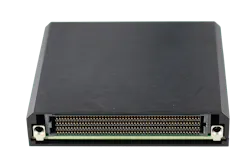
Companies like TEWS Technologies are actively developing solutions that bridge these standards, including QMC modules and carrier designs that can be integrated into modular system architectures. This growing ecosystem enables integrators to assemble systems from proven building blocks rather than designing custom hardware for each program.
From a program perspective, this has significant implications. Development cycles can be shortened, development risks and costs reduced, and certification processes streamlined. Moreover, the use of standardized modules facilitates multi-vendor sourcing, improving supply chain resilience and long-term maintainability.
For upcoming defense programs, the message is clear: adopting VNX+ and QMC is not a theoretical exercise. It is a practical, achievable strategy supported by available technology and a rapidly expanding ecosystem.
MOSA at the Edge: A Strategic Shift
Perhaps the most important implication of VNX+ and QMC is their role in extending MOSA principles to the tactical edge. By enabling modular, standards-based architectures in SWaP-constrained systems, they eliminate one of the last barriers to widespread MOSA adoption.
This shift has strategic significance. It allows defense organizations to standardize architectures across platforms of all sizes, from large mission systems to small, distributed nodes. It also enables faster technology insertion, improved interoperability, and reduced lifecycle costs, all core objectives of modern defense procurement strategies.
Related: Boeing taps Intellisense for C-17 flight deck replacement effort
This convergence represents a turning point. The industry is moving toward architectures that are not only open and modular but also scalable across every level of deployment.
Conclusion: A Future Built on Scalable Modularity
The combination of VNX+ and QMC marks a significant evolution in embedded system design for defense and aerospace applications. By bringing MOSA and COTS into SWaP-constrained environments, VNX+ eliminates the need for custom architectures at the edge. By enabling application-specific I/O and processing, QMC provides the flexibility required to adapt to rapidly changing mission requirements.
Together, they create a unified, multi-layer modular framework that supports scalable system designs across UAV, electronic warfare, and dismounted applications. They enable integrators to leverage available COTS solutions, reduce development risk and costs, and build systems that can evolve over time.
We are convinced that this approach defines the next generation of rugged embedded computing.
