Electronic subsystems for hypersonic flight aim for new levels of rugged
Key Highlights
- Hypersonic flight environments impose extreme thermal, pressure, and electromagnetic challenges on electronic systems, necessitating advanced ruggedization techniques.
- Guidance, navigation, and control systems rely on rugged inertial measurement units, anti-jam GPS, and sensor fusion to maintain accuracy amid plasma interference and electromagnetic disturbances.
- Leading U.S. hypersonic projects include the Dark Eagle LRHW, Navy's CPS missile, and the Blackbeard program, focusing on affordability, mass production, and operational readiness.
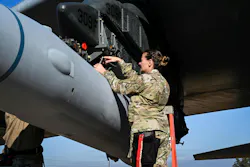
NASHUA, N.H. - If there's one thing people know about electronics for hypersonic aircraft and munitions, they've got to be rugged. Hypersonic flight involves a host of environmental extremes, not the least of which are extreme temperatures from aerothermal heating; pressures on structural integrity, vibration, shock, and acoustic loads; thermal expansion and materials compatibility that can involve warping, cracking, and seal failures; plasma-induced electromagnetic interference; and testing and validation to simulate the harsh environments of hypersonic flight.
Electronics design challenges can involve thermal protection systems and materials like carbon–carbon composites; high-speed protective coatings; structures must resist deformation at high temperatures, joints and fasteners that accommodate thermal expansion; and ways to prevent fatigue and resonant failures.
Solutions can involve rugged high-reliability robust inertial measurement units; radiation-hardened electronics; thermally insulated compartments for sensitive components and systems; carbon–carbon composites; ultra-high-temperature ceramics; and titanium alloys and aluminides.
The air friction and shock heating of hypersonic flight create surface temperatures of 1,500 to 3,000 degrees Celsius, which few materials can withstand without disintegrating -- particularly on leading edges, nose cones, and control surfaces. Control surfaces must function in high-temperature air without melting or warping, and plasma around the vehicle can interfere with sensors and communications, which can compromise guidance, navigation, and control. Packaging miniaturized electronics with adequate thermal management, cooling, and insulation is one of the most difficult problems for hypersonic weapons design.
Thermal challenges can involve insulation layers, active cooling -- particularly those that use fuel as a coolant -- designs that isolate electronics in cooler sections of the hypersonic vehicle, and packaging electronics in munitions payloads into very small and protected places.

Where test and measurement for hypersonics is concerned, ground test can be limited because of the difficulty and expense involved in reproducing Mach 5 to 10 conditions with real heating. Actual flight tests are expensive and risky. As a result, hypersonic design and test heavily involve computational simulations, subscale tests, and instrumented flights. Hypersonic wind tunnels are scarce and extremely expensive. Flight tests are risky and costly, where even small failures can destroy the vehicle. Computational models cannot perfectly predict plasma, shock interaction, and heating effects.
High-speed air flow can induce severe buffeting and acoustic loads, which can damage sensitive electronics and structural joints. At hypersonic speeds, ionization of surrounding air creates a plasma sheath that can block satellite navigation and radio communications, and cause sensor failures because of electromagnetic interference. Electronics, guidance systems, and munitions payloads must be able to survive the instantaneous shocks of launch and maneuver, as well as sustained acceleration as the hypersonic vehicle spools-up to high-Mach speeds.
Top hypersonics projects
The U.S. military has many hypersonic munitions and aircraft projects in progress, at different levels of maturity. Of the most high-profile hypersonics projects, perhaps the U.S. Army's Dark Eagle Long-Range Hypersonic Weapon (LRHW) from the Lockheed Martin Missiles and Fire Control segment in Orlando, Fla., is the most mature and closest to deployment.
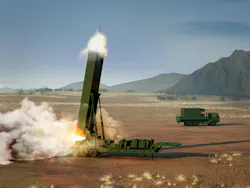
This ground-launched boost-glide missile is in the final fielding and certification phase, with the first operational battery expected to be completed as early as within the next few months. LRHW shares the so-called Common Hypersonic Glide Body (C-HGB) with the U.S. Navy, and should have a strike range of about 1,700 miles or more. It will be fired from a mobile truck launcher, and is considered the most mature U.S. hypersonic strike system and closest to operational use.
Related: X-Bow Systems acquires Evolution Space to expand hypersonic and SRM capabilities
Also close to deployment is the Navy's Conventional Prompt Strike (CPS) ship- and submarine-launched boost-glide missile, also from Lockheed Martin Missiles and Fire Control. This munition also uses the C-HGB glide body, and is expected to be deployed aboard the Navy's Zumwalt-class stealth destroyers and aboard Virginia-class Block-5 fast attack submarines sometime next year.
The U.S. Air Force Hypersonic Attack Cruise Missile (HACM) from the RTX Raytheon segment in Tucson, Ariz., also is far along in development. the air-launched scramjet cruise missile is being designed for jet fighter-bomber aircraft such as F-15E and potentially others. Northrop Grumman is developing HACM's scramjet engines. HACM is considered to be the Air Force's main operational hypersonic weapon effort, and is scheduled for deployment between 2028 and 2030.
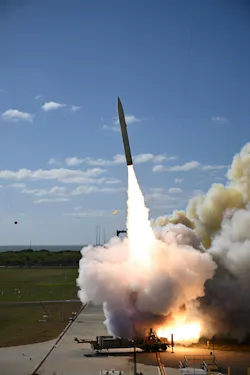
The U.S. Air Force AGM-183A Air-Launched Rapid Response Weapon (ARRW) from Lockheed Martin Missiles and Fire Control is an air-launched boost-glide missile that has completed its prototype phase. It is being tested aboard Air Force B-52 strategic jet bombers, yet its procurement was canceled due to budget concerns, but it has a possibility of being revived.
Other hypersonic systems in development but with uncertain deployment prospects include the Air Force-U.S. Defense Advanced Research Projects Agency (DARPA) More Opportunities with HAWC (MoHAWC), which builds on the experimental Hypersonic Air-breathing Weapon Concept (HAWC) hypersonic scramjet demonstrator; the U.S. Navy Hypersonic Air-Launched OASuW (HALO) from RTX Raytheon to provide long-range anti-ship strike capability; and the DARPA Operational Fires (OpFires) from Lockheed Martin.
One of the newest U.S. hypersonic projects is the Navy Blackbeard project to field affordable, mass-producible hypersonic missiles. The Naval Air Warfare Center Aircraft Division at Joint Base McGuire-Dix-Lakehurst, N.J., announced a $50 million order to Castelion in late February for full-scale prototypes, flight testing, and operational fielding of the Blackbeard Hypersonic Weapons program.
Blackbeard is a tactical hypersonic strike missile designed to travel at speeds exceeding five times the speed of sound, which emphasizes affordability and manufacturability to be built in large numbers.
The hypersonic missiles program includes variants for ground launch from the Army High Mobility Artillery Rocket System (HIMARS) and future Common Autonomous Multi-Domain Launcher (CAMDL) to replace the M270 Multiple-Launch Rocket System (MLRS) as part of the Army’s Long-Range Precision Fires modernization program. Blackbeard also is to be launchable from the Navy F/A-18 jet fighter-bomber. Blackbeard is being designed to hit time-sensitive, mobile, or hardened targets. It is to be a relatively low-cost weapon for frequent use to enhance artillery systems with hypersonic strike ability. Blackbeard is not meant to replace Army strategic hypersonic system like the Long Range Hypersonic Weapon, which focus on extreme range and velocity.
Hypersonic electronic subsystems
Among the most important electronic subsystems for hypersonic munitions and aircraft are guidance, navigation, and control; assured positioning, navigation, and timing (APNT); mission and flight computers; seeker and targeting sensors; telemetry and data acquisition systems; secure communications and data links; electronic warfare (EW) systems; fuze and weapons safety electronics; high-temperature avionics and thermal-management electronics; and flight termination and safety systems. All of these subsystems require special ruggedization to withstand extremes in shock, vibration, and temperature.
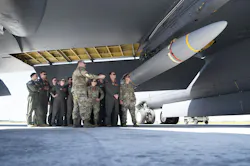
Guidance, navigation, and control are the core flight-control electronics that keep the hypersonic munition on its intended flight path. Key components include ruggedized inertial measurement units (IMUs); gyroscopes and accelerometers; and flight-control computers to calculate the munition’s position, attitude, and trajectory and command control surfaces or thrust vectoring continually for stability and targeting.
Among influential U.S. defense contractors involved in guidance, navigation, and control for hypersonic munitions are Northrop Grumman Corp.; the Charles Stark Draper Laboratory; Honeywell International; RTX Corp. Collins Aerospace; RTX Raytheon; Kratos Defense & Security Solutions; Aurex; Astronautics Corp.; Kearfott Guidance & Navigation; and the Leidos Innovations Center.
Assured positioning, navigation, and timing can involve resilient satellite-navigation-denied systems for hypersonic aircraft and munitions. Subsystems can handle anti-jam GPS receivers; tightly coupled inertial and satellite navigation solutions; atomic clocks; sensor fusion systems; and navigation processing electronics -- especially in contested electronic warfare environments.
Several U.S. defense contractors are involved in assured positioning, navigation, and timing for hypersonic munitions and aircraft. General Dynamics Mission Systems in Chantilly, Va., for example, built some of the first fielded military APNT systems and modernized GPS receivers with M-code anti-jam features.
Northrop Grumman Mission Systems in Woodland Hills, Calif., designs assured navigation and inertial measurement subsystems that can operate in GPS-denied environments and on hypersonic systems. Leidos in Reston, Va., develops advanced APNT software frameworks and resilient positioning that integrate multi-sensor and satellite navigation data with algorithms for contested navigation.
Position, navigation, and timing
Collins Aerospace in Cedar Rapids, Iowa, supplies APNT systems like Mounted APNT Systems (MAPS) with modern GNSS signal tracking and sensor fusion navigation processing used across domains.
The Honeywell Aerospace Advanced Technology Center in Clearwater, Fla., specializes in rugged inertial sensors, alternative navigation subsystems, and resilient navigation hardware that support APNT when satellite navigation is jammed or otherwise compromised.
The Hexagon AB positioning subsidiary NovAtel in Calgary, Alberta, provides precise GNSS receivers with anti-jamming and anti-spoofing features, as well as tightly coupled satellite navigation and INS navigation systems. Mayflower Communications Co. in Bedford, Mass., develops compact GPS APNT subsystems that combine military GPS with tactical IMUs and chip-scale atomic clocks for reliable navigation in small tactical systems.
Curtiss-Wright Defense Solutions in Ashburn, Va., supplies APNT modules and subassemblies that fuse INS, clock sources, and GNSS validation to deliver trustworthy PNT data -- even amid GPS denial and spoofing threats.
NTA Inc. in Huntsville, Ala., develops APNT and inertial navigation systems, and provides testing for military GNSS-denied navigation. Inertial Labs in Paeonian Springs, Va., produces APNT sensor fusion packages and resilient navigation modules that integrate tactical IMUs, satellite navigation, and advanced algorithms for GPS-challenged environments.
Assured PNT enables the hypersonic munition to maintain accuracy even if its satellite navigation subsystem is compromised by electronic jamming. Assured PNT uses M-code GPS receivers; anti-jam antennas; and integrated navigation processors that combine with inertial navigation to maintain accurate positioning throughout the munition's flight.
Mission and flight computers represent the central processing for the hypersonic munition's entire avionics system. Flight computers handle sensor fusion; trajectory computation; targeting logic; and system health monitoring by processing data from several different sensors for guidance and targeting. These are the ruggedized processors, avionics computers, and embedded computing subsystems that perform critical guidance, control, sensor fusion, and mission logic under extreme flight conditions.
Mission and flight computers
Several defense technology suppliers design and supply mission and flight computers for hypersonic aircraft and hypersonic munitions. Curtiss-Wright Defense Solutions, for example, builds rugged mission computers and avionics processing for command, control, navigation, and sensor fusion in military aircraft and missiles. These products include VME- and VPX-based rugged embedded mission computers, high-performance processing blades, and safety-critical avionics systems.
Mercury Systems in Andover, Mass., designs embedded processing modules, mission computers, and avionics systems for advanced aerospace and missile programs. The company builds open-architecture, high-density computer modules for signal processing, guidance, and real-time control.
Northrop Grumman Mission Systems in Linthicum, Md., designs flight-control and mission computers that integrate navigation, guidance, and vehicle management for high-speed weapons and aircraft. The company also supplies rugged avionics and flight computers for military programs alongside inertial navigation and control systems.
L3Harris Technologies in Melbourne, Fla., designs avionics, embedded processors, and mission computers several different weapons and aircraft. The company's ruggedized flight processors and onboard computers integrate guidance, navigation, and control; mission logic; and communications.
RTX Collins Aerospace designs and integrates mission computing subsystems for missiles and aerospace systems, including components that go into hypersonic munitions and aircraft guidance and control. Products include integrated avionics and control computers. General Dynamics Mission Systems builds rugged embedded computers and command-and-control processors for military avionics and weapons systems. Products include secure mission computers, rugged servers, and embedded control systems for real-time guidance and processing.
BAE Systems Electronic Systems in Nashua, N.H., designs mission computing and avionics processors for military aircraft and munitions,, such as high-reliability computer modules, mission processors, and data processors.
Seeker and targeting sensors guide the weapon during its terminal phase of flight. These sensors can involve active radar seekers; imaging infrared seekers; and passive RF seekers to detect and track targets and provide final targeting data for the guidance computer.
Among the most influential U.S. defense subcontractors that make seeker and targeting sensors for hypersonic aircraft and munitions include BAE Systems Electronic Systems, which has produced seekers for anti-missile and anti-ship weapons for target detection and discrimination.
Seekers and targeting sensors
RTX Raytheon designs radar and infrared sensors and seekers for systems like the Patriot and AMRAAM missiles, and develops advanced sensor processing and discrimination technology for hypersonic missiles and hypersonic defense.
L3Harris Technologies is a major U.S. producer of infrared missile-seeker detectors, multi-element infrared focal plane arrays, and advanced sensor payloads for tracking missiles. Products include space-based sensors that track hypersonic threats.
The Boeing Defense, Space & Security segment in Huntsville, Ala., is a major supplier of millimeter-wave and guidance seekers, particularly for the PAC-3 Patriot interceptor. The company builds terminal guidance sensors that detect, track, and lock onto maneuvering threats.
Lockheed Martin integrates and develops multi-mode seekers, radar and infrared guidance systems, and advanced targeting pods like the Sniper targeting pod that provide high-resolution target imagery and tracking cues that feed into missile seeker systems.
Honeywell Aerospace is key supplier of infrared sensors and integrated seeker components for targeting and guidance subsystems for missiles and smart weapons. Honeywell supplies rugged sensor technology for seeker heads in high-speed systems.
Teledyne FLIR LLC in Wilsonville, Ore., supplies imaging sensors and thermal detectors used in missile seekers and targeting pods. These components offer high-sensitivity infrared imaging suitable for precision terminal homing.
Telemetry and data-acquisition systems transmit real-time performance and flight data to ground stations during testing or development. Components can include telemetry transmitters; multi-band antennas; and data encoders to enable engineers to monitor vehicle performance during hypersonic testing.
Among the influential defense subcontractors that make Telemetry and data acquisition systems for hypersonic aircraft and munitions are Curtiss-Wright Defense Solutions, which builds modular data recorders and telemetry processors that capture flight dynamics, GPS/INS data, vibration, and sensor streams that are used in defense test ranges and integrated into hypersonic flight instrumentation suites.
Telemetry and data acquisition
Mercury Systems produces high-performance embedded processing, data acquisition modules, and telemetry interface components to handle large data streams from inertial sensors, telemetry channels, and mission computers that are integrated into test and avionics.
L3Harris Technologies provides telemetry transmitters, receivers, and ground support equipment — especially for flight test instrumentation and instrumentation receivers in test ranges. The company offers rugged airborne telemetry radios for high-speed data downlinks, and flight test instrumentation that captures guidance, navigation, and health data.
Allied Technology Group LLC in Little Rock, Ark., specializes in flight test instrumentation, telemetry ground stations, and data acquisition systems for defense testing. Teledyne FLIR provides high-speed data acquisition cards, digital recorders, and imaging data capture systems used in flight testing and telemetry integration. The company's A/D converters and recording modules are used in telemetry instrumentation racks.
RTX Raytheon builds embedded telemetry and test data modules for missiles and high-speed weapons, and supplies telemetry interface boards and data acquisition units as part of larger test and evaluation suites. General Dynamics Mission Systems builds rugged data acquisition and telemetry systems, especially for ground stations and instrumentation receivers in live-fire and flight test ranges. These systems decode and distribute high-bandwidth telemetry streams to analysis networks.
Emerson Electric Co. (formerly National Instruments) in Austin, Texas, is key supplier of modular test and measurement systems, data acquisition hardware, and instrumentation software for telemetry laboratories and as building blocks in flight test systems. Cobham Mission Systems in Davenport, Iowa, is longtime supplier of airborne and ground telemetry radios, antennas, and test instrumentation for aerospace flight test. Their telemetry transmitters and receivers support fast data downlinks at U.S. military and NASA test ranges.
Moog Inc. in Elma, N.Y., designs flight test instrumentation, high-rate data acquisition systems, and telemetry interface hardware for defense and aerospace testing. The company's rugged acquisition modules and ground instrumentation support hypersonic vehicle flight tests and telemetry decoding.
Communications and data links
Secure communications and data links may provide hypersonic mid-course updates or networking with subsystems like encrypted data links; RF transceivers; and directional antennas that can withstand the effects of plasma formed during hypersonic flight that can disrupt radio signals.
Electronic warfare and countermeasures systems can be necessary for hypersonic munitions to avoid detection or defeat defenses if they are detected. This can involve radar warning receivers; electronic support measures; and jamming transmitters that detect enemy radar emissions and help the hypersonic munition evade defenses.
Influential U.S. defense subcontractors and technology suppliers that design and manufacture EW and countermeasure systems for hypersonic aircraft and munitions include Northrop Grumman Mission Systems, which supplies EW systems, electronic support measures, and counter-radar technologies for jet fighters and bombers, and develops radar warning receivers and jammers that can support hypersonic missions.

RTX Raytheon designs active and passive EW systems, counter-radar payloads, decoys, and electronic attack technologies for aircraft and ships to counter adversary air defenses. BAE Systems Electronic Systems builds EW receivers, jamming pods, decoy systems, and threat-warning sensors for U.S. aircraft that might carry or support hypersonic strikes.
L3Harris Technologies designs avionics EW systems, mission computers with EW processing, and integrated decoy and jammer modules for electronic countermeasures aboard tactical aircraft. RTX Collins Aerospace offers EW subsystems, threat sensors, and countermeasure-control units for integrated defensive systems against radar and missile threats.
General Dynamics Mission Systems produces electronic support receivers, signals intelligence, and electronic countermeasures for threat detection and EW operations
Mercury Systems provides EW-ready compute modules, RF front-end processing boards, and high-speed digital signal processors for EW pods and countermeasure systems in high-speed aircraft and uncrewed aircraft. Teledyne FLIR Defense, meanwhile provides wideband receivers, signal processing chains, and counter-EW sensors for avionics and decoy systems. Cobham Mission Systems produces tactical decoys, jammers, and EW support hardware for military aircraft, naval systems, and test instrumentation.
Fuzing and weapons safety
Fuze and weapons safety electronics control explosives detonation timing and weapon safety. This can involve electronic fuzes; proximity sensors; safe-and-arm devices; ignition safety electronics to ensure the warhead activates only under the correct conditions.
Among the nation's fuze and weapons safety electronics suppliers are Northrop Grumman Innovation Systems in Dulles, Va., which produces mechanical and electronic fuzes, including proximity, impact, and self-destruct fuzes used in missiles and rockets. The company's safe-and-arm and fuze assemblies have been used in Army, Navy, and Air Force ordnance and often are built in to advanced weapons.
Curtiss-Wright Defense Solutions provides electronic safe-and-arm devices, pyrotechnic initiators, and weapons safety modules that interface with flight computers and guidance systems that can withstand the effects of extreme acceleration and vibration.
Honeywell Aerospace designs pyrotechnic firing sets, arming electronics, and safety interlocks for missiles and weapons. These components are engineered for high reliability across temperature and dynamic environments.
The Parker Hannifin Corp. Aerospace group in Irvine, Calif. (formerly Meggitt Defence Systems) designs proximity and time fuzes, safety and arming devices, and firing circuitry for artillery, missiles, and munitions. Products include stand-alone fuzes and integrated safety electronics for advanced weapons.

RTX Raytheon designs and integrates electronic safe-and-arm circuits, redundant firing control electronics, and embedded safety logic as part of broader missile subsystems. BAE Systems Electronic Systems designs electronic fuze subsystems, safe-and-arm modules, and arming logic controllers for precision weapons and guided missiles -- often tailored to specific prime contractor needs.
Teledyne FLIR supplies embedded electronics and circuit assemblies for fuzes and safety interlock systems, and offers custom electronics that can be integrated into safe-and-arm systems.
General Dynamics Ordnance and Tactical Systems in St. Petersburg, Fla., designs electronic fuzes, proximity sensors, and safety devices for artillery and missile systems. Novetta in McLean, Va., specializes in modern digital fuze logic and sensor-based safety electronics for guidance control systems. The company focuses on software-defined fuze logic and intelligent safety controllers.
