Northrop Grumman demonstrates simulation technology for integrated missile defense
Key Highlights
- AI enhancements are expected to automate threat scenario generation, accelerate software validation, and analyze large simulation datasets.
- Digital environments enable testing of complex threats like hypersonic vehicles and decoys, reducing reliance on costly live testing.
- The effort aims to shorten development cycles, improve system integration, and support operational decision-making through digital engineering.
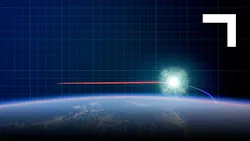
COLORADO SPRINGS, Colo. - Northrop Grumman has received a two-year, $68.8 million task order from the Missile Defense Agency (MDA) to continue developing advanced modeling, simulation, and threat representation capabilities that support missile defense system development, operational analysis, and warfighter training.
The award, issued under the Department of the Air Force's Enterprise-Wide Agile Acquisition Contract (EWAAC), includes five one-year option periods that could increase the total potential value to approximately $606.5 million if all options are exercised.
The work falls under MDA's Modeling and Simulation Vistas - Threat and Advanced Simulation Development (MSV-TASD) effort, which succeeds the agency's long-running Specialized Warfighter Development Contract (SWDC). Although Northrop Grumman released few technical details about the program, the award continues MDA's investment in digital engineering, high-fidelity modeling, and simulation tools used to evaluate increasingly complex missile defense scenarios before they are tested in the field.
Related: DoD signs framework agreements to expand PAC-3, THAAD interceptor production capacity
Digital testing
MSV-TASD focuses on the digital environments used to model both U.S. missile defense systems and representative threat capabilities. Engineers use these environments to evaluate missile defense architectures, develop and verify software, assess system performance, and examine how integrated defenses respond to evolving threats.
Modeling and simulation have become increasingly important as missile threats have grown more sophisticated. In addition to traditional ballistic missiles, missile defense architectures must account for maneuvering reentry vehicles, hypersonic glide vehicles, advanced cruise missiles, electronic attack, decoys, and coordinated attacks involving multiple threat types. Reproducing many of these scenarios through live testing alone would be prohibitively expensive and, in some cases, impractical.
MDA relies on high-fidelity digital models to evaluate potentially thousands or millions of engagement scenarios under varying operational conditions. Simulation environments allow engineers to study how sensors detect and track threats, how command-and-control networks distribute targeting information, how interceptors perform against different target profiles, and how changes to software, communications latency, sensor availability, or threat behavior influence the performance of the overall layered missile defense architecture.
The resulting data supports both acquisition and operational decision-making. During system development, modeling and simulation enables engineers to evaluate hardware and software changes before conducting costly flight tests. After systems are fielded, similar digital environments can support mission planning, operator training, readiness assessments, and operational analysis.
Related: DoD expands C-UAS marketplace as counter-drone technologies evolve
Rather than relying solely on the traditional design, build, and test cycle, programs increasingly validate systems within high-fidelity digital environments before committing to hardware production. This approach can shorten development schedules, identify integration issues earlier, reduce testing costs, and improve confidence before live-flight demonstrations.
AI enhancements
Northrop Grumman said the effort will incorporate AI-enhanced development tools but provided few details. Within modeling and simulation environments, artificial intelligence can be applied to tasks such as generating representative threat scenarios, accelerating software verification and validation activities, automating portions of software development workflows, analyzing large simulation datasets, and identifying performance trends across large numbers of simulated engagements.
MSV-TASD builds on nearly a decade of work performed under SWDC, which supported MDA's modeling and simulation activities for areas such as threat representation, mission analysis, software integration, and operator training. As missile defense systems become increasingly interconnected across land, sea, air, and space domains, digital engineering and high-fidelity simulation are expected to play an increasingly important role in evaluating future architectures before new hardware or software is fielded.
Northrop Grumman did not identify which missile defense programs will directly benefit from the work. However, modeling and simulation capabilities developed under the effort are expected to support MDA's continuing modernization of its layered missile defense architecture by helping engineers evaluate new sensors, interceptors, command-and-control software, and integrated defensive concepts while reducing technical risk through digital engineering.
About the Author
Jamie Whitney
Editor-in-Chief
Jamie Whitney joined the staff of Military & Aerospace Electronics in 2018 and oversees editorial content and produces news and features for Military & Aerospace Electronics, attends industry events, produces Webcasts, and oversees print production of Military & Aerospace Electronics.
Related
Voice Your Opinion!
To join the conversation, and become an exclusive member of Military Aerospace, create an account today!
 Leaders Logo
Leaders relevant to this article: