DoD expands C-UAS marketplace as counter-drone technologies evolve
Key Highlights
- The C-UAS marketplace provides a centralized platform for authorized users to evaluate validated counter-drone technologies based on operational needs.
- It supports faster acquisition by integrating performance data from testing, aiding decision-making in defense and allied agencies.
- Modern C-UAS systems rely on layered architectures incorporating sensors, AI, and multiple defeat methods such as electronic warfare, kinetic interception, and directed energy.
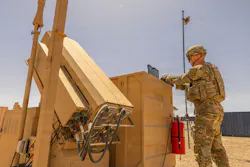
WASHINGTON - The rapid proliferation of small uncrewed aircraft systems (UAS) is forcing military organizations to rethink how they detect, identify, track, and defeat airborne threats. To help accelerate access to counter-uncrewed aircraft system (C-UAS) capabilities, the Department of Defense (DoD), through Joint Interagency Task Force 401 (JIATF-401), is expanding its C-UAS marketplace, a centralized platform designed to help authorized users identify validated counter-drone technologies and navigate existing acquisition pathways.
Developed in partnership with Kaizen Laboratories in N.Y., the marketplace provides military organizations, domestic agencies, and international partners with a common environment to evaluate available C-UAS solutions based on operational requirements and validated performance data.
The marketplace does not replace traditional contracting processes. Instead, JIATF-401 describes the platform as a way to help authorized users more rapidly identify, evaluate, and acquire counter-drone technologies through established acquisition channels. The marketplace is also intended to incorporate performance data from JIATF-401 testing activities, providing users with additional information to evaluate available capabilities.
A growing battlefield challenge
Small UAS have transformed modern warfare by providing relatively inexpensive platforms capable of performing intelligence, surveillance, reconnaissance (ISR), targeting, communications relay, and direct attack missions.
Related: Why counter-drone systems need to detect what they don't recognize
Recent conflicts have demonstrated the ability of small UAS to threaten personnel, vehicles, logistics networks, and critical infrastructure. The challenge for defenders is the cost imbalance between the threat and the response. Many small UAS threats can be acquired at relatively low cost compared with the sophisticated systems required to detect and defeat them.
As drone technology continues to advance, military organizations are increasingly moving toward layered C-UAS architectures that combine multiple sensing, command-and-control, and defeat technologies.
How modern C-UAS systems work
A C-UAS architecture generally consists of three primary functions: detection and identification, command and control, and defeat.
Detection begins with a network of sensors designed to identify small, low-altitude targets operating in complex environments. These systems can include radar, radio frequency (RF) sensors, electro-optical and infrared cameras, and other sensing technologies.
RF sensors can detect communications links between drones and operators, while radar and optical systems provide additional tracking and identification capabilities. Increasingly, artificial intelligence and machine learning algorithms are being incorporated to help classify objects, reduce false alarms, and prioritize potential threats.
Related: Sikorsky advances Nomad 100 VTOL aircraft into DARPA flight testing
Once a threat is identified, C-UAS systems rely on command-and-control architectures to process sensor data and determine an appropriate response. These systems must rapidly combine information from multiple sources while operating within increasingly complex electromagnetic environments.
Defeating the drone threat
Counter-drone technologies generally fall into three broad categories: electronic warfare, kinetic defeat, and directed energy.
Electronic warfare systems can disrupt or deny drone operations by interfering with communications links, navigation signals, or control systems. These capabilities can provide a reusable response option but may be less effective against autonomous systems that do not rely on external communications.
Kinetic systems defeat drones through physical interception. These technologies include interceptor drones, missiles, guns, and specialized ammunition. While kinetic approaches can provide effective engagement against certain threats, they introduce considerations including cost per engagement, logistics requirements, and potential collateral effects.
Directed-energy systems, including high-energy lasers and high-power microwave technologies, represent another emerging approach. These systems offer the potential for low-cost engagements and deep magazines but require advances in power electronics, energy storage, thermal management, beam control, and system integration.
The systems-engineering challenge
The expansion of the C-UAS marketplace highlights a broader challenge facing military technology developers: no single technology is likely to address the full range of uncrewed aircraft threats.
Future C-UAS architectures will depend on the ability to integrate sensors, effectors, networking systems, and command-and-control technologies into flexible, scalable systems. That requirement places increased emphasis on enabling technologies such as edge computing, artificial intelligence, open architectures, cybersecurity, high-performance processing, and secure communications.
Related: Honeywell introduces compact navigation system for uncrewed aerial systems
The challenge is not simply developing individual counter-drone technologies, but creating integrated systems capable of rapidly detecting threats, making decisions, and applying the appropriate response.
Accelerating access to emerging capabilities
Through the marketplace, JIATF-401 is attempting to create a more streamlined path for authorized users to discover and evaluate counter-drone technologies. The platform also supports the Secretary of the Army's Foreign Military Sales Fast Lane initiative by helping integrate approved products into existing export and acquisition pathways.
As uncrewed aircraft threats continue to evolve in capability and availability, defense organizations will need faster methods to evaluate and field technologies capable of countering emerging threats.
The C-UAS marketplace represents one effort to bridge that gap by connecting users with validated technologies while highlighting the increasingly complex engineering challenge of defending against small, affordable, and rapidly changing aerial systems.
About the Author
Jamie Whitney
Editor-in-Chief
Jamie Whitney joined the staff of Military & Aerospace Electronics in 2018 and oversees editorial content and produces news and features for Military & Aerospace Electronics, attends industry events, produces Webcasts, and oversees print production of Military & Aerospace Electronics.
Related
Voice Your Opinion!
To join the conversation, and become an exclusive member of Military Aerospace, create an account today!
 Leaders Logo
Leaders relevant to this article: